If you are reading today’s blog on your email, don’t forget you can click onto the blog to read it clearer. I will be updating the Spelling Rules page each week, but if you want a rule on there that I haven’t put up yet, just message me on the contact page and I will prioritise that for you.
There are always so many things I want to share with everyone when I discover new strategies or have new ideas, but there is never time to speak to anyone about all these different things, including my colleagues (although sometimes I admit I just can’t contain myself!). Therefore, I hope this blog will be useful to my colleagues, parents and other educators. Here are items I want to share this week:
Pencil grip
It is important that a child learns to hold a pencil in an efficient way to enable controlled, pain free handwriting. However, the development of a pencil grip is a gradual process that develops as a child grows. A tripod grip is regarded as a classic, functional way to hold a pencil and this pencil grasp can be encouraged by the following pinch and flip action. Younger children who are ready to use this grip will probably need an adult to flip the pencil over into the correct position for them after it is securely pinched between their fingers. Practising picking up very small crayons will also encourage the pinch action.
RNIB BOOKSHARE FOR THE DYSLEXIC READER
I have found the RNIB Bookshare useful, as it means dyslexic individuals can access the same text that is being used in class reading books and many other resources by using text to speechware. Not many people are aware that the RNIB (Royal National Institute of Blind People) Bookshare is a free service supported by RNIB and Dyslexia Action, where you will find over 8,500 accessible resources for educators to use with pupils who are unable to read standard print, including those with dyslexia or sight loss. This ensures that those pupils are able to have access to the same books at the same time as their peers, giving them the same educational opportunities.
How much does it cost?
You can join and use RNIB Bookshare for free if you’re:
- an early years centre
- a school, college or university
- a sensory support team
- an adult learning centre.
There is a small charge for schools based overseas.
SEND Station
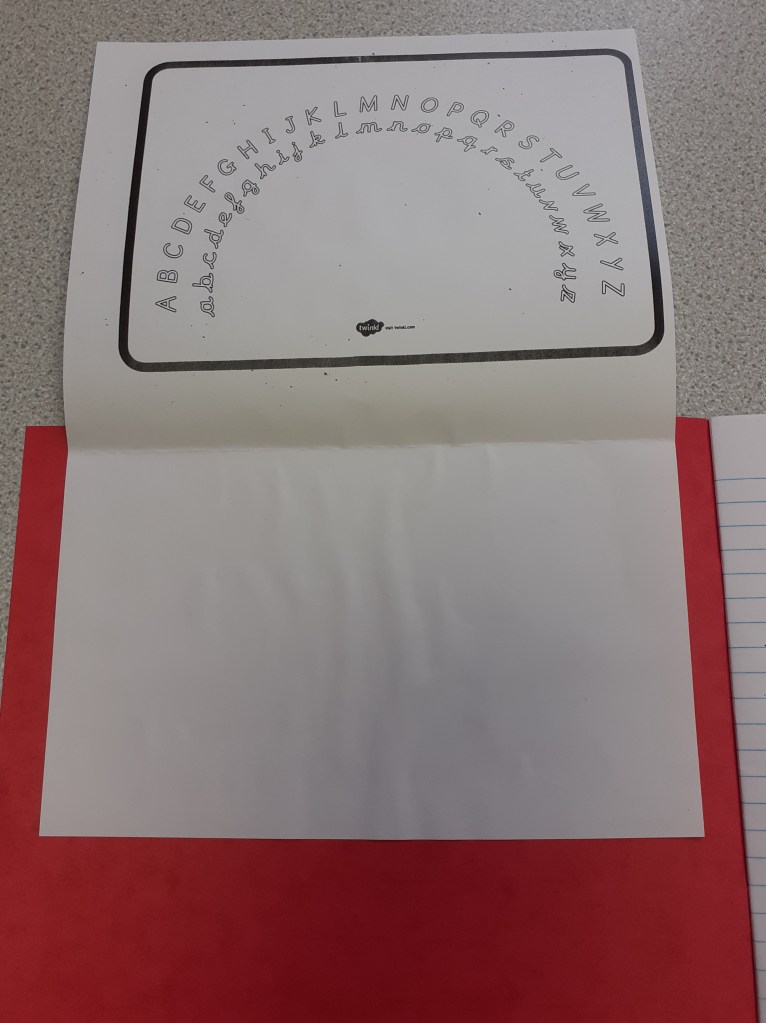
This week I did some online training with Sarah Singleton of SEND Station who can be found on http://www.sendstation.co.uk. She explained everything very clearly and with humour, so made it all really interesting. SEND Station provides various training for SEN suitable for educators and parents. The training I attended was really helpful, giving some great new strategies at minimal cost. This week we discussed how useful the alphabet arc is for helping children not only with alphabetical code and sequence, but also for learning the names of letters, phonemes and digraphs, especially if the alphabet arc is made from materials that you can move around e.g. velcro, wooden or magnetic letters. Another bonus to having the arc to hand is that it will help those who muddle their ‘b’ and ‘d’ as they will soon realise that the letter ‘b’ comes first in the alphabet arc so will start to automatically write the correct letter ‘b’ or ‘d’ after referring to the arc. I already use the alphabet arc in interventions as it is so useful (as explained on the ‘Alphabet’ page on this site). However, I will now be using it for more activities and after discussion with our Literacy Lead in school, it is being introduced into the classroom, starting with the suggestion from SEND Station by sticking the arc into the front of a book, but folding it out of sight. When a learner starts work, they can unfold the arc and it is ready as a useful resource for the child when needed (as shown below) and extra reminders can be written on as required. The children are going to colour the vowels in red so that they stand out and are easily identifiable. The arc in the photograph has been downloaded from Twinkl.co.uk.
Other SEN
Although this site and blog is primarily for support in reading, spelling and dyslexia, many difficulties are often co-occuring in individuals. As I work with all SEN, I have also studied dysgraphia, dyscalculia, dyspraxia and autism as I want to support individuals with these challenges. Therefore, I will also be mentioning items I come across relating to these in future posts.
Finally, some training I have found useful recently at a minimal cost or free has come from the following:
SEND Station (www.sendstation.co.uk) give training for autism related topics as well as dyslexia.
The Skills Network ( https://theskillsnetwork.com/) offer free level 2 courses for adults which include Understanding Autism, Special Needs and Disability and Behaviour that Challenges in Children.
Have a good week and take care of yourselves. PJ
In a world where you can be anything……..
Be kind
 Help your child learn to read, write and spell