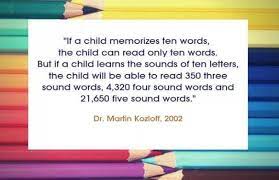
Further to my recent blogs regarding the Science of Reading, here is a video I recently discovered which gives a clear explanation about this research. The following video is from Australia, but the information is relevant to everyone as it involves scientists and reading experts from many different countries. Sit down with a cup of coffee and have a look if you are able to, as it is really quite interesting and informative as an introduction to the Science of Reading and how this extensive research influences how we should now teach children to read.
PATOSS
PATOSS is the professional association of teachers of students with specific learning difficulties, for all those concerned with the teaching and support of pupils with SpLD, for example: dyslexic, dyspraxic, dyscalculic, ADHD. I am an asssociate member of PATOSS, which shows that they recognise that I am qualified as a specialist teacher for those with dyslexia and therefore able to teach as well as assess for establishing and reviewing a teaching programme for individuals with Specific Learning Difficulties. I am therefore able to use the PPM suffix and logo on correspondence or marketing materials to identify myself as a “Patoss Professional member” and could be included on their specialist tutor list if I wished. PATOSS and the BDA (British Dyslexia Association) have lists on their websites for approved, qualified dyslexia assessors and tutors who offer a private service for dyslexic individuals who need extra tuition or full dyslexia assessments.
The Phonics Queen
Experienced educator Natasha Tuite aka ‘The Phonics Queen’ is on facebook and offers lots of guidance for phonics. Her next zoom training session is ‘Phonics and Spelling in KS2’ for a nominal cost of £25 per person on 11th November 4.00pm-5.30pm. Be quick if you wanted to join her as her training usually gets booked up quickly. To book up, just email her at: thephonicsqueen@gmail.com or join her ever increasing facebook group ‘The Phonics Queen’ to keep up to date with more phonics information.

Touch Typing
For those children who still find writing very difficult by the time they are in the upper years of Key stage 2, then I would definitely recommend that they learn to touch type as this may be the way forward to help them to get information written down quickly and if it is their usual way of working, then this can be used in many tests/exams if requested. Nessy Fingers is a typing programme from Nessy.com at a fee of £30 p.a. but there are also free online typing programmes such as BBC Bitesize Dance Mat and Typing Club for older students.
Free event on Eventbrite -Dyslexia: What’s New?
Dyslexia: What’s New? is an free online event hosted by the University of Birmingham on Thursday, 18th November 2021 6pm – 7pm. Tickets are available on http://www.eventbrite.com. Join experts answering your questions on dyslexia and providing updates based on latest research.
About this event
This event is part of ESRC Festival of Social Science at the University of Birmingham Do you have dyslexia or care for a child or young person with dyslexia, or are you a teacher interested in learning more about dyslexia? In this online event experts from the field of dyslexia will answer your questions on the latest research and current trends to support dyslexic children and young people in education.This event will be facilitated by Dr Maria Reraki (Course lead, PGCert Dyslexia and Literacy Difficulties, University of Birmingham) and Ms Vikki Anderson (Teaching Fellow – Language, Literacies & Dyslexia, University of Birmingham), with an introduction by Professor Margaret Snowling CBE, FBA, FMedSci (University of Oxford) and panellists Katrina Cochrane (Positive Dyslexia), Neil Mackay (Action Dyslexia) and Dr Harriet Cameron (University of Sheffield). To have the panel address your questions, please send them to esrciaa@contacts.bham.ac.uk.

The above event looks as if it will be helpful to many of us and it will be good to see the introduction from Professor Snowling and hear from Neil Mackay. I wrote about Professor Snowling in a previous blog and mentioned her valuable, extensive research with regards dyslexia. Neil Mackay has written books advising how to identify and meet the classroom based needs of vulnerable learners and I have used his advice on many occasions. I have found their work really interesting and informative, so I look forward to joining this event from the University of Birmingham.
Finally, as the saying goes: ‘Take time to smell the roses’. (I do need to remind myself of this!) Have a good week everyone. PJ 🙂
 Help your child learn to read, write and spell