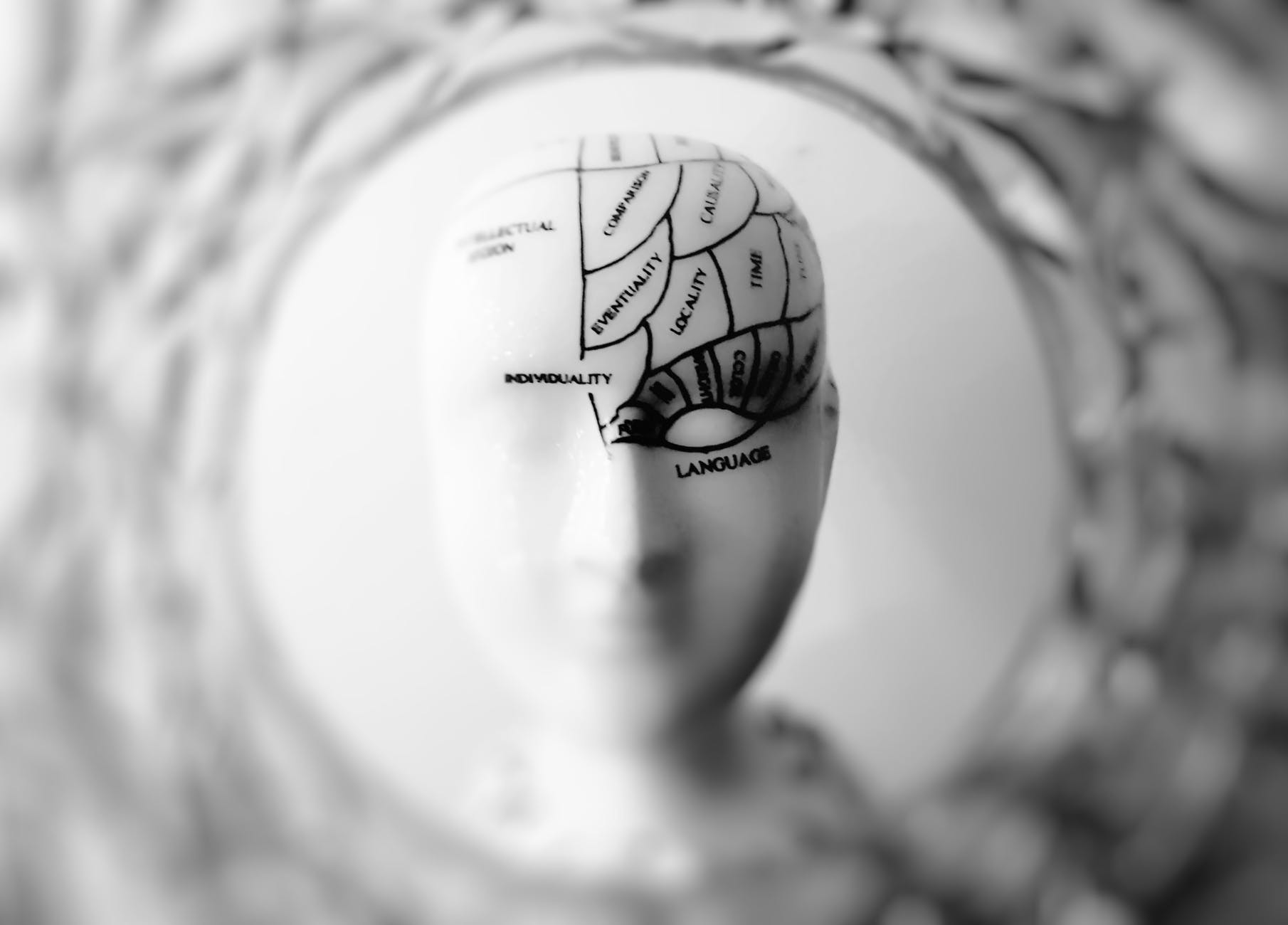
We are all unique and our brains determine some of our strengths and weaknesses. The brain is divided into two hemispheres and each hemisphere is in charge of the opposite side of the body, so the right cerebral hemisphere receives sensory input from and directs movement on the left side of the body, while the left hemisphere governs corresponding functions for the right side. In general, the left side of the brain is responsible for language and speech, whereas the right hemisphere plays a large part in interpreting visual information and spatial processing. In a neurotypical brain, the left side of the brain is usually dominant, however in the dyslexic brain the right side of the brain is stronger. Often left-brained dominant individuals are methodical and analytical in nature, whereas those with right-side dominance are more likely to be creative and artistic. A mixture of strengths is required to make a strong team and each individual should be valued for what they bring to a community. Wouldn’t it be boring if everyone was the same? However, it is important that individuals develop a growth mindset, especially if they have learning difficulties as it is likely they will encounter setbacks during their learning.
By understanding our similarities and differences with others we can discover who we are and where we fit into our social and cultural settings. Those with a learning difference especially need to be aware that all individuals have strengths and weaknesses and everybody makes mistakes. Mistakes only show that we are continuing to learn and it is not the mistakes that matter, but how we come back from those mistakes. Albert Einstein (thought to be dyslexic himself) is quoted as saying ‘ A person who never made a mistake never tried anything new’.
The older dyslexic learner will need to develop strategies to help them become organised and strengthen their study skills. Research has shown strong correlations between dyslexia and deficits in short-term memory and executive functioning. The central executive deals with filtering, prioritising and categorising the information received from sensory inputs. If information is not stored appropriately in memory stores, it will not readily be able to be retrieved. For example, if information is categorised only by location or image, then an individual would only be able to retrieve the information if it occured again in the same context. Multisensory learning is therefore beneficial to strengthen the neural pathways, so that information is categorised in various ways and stored in the long term memory.
An excellent tool for helping learners with study skills is the mindmap, either drawn by hand or computerised. Mindmaps enable learners to organize ideas and understand concepts better. This speeds up the time it takes individuals to learn new information and also embeds new information into the long-term memory more effectively, especially if colours are added to connect categories.
The dyslexic learner will usually require support in the classroom. The following youtube video is a recording of a webinar ‘Teaching for Neurodiversity Classroom support strategies’ by the Helen Arkell Charity, which gives lots of useful ideas for educators.
Remember, what helps the dyslexic individual to learn can help all learners. Happy half term everybody. 🙂 PJ
Life is like a camera Just focus on what’s important, Capture the good times, Develop from the negatives And if things don’t turn out Take another shot!
Photo by Sven Huls on
 Help your child learn to read, write and spell