Another week has gone by quickly. I do hope you managed to get through last week’s blog all about the Science of Reading and Structured Literacy. I did have some lovely feedback from a couple of teachers who had read it all and advised me that it was really informative. I realised afterwards though that I didn’t explain that all these reading and spelling programmes that were proven to work include the teaching of ‘synthetic‘ phonics i.e. breaking words up into phonemes and identifying these phonemes. Therefore, the recommended way of teaching children to read and spell nowadays is through a structured, synthetic, systematic, cumulative approach. Hope that all makes sense! Now for some lighter reading this week………….
Spelling the days of the week (How the days were named)
Since I was writing about the origin of different spellings and words last week, when I saw this video I thought it would be appropriate to share as it is a good talking point when teaching children how to spell the days of the week.
Barrington Stoke publish ‘super-readable, accessible books that help every child experience the joy of reading’. They have recently developed ‘The Barrington Stoke Young Editors Scheme’ which gives students a fantastic opportunity to be an editor for the day, by reading a manuscript and giving feedback to help shape the final book, before it is published. I have tried it out this week, by downloading a manuscript that was age appropriate for the children I was working with. They really loved the opportunity and are enjoying reading the manuscript ready to give their feedback after the half term break. This Young Editors Scheme is free to register on https://youngeditors.barringtonstoke.co.uk/.
Book your class to meet an author or illustrator for FREE
Book a school Zoom with a Puffin authoror illustrator during the months of November and December. Register at puffinschools.co.uk/meet-an-author so your class can join in Friday mornings at 10:30, for a 45-minute online event including live readings, creative writing ideas, activities and Q&A sessions. Get your class ready with free chapter samples and supporting resource packs. Don’t forget to send in your questions to be answered live by emailing PuffinSchools@penguinrandomhouse.co.uk with the author’s name in the subject line. Coming up: 5 November – Yassmin Abdel-Magied, author of You Must Be Layla 12 November – Jacqueline Wilson, author of The Primrose Railway Children 26 November – Maddie Moate, author of STUFF 3 December – Nick Sharratt, author and illustrator Oh no! Shark in the Snow!
That’s all the news and info for this week. I hope everyone has a good week and manages to stay healthy. Take care. PJ
Well, as I mentioned in my previous blog, last week I received an email from Mike Jones, who is the CEO and founder of Nessy.com and he approved of my blog, suggesting that I use this platform to also share my understanding of the Science of Reading and Structured Literacy. Nessy and other dyslexic programmes already use these studies as the basis of their teaching for reading and spelling and it is now recommended this is the best way to teach all learners. This will probably be the longest blog I write (sorry!), but it does contain important, relevant information and eventually I will transfer this information onto a page on my site.
Although I am no expert, for the past couple of years I have been involved in intense study of teaching for the dyslexic student and programmes based on the Science of Reading. It has been recognised that if this research is helping dyslexic individuals, then it can help all students to strengthen their reading skills. The Science of Reading is not a fad, a new idea or a programme of instruction but is the result of many years of careful research which identifies the five essential components that make up the Simple View of Reading. Structured Literacy incorporates all five of these components i.e. phonemic awareness, phonics, fluency, vocabulary and comprehension. The structured, systematic way of teaching dyslexic individuals reading and spelling skills is now being used in mainstream schools as the best method for teaching all children. Today, I am going to try my best to share my views and explanations as to why programmes and teaching based on information from these scientific studies can inform effective instruction to benefit all students, including those who are dyslexic. …………..
From studies and research over many years, scientists together with reading experts have discovered how we learn to read, what skills are involved, how these skills work together and which parts of the brain are responsible for reading development. We are now able to understand how a child’s brain acquires and processes information and the cognitive processes that are essential for reading proficiency. This conclusive, supported research has resulted in an evidence-based, best practice approach for teaching basic literacy skills leading to Structured Literacy. Structured Literacy hinges on a well-developed, systematic and cumulative curriculum that directly teaches students phonology, sound-symbol association, syllables, morphology, syntax, and semantics in an explicit and diagnostic manner. Using a structured and explicit teaching approach is proven to be beneficial to all students, not just those with dyslexia or other reading difficulties.
Nowadays, it is against all the principles of teaching accurate reading skills to ask a child to look at the picture for clues if they can not read a word. The result of guessing a word only means that a child will start to guess more words instead of trying to decode them and therefore will not be reading accurately, which can cause many misunderstandings. A picture can help keep a child’s interest and can lead to more discussion, but should never be used when trying to read a word and a child should never be asked to ‘guess’ what a word says. This also means that a learner should never be asked to try and guess what a word may say by looking at the rest of the sentence for clues from the context or by using the first letter of a word. Instead, a child needs to be shown the strategies to be able to accurately decode unfamiliar words. If they are finding many words difficult to read in a book, then they need to find a book which is decodable according to the graphemes that they have learned in a structured, systematic programme as it is essential children are not guessing words. These decodable books should only be used for a short time as learners quickly strengthen their knowledge of grapheme/phoneme correspondence. However, books above their reading capabilities should still be shared and read to a child where required, as they will find huge benefit being exposed to a range of text, which will strengthen and widen their general knowledge and vocabulary. Increasing fluency requires a lot of practice and can be developed by reading aloud to an adult who can support the learner, quickly picking up any errors and demonstrating strategies to help develop fluency. Therefore, silent reading will not help to develop fluency for the child who has not yet learned this skill.
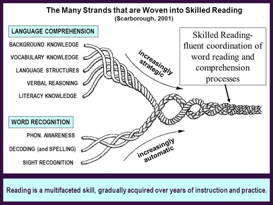
The Simple View of Reading (SVoR) has been validated by many scientists and demonstrates that reading comprehension is the product of of two main components i.e. decoding and language comprehension and this is further detailed in Scarborough’s Reading Rope. If either one of the components is weak, then reading comprehension is diminished, because no amount of skill in one area can compensate for lack of skill in the other. These two main features are made up of smaller strands, which gradually combine until a reader is skilled and able to display a fluent coordination of word reading and comprehension as shown in the diagram.
The Reading Rope (Scarborough 2001)
Structured literacy, based on the Science of Reading, uses a systematic and cumulative approach starting with the basic skills and building upon those learned skills. Direct teaching, using multisensory instruction, accommodates a range of learning styles and students should be constantly monitored as they learn to read, so any misconceptions can be quickly rectified. This way of teaching has been at the core of dyslexic programmes for many years and most dyslexic programmes are based on the Orton Gillingham method of teaching, which is an evidence based science of reading approach. What works for the dyslexic student works for all students.
Therefore, the skills that need to be taught to enable a child to be a confident, skilled reader are:
Phonological awareness skills(see page on this site Phonological and Phonemic Awareness ) These skills need to be taught with the essential component of Phonemic Awareness.Phonemic awareness is recognising that words comprise of individual sounds that can be blended together to read or segmented for spelling. Learners should be taught how to mentally manipulate phonemes in spoken words.
Phonics: (See page on this site First stages of reading and spelling) This is an explicit and systematic instruction in phoneme-grapheme correspondences to support both decoding and encoding. Phonics is the key component to reading because decoding is the foundation upon which all reading instruction is built upon.Children learn the grapheme-phoneme linkage and start to blend these letters together . Whole words are gradually logged into the visual memory store, so no longer need to be individually decoded and spellings can become more phonetically correct as learners find the correct grapheme for the phoneme. Phonics instruction also includes word analysis, syllabication, and morphology. Morphology concerns how words are formed through compounding, inflection and derivation. Morphological awareness instruction continues throughout school years and is an important part of embedding reading and spelling skills.
Fluency: Gradually as the learner encounters more words and their skill develops with extended practice, they start reading these words automatically, quickly retrieving the phonemes stored in their memory. Once they achieve automaticity in word recognition, they no longer have to consciously think about each individual step in the process of reading and can do it without effort as these words and phonemes have been stored in their memory. When automaticity has been reached, the working memory is free for more complex skills such as comprehension. Fluency is formed by developing reading accuracy, reading rate and expression, which can be taught by supporting learners to develop typical speech patterns and appropriate intonations when reading aloud. This fluency of reading is now often referred to as ‘prosody’ ( which is a word new to my vocabulary, so I have attached a video below to explain this better than I could!).
Vocabulary is the body of words in a text or in spoken language. The understanding and use of a variety of vocabulary can be helped by the knowledge of orthography and morphology. Whereas etymology identifies the word origins, orthography identifies spelling pattterns within words, helping students to understand why words are spelled the way they are and the relationship between phonemes and graphemes to enable them to acquire the alphabetic principle. Morphology is the study of the word structure and their parts and with an understanding of morphology, learners are able to expand their vocabulary by adding morphemes such as prefixes and suffixes to root words.
COMPREHENSION – The purpose of reading is comprehension i.e. getting the meaning from the text. Without comprehension, reading is meaningless – just a list of words. Reading is a complex skill and students need to use a number of strategies to get the meaning from a text. Skilled readers can read quickly and accurately, whilst monitoring their comprehension as they read, using the many skills they have developed to be competent readers, including background knowledge, vocabulary and morphology. This view of reading is shown in the Scarborough Reading Rope (above), demonstrating that a skilled reader needs to be showing the fluent coordination of word reading and comprehension processes.
By understanding these stages and routes to reading, educators can identify where a learner is developmentally. Learners can then be given the appropriate support at the right time. which should impact greatly on their literacy development.
If you have read all the way down to here, WOW and thank you for spending this time with me! As you can probably tell, I am quite passionate about this subject and helping all children. I am pleased Mike Jones from Nessy took the time to read my blog and it has given me a boost to continue with these pages. I was happy to follow his suggestion and write in more detail about the Science of Reading and Structured Literacy, as I have been studying these approaches in detail for my dyslexia course. I find that the Science of Reading and Structured Literacy all make so much sense to me as an explicit, systematic, cumulative approach to help all learners. Therefore, I hope I have explained it properly, but if you wanted more details, there are many online papers that explain the research further.
Finally, just to let you know of some more freebies being offered this week from Nessy, but the dates are nearly running out so get in quick!
To Support children with dyslexia, Nessy are offering their Dyslexia Screener Dyslexia Quest for Free with the code TESTDQ. Visit the product page: British English: https://www.nessy.com/uk/product/dyslexia-screening/American English: https://www.nessy.com/us/product/dyslexia-screening/ This is a dyslexia screener so will identify those at risk for dyslexia by showing where their strengths and weaknesses are, it is not to be used to assess dyslexia. THIS EXPIRES ON 17TH OCTOBER!
To celebrate Dyslexia Awareness Month, Nessy are giving away free licenses to their Understanding Dyslexia course, to help educators and parents learn more about dyslexia. Use the code: TEACHUD at the checkout at http://www.nessy.com. The code is valid for up to 3 free licenses per person. Schools interested in more licenses please contact: schools@nessy.com I definitely recommend this training, which only takes about an hour to complete, is really informative and usually costs £20 a person.
I think that is everything for this week. Do remember this is my interpretation of the Science of Reading and Structured Literacy based on my studies, but I do hope this has been helpful to someone else. If not, hopefully this blog will help towards my accreditation when it needs renewing and it does help me to keep all this information fresh in my mind! Have a good week. PJ
The most beautiful things in life are not things.
They’re people and places and memories and pictures.
They’re feelings and moments and smiles and laughter.
October is a time to make more people aware of neurodiversity. Don’t forget to look at the ‘Dyslexia’ page on this site for more information and videos (such as the one below from the British Dyslexia Association). Watch and share these videos (including some from famous celebrities) to help promote a better understanding of dyslexia.
British Dyslexia Association
The dyslexia-friendly book publishers Barrington Stoke state that they ‘work with the best writers and illustrators to publish super-readable, accessible books that help every child experience the joy of reading’. This week they have launched an updated ‘Home Learning Help Pack’ filled with expert advice, free resources and useful links for parents and carers of dyslexic learners. This pack is available for families to view or download free from the Barrington Stoke website at https://www.barringtonstoke.co.uk/books/home-learning-help-pack/?fbclid=IwAR1iRcYtOd_hz00fuX5vG-r7B324Ka1ZfmStqcJoI2BRWei-u_trTHcTSqc.
Join ‘The Phonics Queen‘ on facebook or watch her videos on the YouTube channel. This week Natasha’s new video has been released ‘Making the most out of Nonsense Words’ where she uses nonsense words to ensure accurate decoding, improve articulation skills and develop reasoning skills as shown below……
The Phonics Queen Youtube channel
To celebrate Dyslexia Awareness Month, Nessy are giving away free licenses to their ‘Understanding Dyslexia’ course, to help educators and parents learn more about dyslexia. This training on average takes under one hour, consists of enjoyable videos, a few informal quizes and is really useful. So, if you missed the last offer of this free training I promoted locally, do have a look. Usually training, especially for schools, costs quite a lot, so it is brilliant to get something free. To take advantage of this offer go to https://www.nessy.com/uk/product/understanding-dyslexia/ and use the code: TEACHUD at the checkout. The code is valid for up to 3 free licenses per person. Schools interested in more licenses please contact: schools@nessy.com
This week I was training with SEND Station regarding ADHD on https://www.sendstation.co.uk/ They gave lots of helpful advice, such as don’t ask a child ‘Why did you do that?’ when they have displayed undesirable behaviour, as the child will probably be unable to give an answer (especially if their actions were impulsive). Instead, they recommend asking: ‘What did you think would happen after you did that?’ This question seems to produce a much better explanation and can lead to a discussion how to avoid such behaviour in the future.
Finally, I had a lovely note sent to me today from Mike Jones, the founder and CEO of Nessy Learning. I had thanked him for sharing and recommending my blog recently on the Nessy facebook page. Mike replied that they were very happy to share my blog and advised me to ‘Keep up the good work!’ He also gave me some great ideas of other topics regarding dyslexia that he feels need to be communicated to everyone and could feature in my blog. So watch this space! PJ 🙂
During the month of October there are lots of Dyslexia Awareness days throughout the world to try and ensure that there is a greater understanding of dyslexia.
I have mentioned the challenges that the dyslexic learner faces, but I must also mention their great strengths, which are to be celebrated. Dyslexic individuals are usually good problem solvers, creative, observant, excellent big-picture thinkers, good at making connections, have three-dimensional thinking, display strong narrative reasoning and show high levels of empathy.
Made by Dyslexia Youtube
Ernst and Young, in collaboration with Made by Dyslexia, have published a report to analyse how dyslexic strengths match closely to the skill requirements of the changing world and discuss the huge benefits to be had from taking action to maximise dyslexic strengths at: https://www.madebydyslexia.org/assets/downloads/EY-the-value-of-dyslexia.pdf The billionaire Richard Branson says that dyslexia is at least partially responsible for his success and those with dyslexia are likely to have the ‘skills for the future’. In a blog post, Branson stated that many dsyslexic individuals have a vivid imagination, noting that Thomas Edison, Henry Ford and Steve Jobs were all dyslexic.
Kate Griggs is an award winning British social entrepreneur, a leading voice in Global Dyslexia advocacy and in 2005 she founded the dyslexia charity Xtraordinary People which united the UK dyslexia charities. Her high-profile campaign culminated in the UK’s Dyslexia Review and Kate was given an award by former Prime Minister Gordon Brown in recognition of her campaigning work. She is the founder and CEO of Made By Dyslexia, a charity run by famous and successful dyslexics. Launched in May 2017 this global charity aims to help the world properly understand, value and support dyslexia by developing campaigns and tools which explain Dyslexic Thinking. In January 2020 Kate published her first children’s book Xtraordinary People: Made by Dyslexia (read by HRH Princess Beatrice in the video below). This lovely book helps children to understand dyslexia and celebrate their strengths. Kate has also written another book, which has been published this year which is entitled ‘This is Dyslexia: The definitive guide to the untapped power of dyslexic thinking and its vital role in our future’.
Made by Dyslexia
HRH Princess Beatrice also speaks about dyslexia in this interview for Made by Dyslexia.
Made by Dyslexia YouTube
I am hoping to start adding more strategies for study skills etc onto this site. In the meantime, a simple but highly effective way to help improve the way the dyslexic individual learns is to use a mindmap. Imagery with different colours will help a learner to retain information and improve organisation skills. I have found this video on Youtube which explains the basics of using a mindmap.
Susan Gregory on Youtube
Finally, this week I discovered another way to help learners who tend to guess some words rather than decode them when reading. Often in my sessions, children play the game ‘Treasure and Bin’ or a sorting game on ‘Phonics Play’ so they have to concentrate and accurately decode real and pseudo words to encourage accurate decoding. This week I came across a new game to play, whilst a child is reading to me, to encourage them to decode instead of guessing some words. The children who have played this so far have found it enjoyable and it is proving effective. I have two pots, with a lot of treasure (counters) in one pot for the child and another empty pot for me. If the child guesses a word whilst reading, instead of decoding it, then I can ‘steal’ a piece of their treasure. However, if they decode a new word I have to give some ‘treasure’ back to them. It is a bit of fun, which the children seem to enjoy, but it is suprising how quickly the learner ensures they are decoding instead of guessing unknown words. 🙂
Well, this has been quite a week. On Tuesday, I had the wonderful news that the Nessy educational company had posted a link to this site on their facebook page, telling their followers to check out my blog as it was ‘filled with information and teaching tips’. Wow! My blog has now had over 500 views so far this week and I was so pleased that Nessy were happy to be associated with this little project I am doing, especially as this is all new to me and is still a work in progress. Apologies to those who have already heard this a few times this week, but I was rather excited!
Have a look at my blog of 28th August detailing the story behind Nessy and its founder Mike Jones – it is very inspiring. Go to Talking about Nessy etc
In this short video clip, Mike Jones the founder of Nessy and Director of Bristol Dyslexia Centre mentions his early struggles.
Although this blog/site was set up to help those with dyslexia, the basics of learning to read and write apply to everyone and so information on this site is applicable to most learners. However, the dyslexic learner usually needs to be taught more explicitly for them to be able to understand and process the learning. Teaching for the dyslexic individual needs to be detailed, structured, cumulative and multisensory. As many individuals are not diagnosed with dyslexia or other learning differences immediately, it makes sense to use these strategies for as many children as possible.
Under the offers detailed below, Nessy are offering their ‘Chimp Fu’ app free until 28th September to help learners chunk words into syllables. Awareness of syllables is really helpful in reading and spelling. If a learner can chunk a word into syllables, especially longer words, then they can have more success in reading accurately, as they can concentrate on one syllable at a time and then blend all the syllables together. Did you realise that when we clap the syllables, we are actually clapping on the vowel phoneme? Try it out. Vowels are so important in reading and spelling and they are differentiated from the rest of the alphabet because they are all ‘open’ sounds, whereas consonants have the airflow at least partially obstructed. Try and say the vowels and you will notice that your chin moves as the mouth opens to voice the sound without any obstruction. Each syllable contains a vowel and although the letter ‘y’ is usually referred to as a consonant, it is in fact a semi vowel, as it can sometimes make a vowel phoneme e.g. the long /ī/ sound in cry and shy, the short /ĭ/ phoneme in gym and long /ē/ as in funny and silly* and is counted as a vowel in these circumstances. A good knowledge of syllables can help a learner spell longer words, by splitting the word into chunks and tackling each part at a time, knowing that each syllable has to contain a vowel in some form. As well as single vowels, there are ‘vowel digraphs’, which are two letters making one sound and begin with a vowel e.g. er, or, oi, ow, ue and vowel trigraphs (three letters) e.g. igh, ear, air.
*Note: When writing about phonemes, I use the lines // to show that I am referring to a sound. The breve symbol is used above the letter to show if I am referring to a short, weak vowel sound e.g. /ă/ as in cat and the macron symbol to demonstrate a long, strong vowel sound e.g. /ā/ as in late. These symbols all refer to the phoneme i.e. what you hear and not the letters used to make that sound.
You Tube Learning Games for Kids
Letters should be referred to by their letter name from an early age. It is recommended the letter names are introduced when digraphs are taught as the letters are then no longer making just one sound, so need to be identified by their names for consistency. It is in fact a curriculum objective for year 1 to name the letters of the alphabet and refer to the letters by their name. This does not mean that learners should never say the sound (phoneme), but they need to be aware of the difference between the name of the letter and the phoneme, using the correct term each time. If a child is spelling a word or an adult is saying the letters to a learner, then it is important that the letter names are used consistently from year 1. Especially, as it is very easy for adults to accidentally add a ‘schwa’ when saying letters to spell a word e.g. they may say ‘muh’ instead of ‘mmmmm’ and ‘nuh’ instead of ‘nnnnn’ and learners will copy this, which will hinder their ability to blend phonemes together to read a word. Also, it will start to confuse the learner if they are told to write the short vowel sound /ă/ and /ĭ/ in a word such as ‘rain’ because they are not hearing any of those sounds in the word ‘rain’, only the long /ā/ sound made by the digraph ‘ai’. See the video on my page First stages of reading and spelling for a video demonstrating how to say the pure phonemes when sounding out a word, but use letter names when saying which letters are needed to spell a word. For example we should be saying that together the letter names ‘a’ and ‘i’ can make the phoneme /ā/ as they are no longer making individual sounds.
The dyslexic learner who does not progress well in the normal classroom may require an additional personalised dyslexic programme, but many dyslexic individuals will be able to follow the class phonics teaching with daily multisensory, structured, cumulative phonics programmes taught explicitly.
Look below to see what I have found free this week!
Have a good week! PJ
Life isn’t about waiting for the storm to pass, It’s learning to dance in the rain
FREE FREE FREE FREE FREE FREE FREE FREE
For Learners: Nessy’s Chimp Fu app is now free until the 28th September! Have fun finding how to chunk words into syllables. Go to https://www.nessy.com/uk/apps/
For Parents: Check out Eventbrite online events from Dyslexia Scotland, who are offering free online sessions entitled ‘Tips for Helping Spelling at Home’ on Thursday 11th November at 2pm, ‘Tips for Helping Reading at Home’ on Thursday, 25th November at 2pm and ‘Tips for Helping Writing at Home’ on 9th December at 2pm. Go to: https://www.dyslexiascotland.org.uk/news/3-online-workshops-parents-support-literacy-home
For Educators: Join the facebook group ‘The Phonics Queen’ or subscribe to her Youtube channel for free. This last week Natalie (The Phonics Queen) has posted videos of sample lessons for teaching the early stages of Phase 2 including lots of ideas for Phase 1.
If you are reading today’s blog on your email, don’t forget you can click onto the blog to read it clearer. I will be updating the Spelling Rules page each week, but if you want a rule on there that I haven’t put up yet, just message me on the contact page and I will prioritise that for you.
There are always so many things I want to share with everyone when I discover new strategies or have new ideas, but there is never time to speak to anyone about all these different things, including my colleagues (although sometimes I admit I just can’t contain myself!). Therefore, I hope this blog will be useful to my colleagues, parents and other educators. Here are items I want to share this week:
Pencil grip
It is important that a child learns to hold a pencil in an efficient way to enable controlled, pain free handwriting. However, the development of a pencil grip is a gradual process that develops as a child grows. A tripod grip is regarded as a classic, functional way to hold a pencil and this pencil grasp can be encouraged by the following pinch and flip action. Younger children who are ready to use this grip will probably need an adult to flip the pencil over into the correct position for them after it is securely pinched between their fingers. Practising picking up very small crayons will also encourage the pinch action.
Occupational Therapy Helping Children on Youtube
RNIB BOOKSHARE FOR THE DYSLEXIC READER
I have found the RNIB Bookshare useful, as it means dyslexic individuals can access the same text that is being used in class reading books and many other resources by using text to speechware. Not many people are aware that the RNIB (Royal National Institute of Blind People) Bookshare is a free service supported by RNIB and Dyslexia Action, where you will find over 8,500 accessible resources for educators to use with pupils who are unable to read standard print, including those with dyslexia or sight loss. This ensures that those pupils are able to have access to the same books at the same time as their peers, giving them the same educational opportunities.
There is a small charge for schools based overseas.
SEND Station
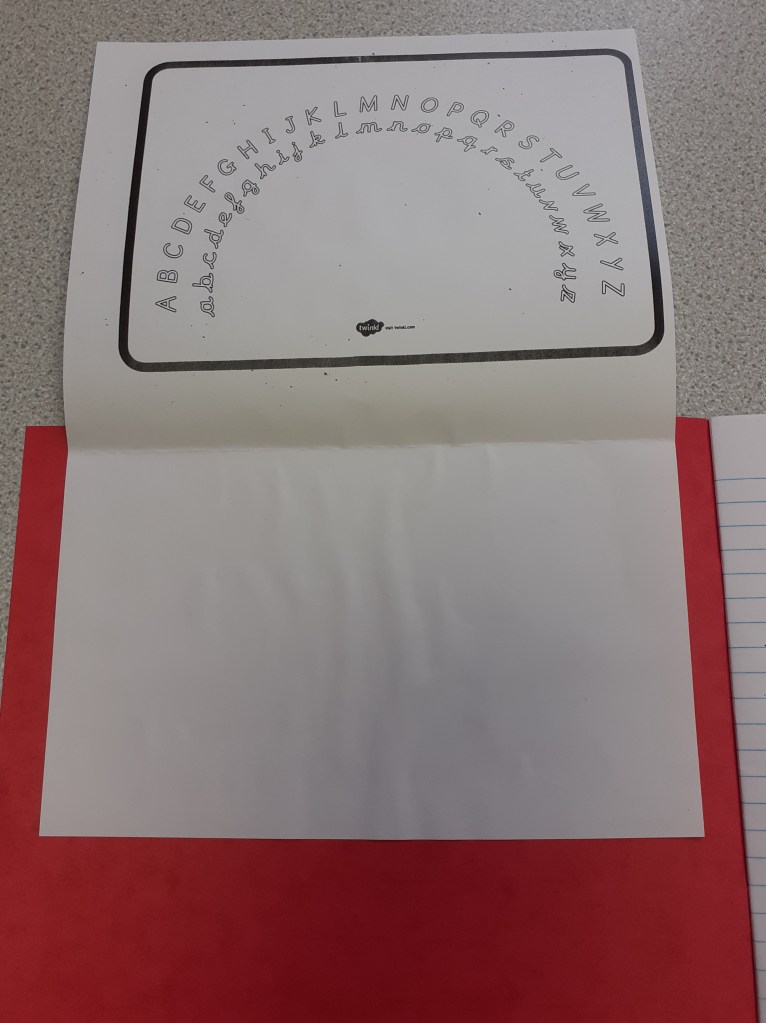
This week I did some online training with Sarah Singleton of SEND Station who can be found on http://www.sendstation.co.uk. She explained everything very clearly and with humour, so made it all really interesting. SEND Station provides various training for SEN suitable for educators and parents. The training I attended was really helpful, giving some great new strategies at minimal cost. This week we discussed how useful the alphabet arc is for helping children not only with alphabetical code and sequence, but also for learning the names of letters, phonemes and digraphs, especially if the alphabet arc is made from materials that you can move around e.g. velcro, wooden or magnetic letters. Another bonus to having the arc to hand is that it will help those who muddle their ‘b’ and ‘d’ as they will soon realise that the letter ‘b’ comes first in the alphabet arc so will start to automatically write the correct letter ‘b’ or ‘d’ after referring to the arc. I already use the alphabet arc in interventions as it is so useful (as explained on the ‘Alphabet’ page on this site). However, I will now be using it for more activities and after discussion with our Literacy Lead in school, it is being introduced into the classroom, starting with the suggestion from SEND Station by sticking the arc into the front of a book, but folding it out of sight. When a learner starts work, they can unfold the arc and it is ready as a useful resource for the child when needed (as shown below) and extra reminders can be written on as required. The children are going to colour the vowels in red so that they stand out and are easily identifiable. The arc in the photograph has been downloaded from Twinkl.co.uk.
Other SEN
Although this site and blog is primarily for support in reading, spelling and dyslexia, many difficulties are often co-occuring in individuals. As I work with all SEN, I have also studied dysgraphia, dyscalculia, dyspraxia and autism as I want to support individuals with these challenges. Therefore, I will also be mentioning items I come across relating to these in future posts.
Finally, some training I have found useful recently at a minimal cost or free has come from the following:
SEND Station (www.sendstation.co.uk) give training for autism related topics as well as dyslexia.
The Skills Network ( https://theskillsnetwork.com/) offer free level 2 courses for adults which include Understanding Autism, Special Needs and Disability and Behaviour that Challenges in Children.
Wow, that week went quickly! Life always seems to rush by, so I really liked this quote I saw earlier this week, which stated ‘You should spend at least 20 minutes a day out in nature………….unless you’re too busy, in which case make it one hour!’ Keep safe and well.
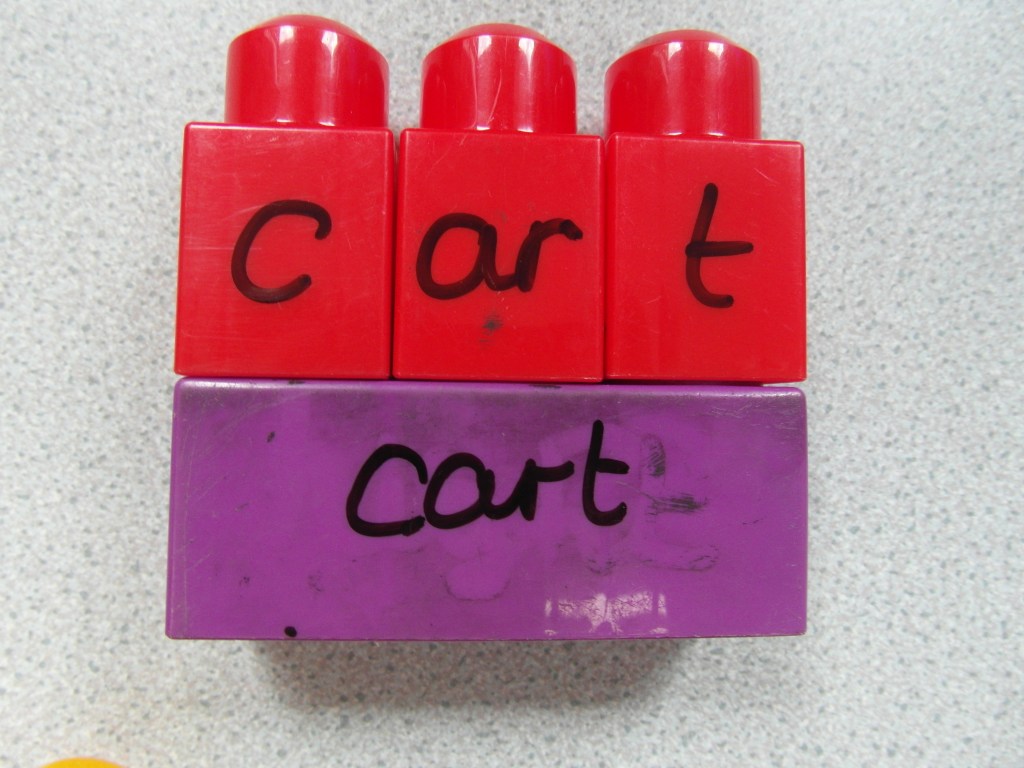
STRATEGIES TO HELP SEGMENT FOR SPELLING
This week I have been using the duplo blocks a lot to help the children with spelling. First the child needs to identify how many phonemes are in the word they want to write (see Phonological awareness section) and choose the large block with the correct number of studs. Then they need to write a grapheme on each single block until the word is completed. Finally, they write the whole word on the bottom large block. All the different ages seem to enjoy completing this activity and it really helps them to distinguish the different phonemes in the word.
Duplo blocks to help spelling
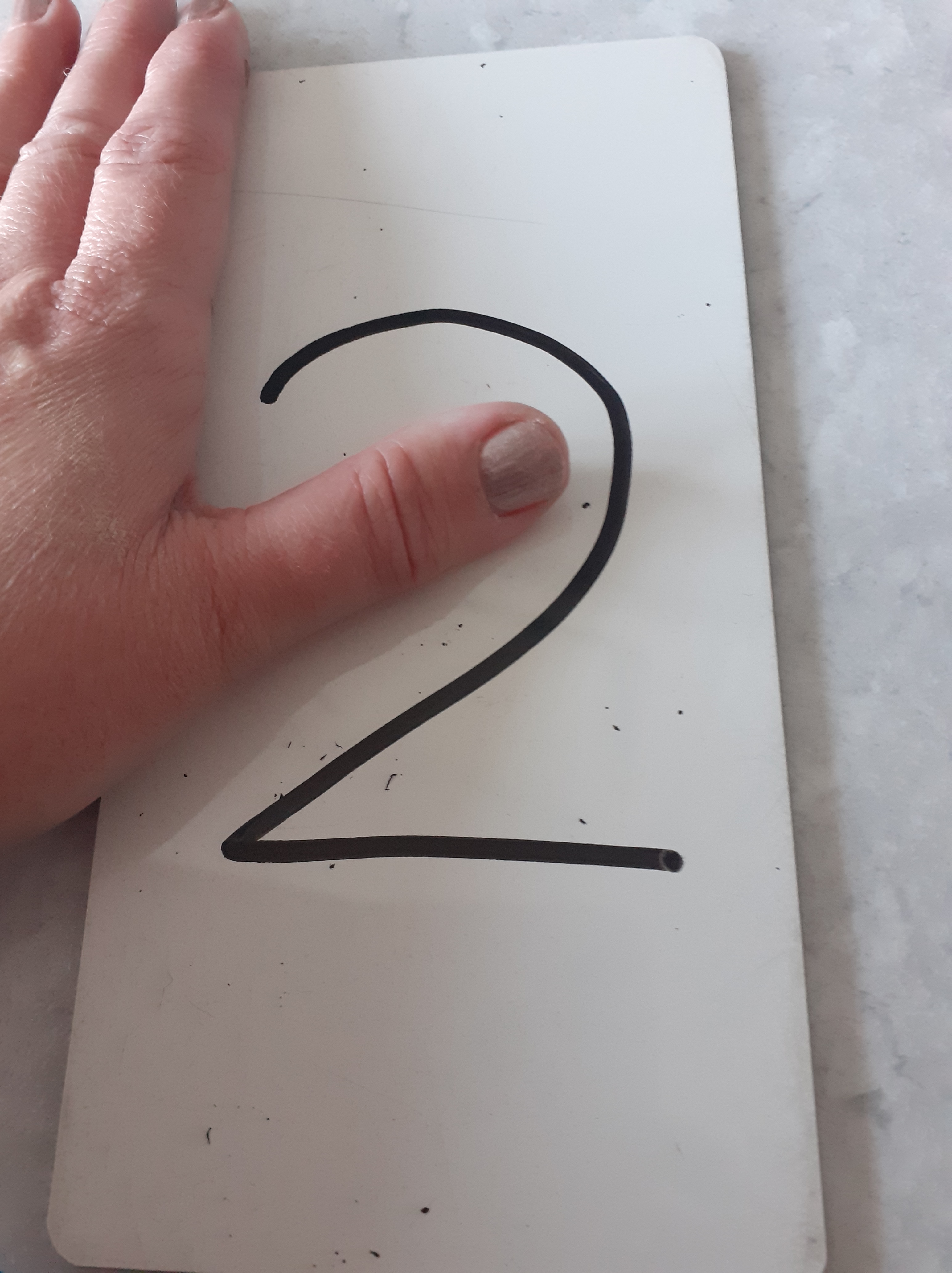
Strategies to help write numbers
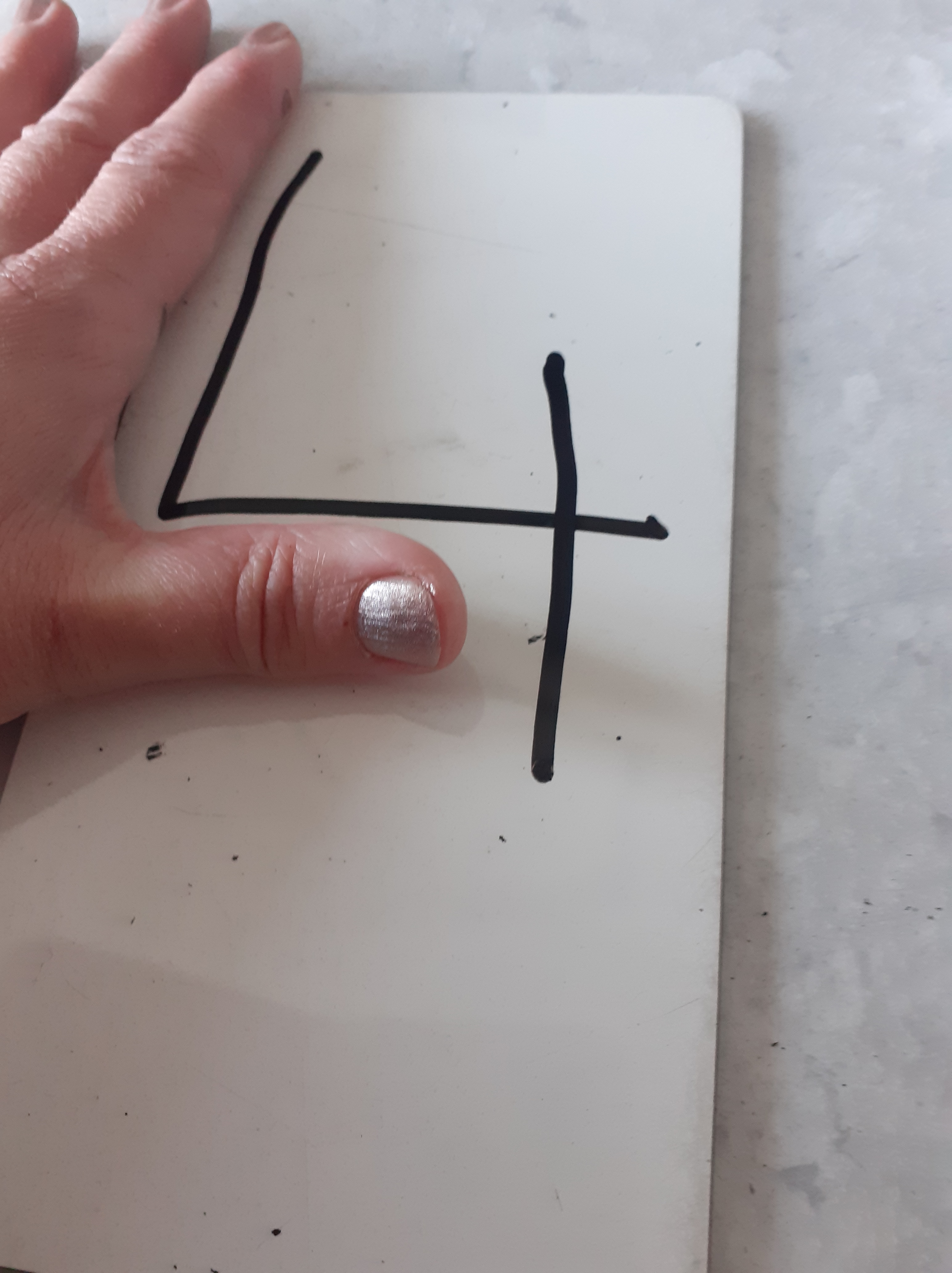
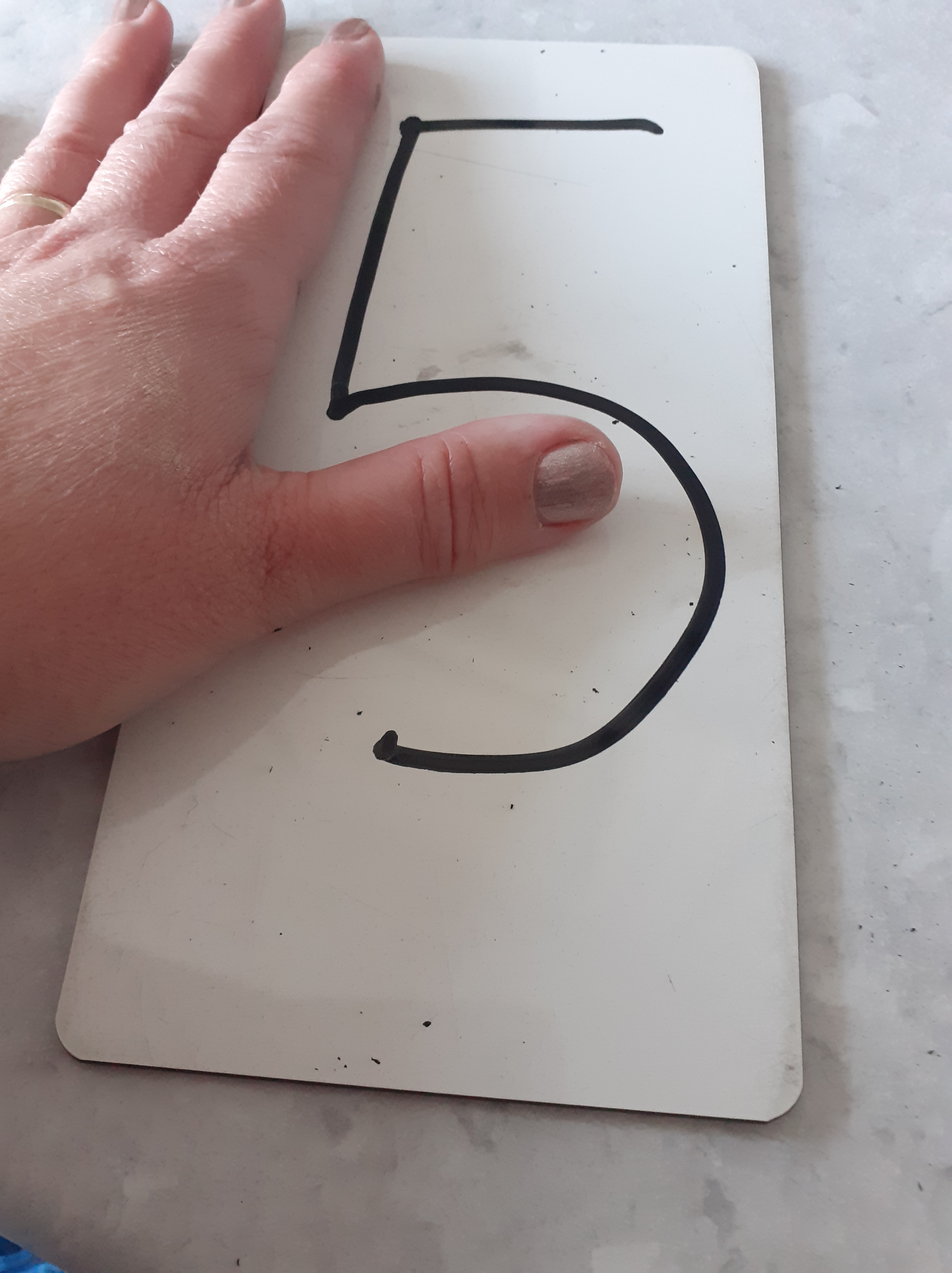
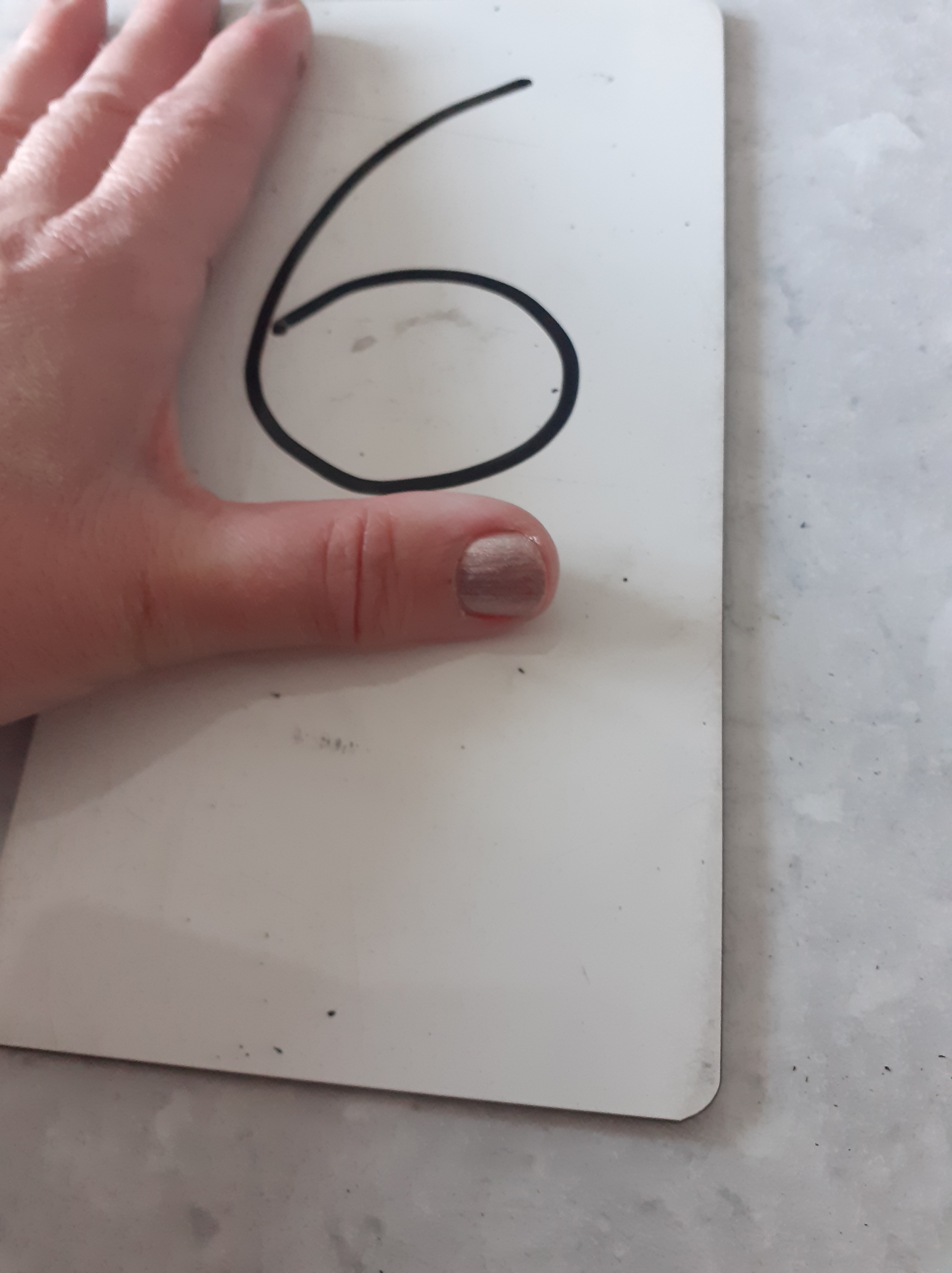
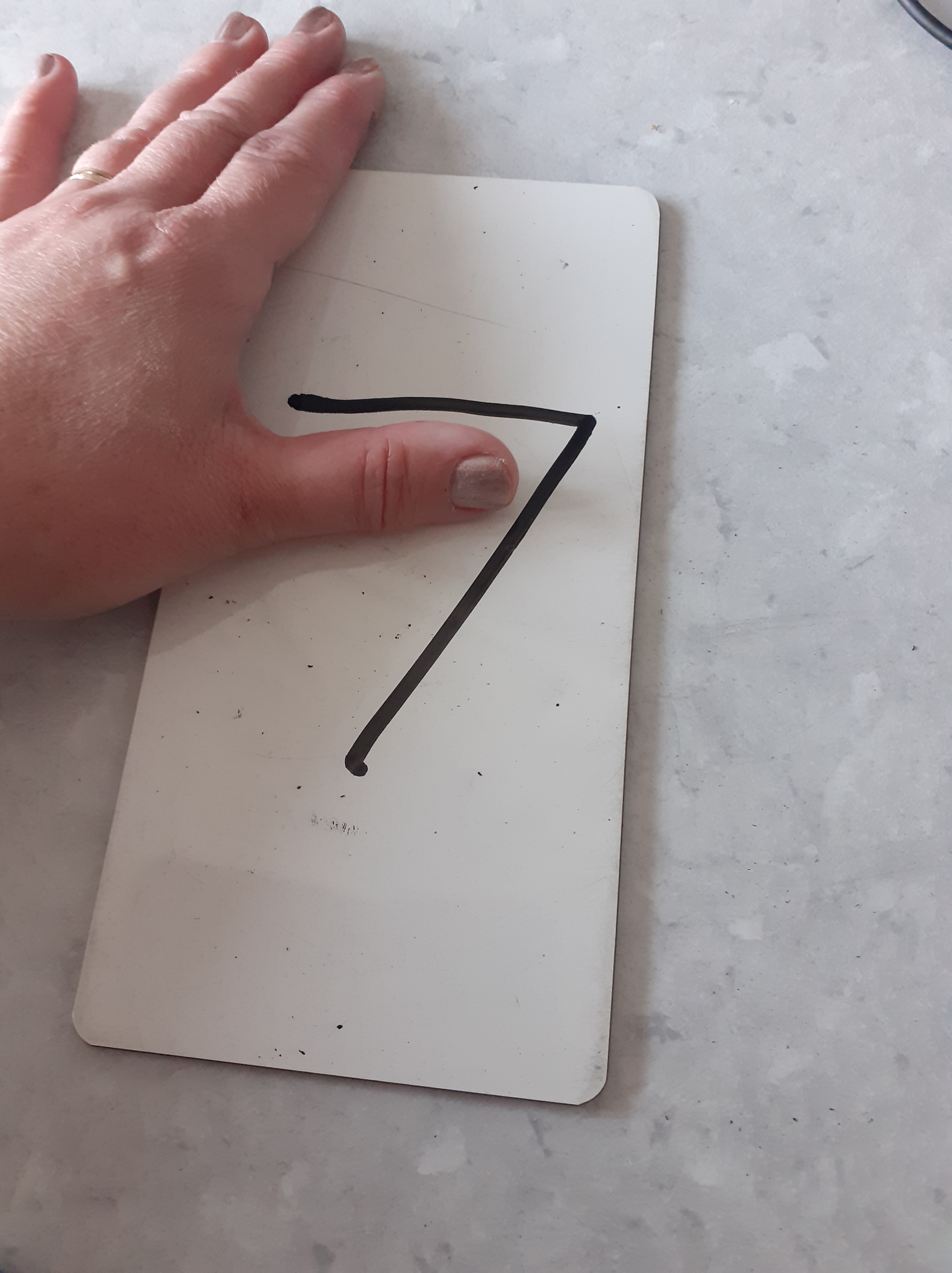
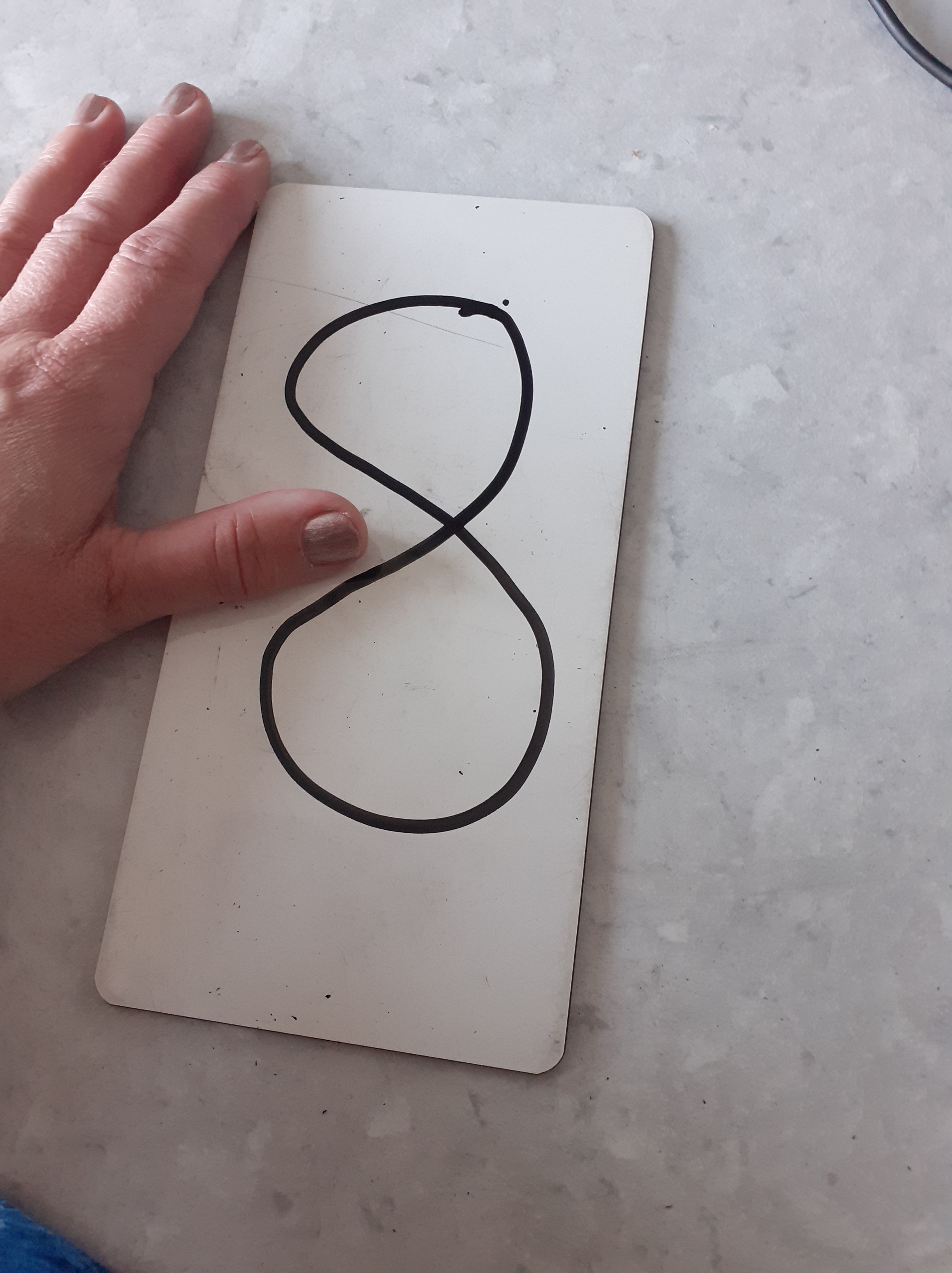
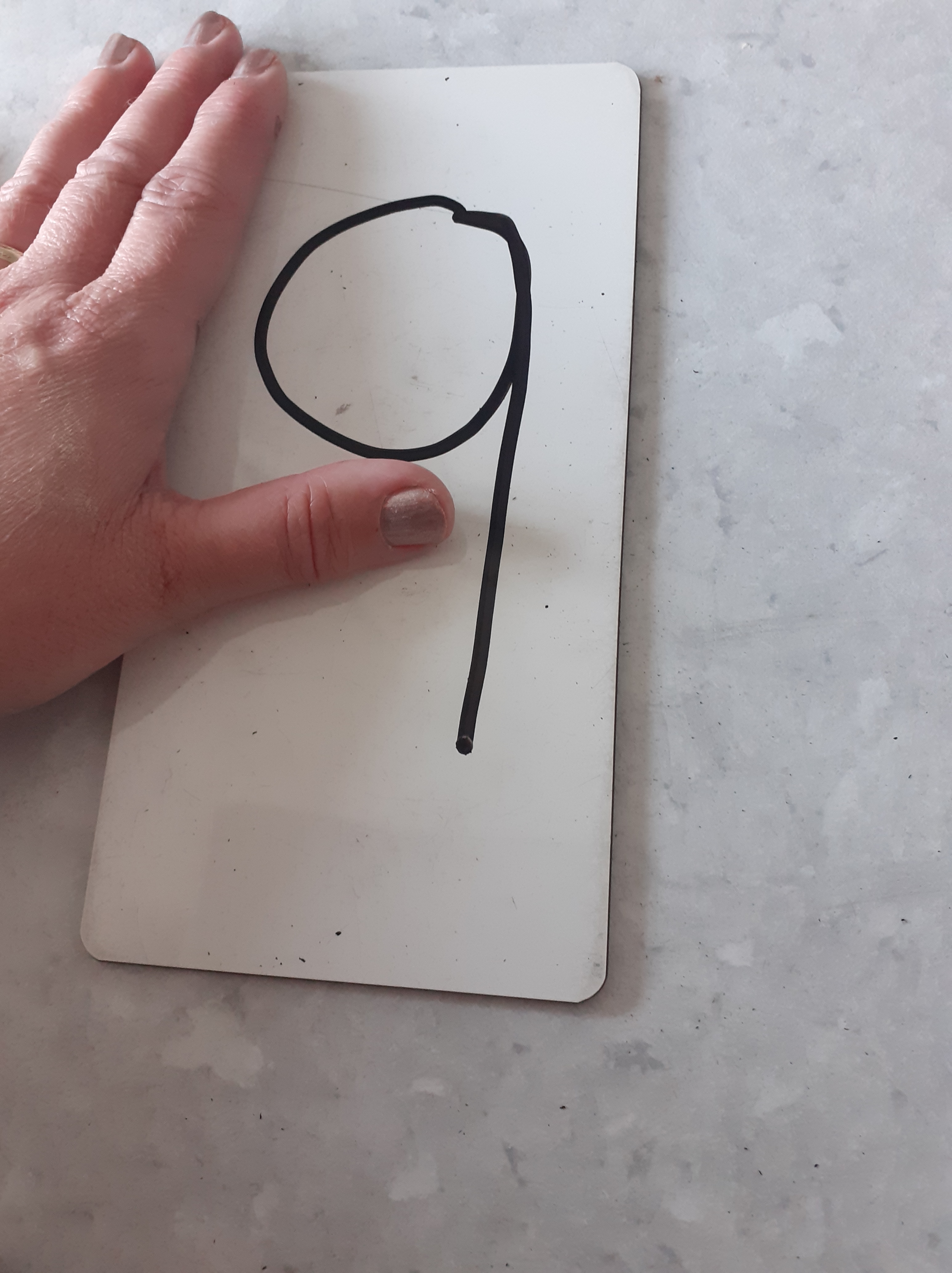
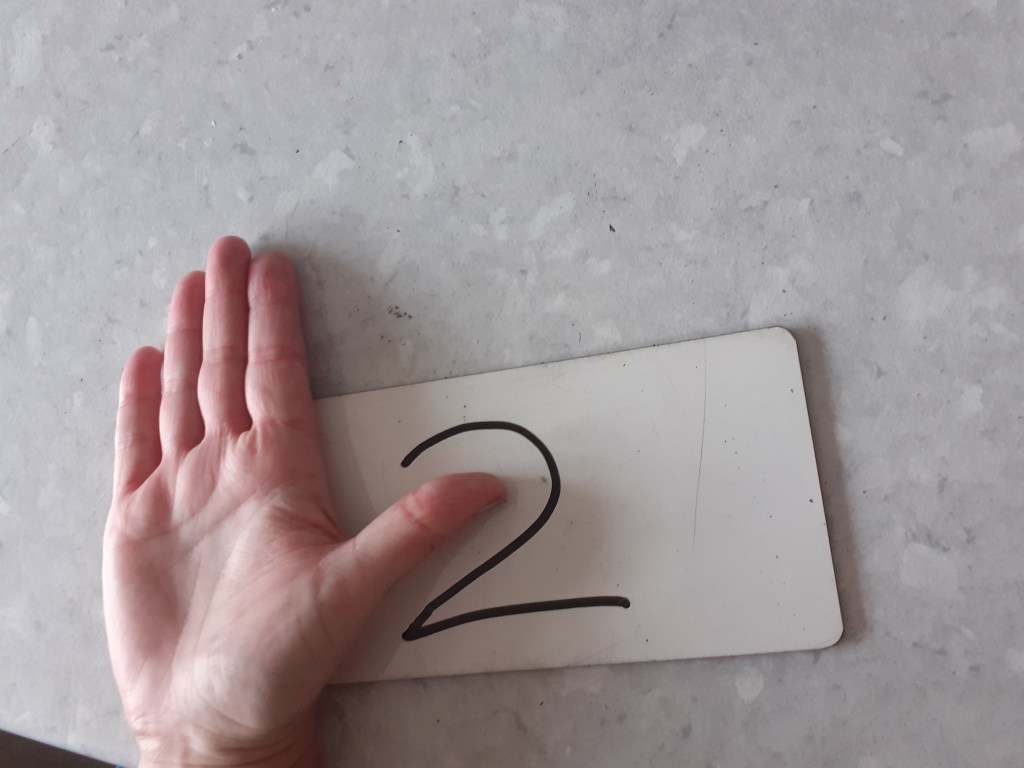
Some children reverse numbers and so I have included some photos to demonstrate how to use a strategy to help learners remember which way the numbers should go. It is a simple, but effective method of drawing around the thumb on the non-dominant hand. The numbers 1 and 6 sit on the thumb, 2 and 3 hang on it, 4, 5, 7 and 9 fit in the gap between the thumb and first finger with 5 then curling around the thumb and finally, the thumb points to where the circles join for the number 8. All numbers are written from the top of the number. This strategy especially helps with the number reversal, because it is impossible to go past the thumb for the incorrect formation on some of the numbers. For the left handed learner, just turn the right hand over i.e. palm up and follow the same format.
For those who are left handed, just turn the non dominant hand over to write around the thumb.
FREE design competition, zoom sessions and touchtyping
This looks interesting………
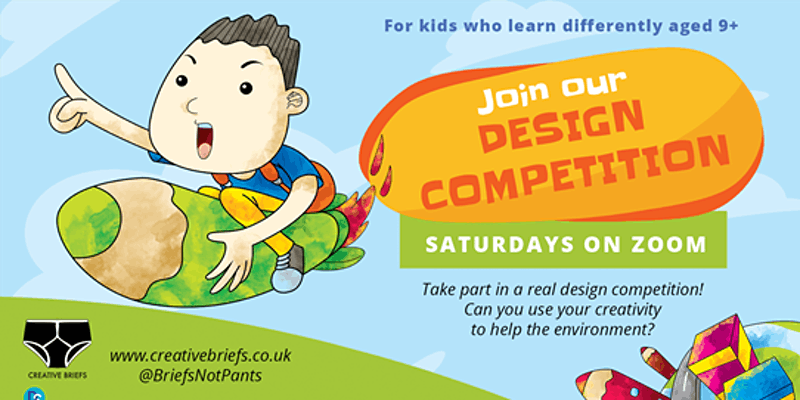
Join Dyslexia Scotland and the team at Creative Briefs and take part in a real design competition! Are you imaginative? Do you think you could design the next best thing to help the environment? Use your creative skills to join us over three weeks (every Saturday) and your design could be chosen to come to life! You will meet our team of tutors and designers and learn the design process real designers use. Show off your creative skills and take part in our competition. To take part you need to join us on Zoom on these 3 days:18 September 10 – 11.45am, 25 September 10 – 11.45am and 2 October 10 – 11.45am.You won’t be put on the spot – it’s not like school! We will have breaks and we promise it will be good fun! This is for young people with dyslexia aged9+. To ask any questions please email lena@dyslexiascotland.org.uk Book your free ticket through Eventbrite, Dyslexia Scotland, the direct link can be found on https://www.eventbrite.co.uk/e/creative-briefs-online-event-for-young-people-tickets-170176108321?aff=ebdsoporgprofile
Don’t forget this next offer from Nessy – free sign up for just a few more days.
Finally, I have added on the new Spelling Rule 8, which is for the spelling ‘dge’ or ‘ge’ at the end of a syllable.
4.9.21 Hello there, I hope you are all having a good weekend and thank you to all the new subscribers. I will probably update this site just once a week, so don’t worry, you won’t be inundated with emails 🙂 . Each week I will let you know what I have been finding out that week and I will add another spelling rule on the relevant page. This week I have added on the ‘es’ rule, to make it 7 spelling rules on here so far, but lots more to follow when I have chance and I have also been watching the Phonics Queen video regarding the Government’s new Reading Framework.
The Phonics Queen YouTube channel discusses lots of phonics topics for educators. Recently, Natasha (The Phonics Queen, who can also be found on facebook) discussed the new Government Reading Framework (which I understand are guidelines rather than statutory) and her take on this was really interesting and informative – I recommend having a look at this one and her other videos if you teach phonics as it is free to subscribe to her Youtube channel and watch all her videos. She also supplies training to teachers and is in great demand at the moment, giving advice to schools at a small cost to help them ensure their own phonics schemes meet the new criteria if they do not wish to change to one of the Government’s validated phonics programmes. One item that was written in the new Framework but I don’t remember being mentioned by The Phonics Queen was the line ‘Teachers should not ask children to read lots of pseudo-words to prepare for the phonics check. ‘ Although I agree that children should not be coached specifically for a test, but to enhance their overall learning, I do feel that there is a time and place for reading pseudo-words. Through my dyslexic teaching courses I have been advised that in a specialised dyslexic programme, each lesson should contain reading real and non-words to build accurate decoding skills. I have found this has been really effective in ensuring that children are decoding words instead of guessing them, as I have experienced some children reading text quickly, but misreading many words by guessing them from the initial letter or substituting a word with a similar meaning. After a few weeks of playing treasure and bin type games, where they have to decode a word to work out if it is a real word (treasure) or non-word (bin) , the learner was automatically decoding all unfamiliar words in a text instead of guessing them and so their accuracy and comprehension of a text improved. Therefore, I am in favour of all children practising reading real and non-words in phonics, not to prepare for a test, but to ensure they are automatically using their decoding skills to read unfamiliar words.
The Reading Framework also mentioned using lots of rhymes and songs, which is already common practice in most primary schools as this is a great way for learners to build on their phonological awareness skills because they are encountering rhyme, syllables, new vocabulary, articulation and more. These phonological awareness skills need to be built on before children try and learn reading and writing skills. The awareness of syllables is often not recognised as being an important phonological awareness skill, but it is really necessary, because if a learner can split up a word into syllables in the correct place, it really helps them to read and spell accurately (especially when they encounter longer words). I mention syllables on the Phonological Awareness page , detailing how each syllable has a vowel sound and you can count the syllables in a word by checking how many times the chin moves on saying the ‘open’ vowel sounds. When we clap the syllables of a word or beat to a rhyme, we are actually clapping on the vowel phoneme (sound) e.g. Hum/pty Dum/pty.
31.8.21 Just a quick blog to tell anybody who is interested (or if you can let anyone know who you think would benefit) that Dyslexia Scotland is providing a Masterclass for Parents to help their children when they go back to school. The event is free on zoom tomorrow (1st September) at 3.30pm and the registration is on Eventbrite on: https://www.eventbrite.co.uk/e/dyslexia-masterclass-for-parents-tickets-168077721991
28.8.21 I like to use the Nessy programme (Nessy.com/uk/) to supplement existing phonics/literacy programmes for individual students to practise their phonics learning on the computer. Nessy provides tuition and games starting with the early skills of identifying individual phonemes and progresses to teaching and giving practise of complicated spelling rules. Nessy is not just for the dyslexic student, it can help strengthen literacy skills for many children aged 6-11 years old who are having reading and spelling difficulties. Learners can practise at home or at school once subscribed and I find that it gives the students a lot more self confidence by practising a spelling rule on Nessy. The Nessy videos, many of which can also be found on Youtube, explain spelling rules in a fun way which is easier to remember.
The story behind the Nessy set up is also very inspiring. …………. Nessy Learning was founded in 1999 by mother and son, Pat and Mike Jones at the Bristol Dyslexia Centre. The Bristol Dyslexia Centre was established in 1989 by Mike’s mother Mrs Pat Jones after she homeschooled him from age 8 when he had difficulties learning to read and write. Mike Jones says “When I was taught in a style which suited the way I learnt, I went from bottom to the top of the class”. During homeschooling, Pat developed a series of learning strategies and a phonics-based learning program based on the Orton-Gillingham method and taking inspiration from other highly recomended programmes such as Hickey and Hornsby (Alpha to Omega). These programmes led to the inspiration and creation of Nessy. Mike adds “I went to Art College, then to take a Law Degree, and then went onto retrain to teach dyslexic students. Now I am passionate about helping other dyslexics succeed, in a way that is fun and innovative”. He developed the Nessy software and won the Educational Resource Award for SEN, 3 years in succession. In January 2015 Pat Jones was awarded the OBE in the Queen’s New Year’s honours for her services to education. Nessy is now run by Mike Jones and his wife Tiffany James, both of whom are dyslexic.
There has been a short film made about Mike Jones’ early life and difficulties entitled ‘Mical’ which can be found on Youtube.
Thinking about inspiring lives and how the barriers to learning can be removed, also this week I watched the film ‘Temple Grandin’. Grandin is on the autism spectrum and didn’t speak at all until she was nearly four years old and the story details her life and how she progressed to overcome difficulties she encountered with the support of her family and those who took the trouble to understand her. She is able to explain how she thinks totally in pictures, with words being like a second language. She overcame many obstacles during her life and has become one of the top scientists in the humane livestock handling industry. Grandin has advocated for autism rights and neurodiversity movements for many years.




 Help your child learn to read, write and spell