World Book Day- March 2022

Photo by Pixabay on Pexels.com

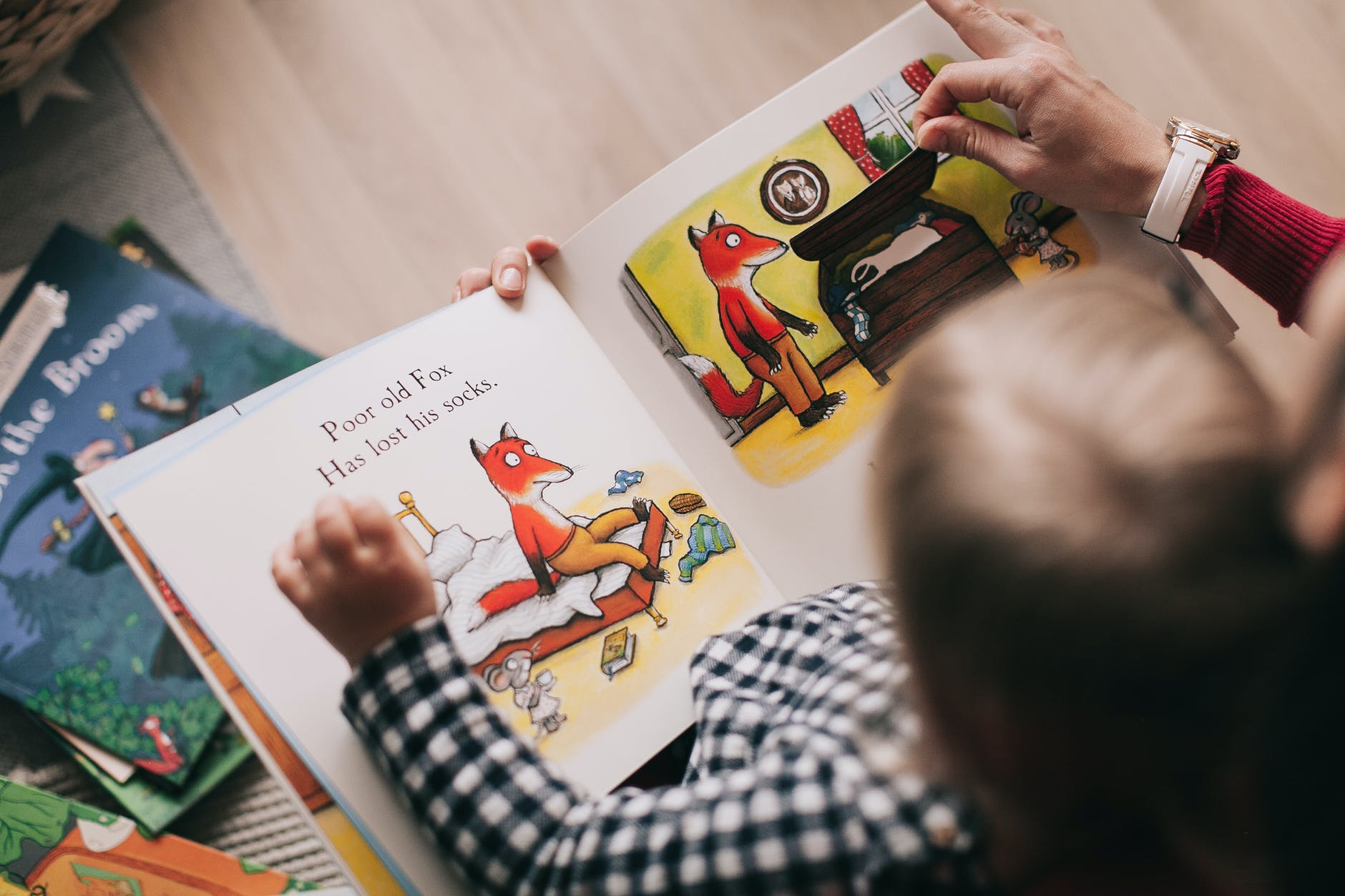
Here we are, ready (or may be not!) for World Book Day this week in the UK. It is often tradition for school children to dress up as their favourite book character and over 100 countries participate in World Book Day, when children of all ages come together to share the joy of reading for pleasure. World Book Day was created by UNESCO on 23rd April 1995 as a worldwide celebration of books and reading, although there had been other book celebration days held over previous years. The UK and Ireland joined World Book Day in 1997, so on 3rd March 2022 they celebrate 25 years of making this a special day.

Most countries participate in World Book Day on 23rd April, however in the UK, that date could clash with the school Easter holidays and the celebrations of St George’s Day. Therefore, it was decided that the event would be held in the UK on the first Thursday in March each year. World Book Day is a charity sponsored by National Book Tokens and children are presented with a £1 book token to offer every child and young person the opportunity to have a book of their own. The token can be used as part payment for a book of their choice or to buy a specially printed £1 book.

The website https://www.worldbookday.com has put together some 10 minute videos of authors, (including children’s favourite Michael Morpurgo) reading excerpts from their books on https://www.worldbookday.com/10-minute-story-shares/ Have a look around the World Book Day website as there are lots of interesting and helpful ideas such as their ‘World of Stories’ where you can enjoy free audio books https://www.worldbookday.com/world-of-stories/. Everybody can enjoy stories and audio books are a really useful resource, especially for the dyslexic learner to access more books for enjoyment and in order for them to expand their vocabulary. Check out the ‘World book day you tube channel’ for more enjoyable videos including ‘Share a Story Corner’.

Free Nessy Programme – Be quick, 1 week only!

Nessy’s programme ‘Hairy Reading’ is FREE to celebrate World Book Day! ­ ­For the 25th anniversary of World Book Day, Nessy is doing something pretty fabulous. For one week only, any child, anywhere in the world, can get Hairy Reading for free. ­ ­ Nessy know that to develop a love of books, children first need to learn to read well. To learn to read well, they need to be explicitly taught. ­ ­Nessy will give any child in the world, a free licence of the early literacy program ‘Hairy Reading’ from March 1st – 7th. ­ ­Based upon the Science of Reading, it begins with PA and phonics, but doesn’t stop there.    Hairy Reading develops readers, by teaching ALL the pillars of literacy – phonological awareness, phonics, fluency, vocabulary, and comprehension.   For ages 4-6. ­ ­ *One week only March 1st – 7th. One free licence per family account available at nessy.com. *Schools can register for classroom access here and will be set up manually by March 15th.

Phonics Training by the Phonics Queen

Don’t forget to join the Facebook group ‘Phonics Queen’ as Natasha is ready to do lots of new training soon, including a free one off live zoom on Wednesday, 30th March explaining why phonics is not just for Early Years or KS1. More details on her facebook page.

Dyslexia Masterclass for parents 16th March 19:00 – 20:30 GMT

by Dyslexia Scotland

About this free event

Join Sharon Hall and Dyslexia Scotland West Lothian Branch on Zoom for a whistle-stop tour of what dyslexia is and how you can support your child.

This free event will cover:

• Dyslexia – what to look for, how it may affect your child

• Homework – practical strategies and resources to use with your child at home

• Building self confidence

• Study skills – tips and tricks

• Understanding the education system

Go to Eventbrite to register https://www.eventbrite.co.uk/e/dyslexia-masterclass-for-parents-tickets-274885047577?aff=ebdsoporgprofile

Have a great week, whatever you are up to. I am off now to get my outfit sorted for World Book Day! PJ 🙂

Photo by Matheus Bertelli on Pexels.com

Follow your dreams,

Believe in yourself and

Don’t give up …

‘Twosday’ 22.02.2022

Photo by Miguel u00c1. Padriu00f1u00e1n on Pexels.com

I can’t let today go past without posting a blog about today’s date written 22.2.22 or 22.02.2022, both of which are palindromes as the numbers read the same forwards and backwards. When the numbers are on a digital clock or screen, the date is also an ambigram as it can be read the same upside down. Just look at a 24 hour clock tonight at 10.22pm as it will register 22.22 on 22.2.22!

Although I have briefly mentioned the origins of the word ‘two’ previously, I feel it is appropriate to mention this again today as it is a tricky word to spell and if learners understand why it is spelt the way it is and its links to the numbers twenty and twelve, then it will be easier for them to remember how to spell it. Etymology and morphology need to be taught alongside systematic, synthetic phonics to enable learners to read and spell words. There appear to be many irregularities of spelling in the English language, but these irregularities can often be explained after investigation of the origin and/or root of a word, because grapheme/phoneme correspondence cannot be used on its own for efficient teaching of reading and spelling. The word ‘two’ comes from the Old English ‘twa’ and twegen (then twain) and also the word ‘dwo. The ‘w’ was originally pronounced, as indeed it still is in words which are connected to the word ‘two’ e.g. twin, twice, twenty, twelve, between, twine. The ‘w’ is now silent in the word ‘two’, but learners need to be aware that it is about the letter pattern and word family not the sound. Other meanings of two in words are displayed by the prefixes ‘bi’, ‘di’ and ‘du’ e.g. biennial, dioxide and duplicate.

And of course it is ‘Twosday’ today! Ok, this is a play on words but it sounds right doesn’t it? Isn’t Tuesday the second day of the working week – is that why it has the sound ‘two’ in it? Maybe not, but where does Tuesday get its name from then? The name Tuesday actually derives from the Old English Tiwesdæg and literally means “Tiw’s Day” or ‘Tyr’s Day’ thought to be from the name of the Norse god ‘Tyr’.

http://www.etymonline.com is a great site to help investigate the origin of words.

Can children recognise palindromes in words and numbers and then have a go at writing words that are palindromes for a bit of fun? Examples are rotor, madam, racecar, radar, level, refer, kayak. Word puzzles are a great way for students to explore letters and the more practise they have manipulating letters, the more confident they can become in their spelling.

Don’t forget, there are many helpful resources and videos regarding dyslexia for parents and educators on http://www.nessy.com and madebydyslexia.com. If you need a short online course to help understand dyslexia more, both these educational sites offer support. Nessy offer a choice of short online courses at a small cost – ‘Understanding Dyslexia for Teachers’ and ‘Understanding Dyslexia for Parents’. They also provide many free resources and advice on their website. Made by Dyslexia have partnered with Microsoft to offer free online training ‘Connect the Spots ‘ and provide many inspiring videos on their website and Youtube channel.

I will leave you with a fun Nessy video and song (from Nessy youtube channel) to help remind younger children when to use a capital letter in their writing! Have a good week. 🙂 PJ

Nessy.com
May be an image of text that says "DO NOT make dyslexic students copy off the board. Good Practice Standard G for Teaching Dyslexic Students Just Teach Me Nessy"
Nessy.com

You can’t help everyone,

But everyone can help someone.

The Dyslexic Brain 16.2.22

Photo by meo on Pexels.com

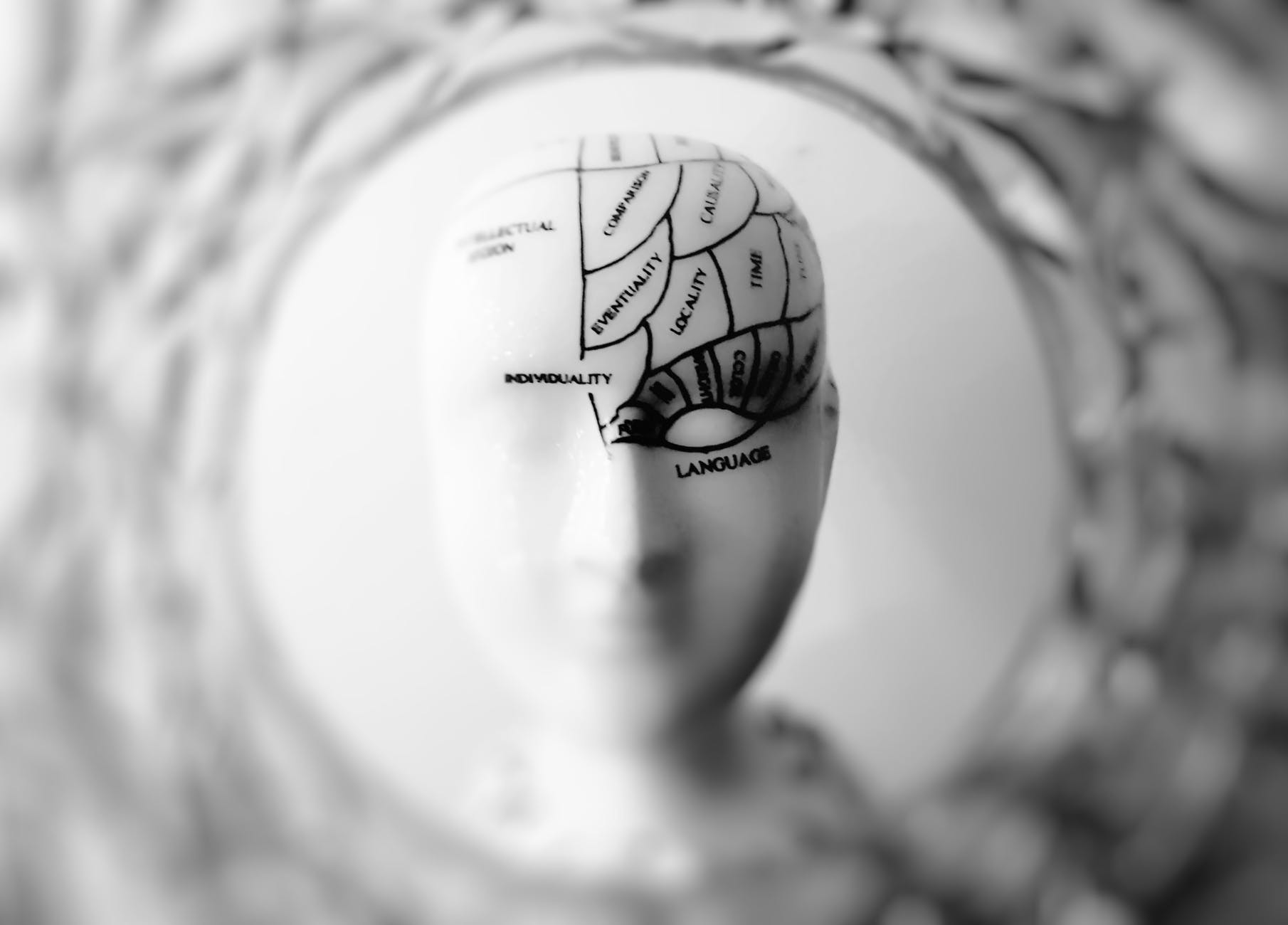
We are all unique and our brains determine some of our strengths and weaknesses. The brain is divided into two hemispheres and each hemisphere is in charge of the opposite side of the body, so the right cerebral hemisphere receives sensory input from and directs movement on the left side of the body, while the left hemisphere governs corresponding functions for the right side. In general, the left side of the brain is responsible for language and speech, whereas the right hemisphere plays a large part in interpreting visual information and spatial processing. In a neurotypical brain, the left side of the brain is usually dominant, however in the dyslexic brain the right side of the brain is stronger. Often left-brained dominant individuals are methodical and analytical in nature, whereas those with right-side dominance are more likely to be creative and artistic. A mixture of strengths is required to make a strong team and each individual should be valued for what they bring to a community. Wouldn’t it be boring if everyone was the same? However, it is important that individuals develop a growth mindset, especially if they have learning difficulties as it is likely they will encounter setbacks during their learning.

Youtube ClickView

By understanding our similarities and differences with others we can discover who we are and where we fit into our social and cultural settings. Those with a learning difference especially need to be aware that all individuals have strengths and weaknesses and everybody makes mistakes. Mistakes only show that we are continuing to learn and it is not the mistakes that matter, but how we come back from those mistakes. Albert Einstein (thought to be dyslexic himself) is quoted as saying ‘ A person who never made a mistake never tried anything new’.

The older dyslexic learner will need to develop strategies to help them become organised and strengthen their study skills. Research has shown strong correlations between dyslexia and deficits in short-term memory and executive functioning.  The central executive deals with filtering, prioritising and categorising the information received from sensory inputs. If information is not stored appropriately in memory stores, it will not readily be able to be retrieved. For example, if information is categorised only by location or image, then an individual would only be able to retrieve the information if it occured again in the same context. Multisensory learning is therefore beneficial to strengthen the neural pathways, so that information is categorised in various ways and stored in the long term memory.

An excellent tool for helping learners with study skills is the mindmap, either drawn by hand or computerised. Mindmaps enable learners to organize ideas and understand concepts better. This speeds up the time it takes individuals to learn new information and also embeds new information into the long-term memory more effectively, especially if colours are added to connect categories.

Susan Gregory Youtube

The dyslexic learner will usually require support in the classroom. The following youtube video is a recording of a webinar ‘Teaching for Neurodiversity Classroom support strategies’ by the Helen Arkell Charity, which gives lots of useful ideas for educators.

Helen Arkell Charity

Remember, what helps the dyslexic individual to learn can help all learners. Happy half term everybody. 🙂 PJ

Life is like a camera Just focus on what’s important, Capture the good times, Develop from the negatives And if things don’t turn out Take another shot!

Photo by Sven Huls on

Pexels.com

PUFFIN AUTHORS ZOOM WEBINARS FEBRUARY 2022

Photo by Pixabay on Pexels.com

Book a FREE Zoom webinar for your class this term, featuring a new and exciting Puffin author each week!

At 10:30am on Friday mornings, Puffin authors will be beaming straight into classrooms across the country via a live Zoom webinar. Each of our 45-minute sessions will include a presentation from the author, giving your pupils a behind-the-scenes look at their books, characters, and creative process, before the author then sets an exciting activity for your class.

At the end of each webinar, there will also be a Q&A session. You can send in your questions for authors ahead of their Visits via our online form on the Puffin Schools website.

Before the event, be sure to download the pre-event pack with everything needed for the Visits, and you can also check out the free chapter samples for each book in the event series.

To find out more and sign up, go to https://www.puffinschools.co.uk/meet-an-author/

Coming up:

Friday 11th February – Adam Hills, author of Rockstar Detectives

Friday, 25th February – Lisette Auton, author of The Secret of Haven Point

Friday 11th March – Lee Newbery, author of The Last Firefox

Friday 18th March – Lucy Brandt, author of Leonara Bolt: Secret Inventor

Friday 25th March – Chris Smith, author of Frankie Best Hates Quests 

Training and Tricky Spellings 6.2.22

Photo by Brett Jordan on Pexels.com

Spelling Tricky Words (common exception words)

Tricky words (common exception words) need to be sounded out as much as possible to read and spell using known grapheme/phoneme correspondence. However, they all have some ‘tricky’, irregular part which needs to be learned off by heart.

The words to, too and two all sound the same and are therefore homophones, but they are spelt differently and have different meanings. How can learners work out the spelling for each word? There are several ways to ensure the correct spelling is used each time. The regular part of each of the words is the letter ‘t’ for the sound /t/. Therefore individuals should not be asking how they spell the whole word, as they will already know the first letter. What they may be asking is how to spell the phoneme /oo/ in each word. Strategies to learn to spell the /oo/ in these words include:

to – This is a short word which only needs two letters, meaning ‘going in the direction of somewhere’. Use sentences and actions to explain the meaning ‘Go to the shops’, ‘Go to the door’ etc. This word can be learned together with the word ‘do’ as the letter ‘o’ is making the same sound in each of these two letter words. Learners could remember a sentence ‘Do go to the ……’ and let them finish the sentence how they will remember best. They will soon realise that the words ‘do’ and ‘to’ end with the single letter ‘o’ when writing this sentence and can compare it to the different sound the ‘o’ makes in the word ‘go’.

too – This means excessively or also. A strategy can be used such as in the Nessy video below, when the monster eats too many cookies and each cookie represents the letter ‘o’ to help the learner remember the spelling and meaning of this word. For the meaning of also, a learner can remember that as it means ‘also’ so it ‘also needs another letter o’. Remind the learner that they can sound out all of this word phonetically /t/ /oo/.

two – meaning the number 2. The letter ‘w’ is included in this word, but cannot be heard. Children may like to make a picture or collage of ‘two wobbly oranges’ and write the initial letters of the words to write the word ‘two’ or they can make up their own mnemonic. Multisensory learning helps stengthen the neural pathways so the student can memorise these irregular spellings easier. However, if the child also learns the connection with the words twice, twins, twelve, twenty which are all to do with the number 2 (but unlike these words, the ‘w’ in the word two is no longer heard,) then this will add to the strategies used to remember the spelling for the word two. This is explained more in the second video below.

http://www.nessy.com
linguist learning

I find the origin of words is really interesting and this knowledge can help individuals make connections in order to spell trickier words. Older learners may also enjoy investigating words using http://www.etymonline.com.

SEND STATION COURSE

SEND STATION http://www.sendstation.co.uk NEW!
Speech and Language Difficulties – An Introduction
 
Monday, 7th February, 7:00pm   This session provides delegates with the basics to understand the category of need: Speech, Language and Communication Needs.
It is designed as an introduction to describe how speech, language and communication develops and shares the differences between terminology such as delay and disorder. This session is packed with top tips and strategies to support a child with both. Tickets £9.50 book on : https://www.eventbrite.co.uk/e/slcn-the-basics-tickets-234878617267
http://www.sendstation.co.uk

Other courses from SEND Station

  Monday 7th February
NEW! Speech and Language Difficulties – An Introduction 07:00pm
NEW! Autism and Play 07:00pm

Tuesday 8th February
Reciprocal Reading – Developing comprehension 09:30am
ADHD – A Practical Introduction 01.30pm


Wednesday 9th February
Memory Matters 09:30am
The Engagement Curriculum – Personalised planning 07:00pm

Thursday 10th February
Alphabet Arc – Supporting phonics 09:30am
NEW! Autism and Visuals 09:30am
Autism and Girls 2 07:00pm

Tuesday 15th February
Autism and PDA 09:30am
NEW! Dyslexia Awareness 07:00pm

Wednesday 16th February
Global Developmental Delay – An introduction 09:30am
Graphic Facilitation – Using dual coding 07:00pm

Thursday 17th February
Supporting Literacy – Practical strategies for the classroom 09:30am
NEW! Auditory Processing Disorder 09.30am

Monday 21st February
Speech Sounds 09:30am
Global Developmental Delay – An introduction 01:30pm

Tuesday 22nd February
Autism and Emotional Regulation 09:30am
Autism and Musical Communication 07:00pm

Wednesday 23rd February
Autism and Anxiety 09:30am
Autism and Girls 07:00pm
Thursday 24th February
NEW! Autism and Play 09:30am
Precision Teaching- Sight Words to Fluency 07:00pm

Monday 28th February
ADHD – A Practical Introduction 07:00pm


MARCH

Tuesday 1st March
Autism and Girls 09:30am
The Engagement Curriculum – Personalised planning 03:30pm
Autism and PDA 07:00pm

Wednesday 2nd March
Autism and Girls 2 09:30am
Alphabet Arc – Supporting phonics 07:00pm
NEW! Autism and Visuals 07:00pm

Thursday 3rd March
SENDStational Spelling™ – including cued spelling – 07:00pm   Friday 4th March NEW! Speech and Language Difficulties – An Introduction – 07:00pm

Monday 7th March
Speech Sounds 01:30pm
Precision Teaching – Sight Words to Fluency 07:00pm

Tuesday 8th March
Autism and Emotional Regulation 09:30am NEW! Developmental Language Delay – 07:00pm
Wednesday 9th March
Autism for Beginners 09:30am
Memory Matters 07:00pm

Thursday 10th March
ADHD – A Practical Introduction 07:00pm   Monday 14th March NEW! Developmental Language Delay – 1:30pm
Tuesday 15th March
Precision Teaching (LSAs) 09:30am
Precision Teaching (LSAs) 01:30pm
Speech Sounds 07:00pm

Wednesday 16th March
SENDStational Spelling™ – including cued spelling 09:30am
Autism and Anxiety 07:00pm

Thursday 17th March
Graphic Facilitation – Using dual coding 09:30am
Autism and Emotional Regulation 07:00pm

Monday 21st March
NEW! Auditory Processing Disorder 07:00pm

Tuesday 22nd March
Independent Learning 07:00pm

Wednesday 23rd March
Global Developmental Delay – An introduction 09:30am
Autism and PDA 07:00pm

Thursday 24th March
Reciprocal Reading – Developing comprehension 07:00pm

Tuesday 29th March
NEW! Autism and Play 07:00pm
Supporting Literacy – Practical strategies for the classroom 07:00pm

Wednesday 30th March
Autism and PDA 09:30am
Autism and Girls 2 07:00pm

Thursday 31st March
NEW! Autism – Using Visuals 07:00pm
The Engagement Curriculum – Personalised planning 07:00pm


APRIL
Monday 4th April
NEW! Developmental Language Disorder 7:00pm

Tuesday 5th April
Autism and Anxiety 07:00pm

Wednesday 6th April
Autism and Emotional Regulation 09:30am
Autism and Girls 07:00pm

Friday 8th April
Speech Sounds 09.30am NEW! Developmental Language Delay – 1:30pm

Tuesday 12th April
Precision Teaching – Sight Words to fluency 07:00pm

Wednesday 13th April
Alphabet Arc – Supporting phonics 07:00pm
Thursday 14th April
Supporting Literacy – Practical strategies for the classroom 09:30am  

GO TO SENDSTATION.CO.UK FOR MORE DETAILS
http://www.sendstation.co.uk

PHONICS QUEEN TRAINING

Regular, quality phonics training is offered by experienced teacher Natasha Tuite aka ‘The Phonics Queen’. Keep informed of new training dates by joining the Phonics Queen facebook group and check out previous CPD by going to her youtube channel, where it is free to subscribe: https://www.youtube.com/c/PhonicsQueen.

February will be racing through to March before we know it and I am trying to keep on top of everything this month! You have an early edition of my blog this week as there is some useful training on speech and language on Monday I thought you may be interested in! Hopefully you will find some useful information here to help children you support. Have a great week everyone! PJ 🙂

Believe you can and you’re halfway there!

Theodore Roosevelt

2.2.22 RNIB Bookshare

Photo by Ivan Bertolazzi on Pexels.com

An early blog post to make up for the late one last week! Here are details of a really useful webinar this week on Wednesday , 3rd February from RNIB Bookshare and Dolphin. RNIB Bookshare ensure that more people can read books in accessible formats. This includes helping dyslexic individuals who find it difficult accessing learning material. Read on to find out more ….

Textbooks that talk! Free app & online library for SEND students of ALL ages (03/02/22) 3.00 – 3.30pm


If you work in a UK school, college or university and support students with visual impairments or neurodiverse conditions, Dolphin and the RNIB invite you to join this free webinar.
We’ll demonstrate how the EasyReader App and RNIB Bookshare Education Collection can help your students read textbooks in accessible formats. Join Rochelle Davis-Pretsell from RNIB Bookshare and Steve Bennett from Dolphin Computer Access for an introduction to accessible versions of learning material, and a demonstration of the Dolphin EasyReader app. Accessible versions of UK school, college and university textbooks – along with other learning materials – are available free in the RNIB Bookshare Education Collection. EasyReader is a free app that makes it easy for students to find, download and read accessible books on any device, then customise the reading experience to suit their own vision and learning style. This webinar helps you support learners of all ages, to make reading accessible for students with visual impairments and neurodiverse conditions including dyslexia. In this short webinar, you’ll learn
– Which students can use RNIB Bookshare
– The range of accessible textbooks available
– Where and how to get the free EasyReader App
– How EasyReader supports students with dyslexia
– How EasyReader supports learners with visual impairmentsThis webinar is recommended for all teaching staff in UK primary, secondary and higher education, including:
– Teachers
– QTVIs
– Lecturers
– Teaching Assistantsand for support teams including:
– SENCo’s
– Disability Support
– Dyslexia Support
– Disability Advisory Service teams

Go to: https://yourdolphin.com/en-gb/webinars/82349266873 to register.

Spelling hints

Several words end with the letters ‘-se’ with the ‘e’ not seeming to have a purpose in the word. Words with single ‘s’ at the end are usually plurals with the ‘s’ being the suffix to make it plural. Therefore, if the word ‘mouse’ was spelt as mous, then it might be assumed that we were talking about the plural of a word ‘mou’. To avoid this confusion and to spell the word correctly, learners need to remember to place the ‘e’ on the end of words such as house, mouse, horse, course, verse, else etc.

The ‘e’ is also added onto words so they don’t end with a ‘v’ e.g. have, shelve, carve etc. I like the Nessy video which gives a humorous explanation why the ‘v’ cannot end the word.

Speak to you next week… PJ 🙂

Don’t let yesterday take up too much of today

30.1.22 Reading

Photo by Lina Kivaka on Pexels.com

I am a little later than usual publishing this week’s blog. I have had a busy couple of weeks trying to sort out a rather large (and it was getting larger) ‘to do’ tray! I don’t know about you, but when I have things starting to pile up all disorganised, my brain also goes into a muddled state until I get it all sorted in order (although, not necessarily completed!) Now I have got myself organised again, I am able to get everything done so much easier. It is sometimes a case of one step back before starting up again!

This week I saw a quote that said ‘Bad spelling does not mean you are stupid and good spelling does not mean you are a genius’. So true! Unfortunately, many learners have low self esteem if they are not able to do things as quickly or easily as their peers. This video from the Nessy You tube channel explains dyslexia and how anyone can be successful in whatever they decide to do by building on their strengths. I use many Nessy videos and the Nessy programme within my teaching to help children learn spelling rules and practise their reading and spelling.

Nessy You Tube channel

There are various stages that a child has to go through in order to learn to read. Once they have learned the skills to decode, then they need to improve their prosody and fluency skills, which means that they still need to regulary read aloud to someone. Mark Seidenburg, a scientist who has studied reading, mentions “For those pupils who lack reading fluency, silent reading is less likely to be profitable”. He adds, “Children who struggle when reading texts aloud do not become good readers if left to read silently; their dysfluency merely becomes inaudible.”

Some children have difficulty blending sounds together to say a word when they start learning to read or orally blend. One of the difficulties they may encounter is remembering to use all the sounds when they try to blend them together. It is therefore useful to use the strategies on the ‘First Stages of Reading’ page on this site, especially using the arm method for blending. If learners miss out the last sound, then it is also useful to have a list of words that only change the final sound each time to work on, so they are especially listening out for the last phoneme. I have made a list of words that just have a different final sound, which is useful to use to help a learner strengthen their blending skills and remember to add the last phoneme. This sheet can also be used for early encoding skills, by having the learner use magnetic letters in an alphabet arc to spell the given word (see ‘Alphabet’ page for more details of using the alphabet arc). The individual can take the letters from the arc, changing one letter each time they hear a new word by being aware of the phonemes. On the sheets I have also used words containing the first digraphs the learner will encounter i.e. ss, ll, ff, zz, th, ck, sh and ch. Therefore, if using magnetic letters, these digraphs will also need to be available if you want to use those words. The sheet is below, available to download free.

Another good exercise to strengthen phonemic awareness skills is changing the first grapheme/phoneme in words. A sheet with an example of these words is available to download below.

Manipulating letters and sounds in words is really beneficial to help strengthen spelling skills and increase phonemic awareness. For older learners, word games such as the online game ‘Wordle’ is great for this. It is a fun, free game to work out the word of the day (and as they only produce one word a day, so it shouldn’t become addictive). You have to guess the 5 letter word in the 6 tries. After each guess, the colour of the tiles will change to show how close your guess was to the word. https://www.powerlanguage.co.uk/wordle/

Free Training

The University of Cambridge Primary School offer various, free online training courses for teaching assistants. Although I haven’t yet joined one of their training sessions, they look really interesting. Below are a couple of sessions that are coming up over the next couple of months. Go to Eventbrite to find more on http://www.eventbrite.co.uk.

Abigail Gray, author of The Effective Teaching Assistant: A Practical Guide to Supporting Achievement will be sharing her knowledge and classroom strategies with members of the UK TA Hub on Thursday 3rd February, 4:30pm-5:20pm Book via Eventbrite https://eventbrite.co.uk/e/discussion-with-abigail-gray-tickets-255991787327

Tips and Strategies to Support Learning Differences: This training from the University of Cambridge Primary School provides a tool kit of ideas that may benefit pupils who have additional needs. It will include a variety of communication strategies and techniques and videos will be used to illustrate how to use them within your setting. Sign up for the SEN Toolkit session will be via Eventbrite only https://www.eventbrite.co.uk/e/sen-toolkit-tickets-249120414867?aff=erelpanelorgon This Toolkit session consists of two parts taking place on: 17th & 31st March 2022 4.30pm to 5.30pm and signing up will gain you access to both parts of this online event. You can access the Microsoft Teams link through your ticket once you have signed up and the same Teams link will be used for both sessions.

Finally, Barrington Stoke Young Editors (which I have mentioned previously) have released some new manuscripts for potential young editors to read and submit their reviews to receive a certificate. This is a really interesting task for youngsters and can encourage some reluctant readers. Go to www. youngeditors.barringtonstoke.co.uk for more details.

Have a good week everyone. 🙂

‘Mistakes are proof that you are trying’

21.1.22 Helpful websites

Photo by Digital Buggu on Pexels.com

Printed Resources

Free Maths Resources and App

Made by Dyslexia

Nessy

Nessy have a new look website on www. nessy.com where you will find a wealth of information regarding dyslexia, how to support the dyslexic learner, details of related difficulties and some free resources. The award winning Nessy Reading and Spelling programme really helps children to enjoy learning reading and spelling through the various games and activities. Nessy offer a free trial to see if it their programme is suitable for your needs before subscribing.

SEND STATION TRAINING

Thank you

Finally, it was lovely to see so many new subscribers to my blog this past couple of weeks. Thank you and welcome! I hope you will find this blog and site useful. It is all still very much a work in progress, so if you find there are specific spelling rules you want me to put on next or anything else that you think would be helpful for me to write on here, then please send me a message on the contacts page and I will try and get some more information on the pages. Constructive feedback would be very much appreciated, as this is a new project for me but I hope it will make life easier for us all by putting all the spelling rules and phonics information in one place to refer to when required.

Is it me, or is January already seeming like the longest month ever? I am longing for the spring, the lighter mornings and evenings plus the sight of the colourful flowers emerging. Not too long to wait now though – I have seen the first snowdrops of the year appearing and the evenings do seem to be starting to draw out a little. Have a lovely week everybody. PJ 🙂

At the end of the day,

remind yourself that you did the best you could today

and that is good enough.

Photo by Pixabay on Pexels.com

Details of training course

THURSDAY, 20 JANUARY 2022 FROM 19:00-20:30

Supporting Dyslexic Students with Maths-with Judy Hornigold

From £3  · Online event

I have just come across details of an online training course ‘Supporting Dyslexic Students with Maths’ , which has been organised by West Yorkshire PATOSS. I thought it was too good to miss out on and wanted to let other educators know in case they also wanted to attend. Judy Hornigold is an independent education consultant specialising in dyslexia and dyscalculia, an Associate Tutor for the BDA and Edge Hill University  and she wrote the British Dyslexia Association’s courses on Dyscalculia so her name is very familiar to me. She has written a guide book for parents of children with dyslexia, two books of ready-made lessons for learners with dyscalculia, the dyscalculia pocketbook and Making Maths Visual and Tactile.

15.1.22 Dyslexia Awareness

Photo by Pixabay on Pexels.com

Dyslexia in the Classroom leaflet

Hello, I hope you all had a good week. This week, some educators were asking about leaflets with details regarding general support in the classroom for their dyslexic students. As part of an assignment for my dyslexia course, I had to design a leaflet for teachers to help them to support the dyslexic student in the classroom. This leaflet contains information for general support, but each student will have different strengths and weaknesses which should be accounted for. A copy of the leaflet is here to download.

Helen Arkell Courses

The Helen Arkell charity (www.arkellcentre.org.uk) offers dyslexia support and advice to anyone who may need it. They provide various courses throughout the year, some of which are detailed below.

Study Skills

The Helen Arkell Dyslexia Charity are holding an online course for dyslexic learners to help improve their study skills for GCSE and A levels. The course is for two hours and covers: – How you learn best – Learning & revision strategies that work for you – Organisational skills – Effective exam techniques. It is held in half term on Wednesday, 16 February at a cost of £50. For more details and booking, go to:

Parents Help Courses

Other Helen Arkell Courses

Thank you

Finally, thank you for all the kind words this week about my blog and site, it has made my week and gives me great encouragement to continue. It is exciting to see this site is getting more views each week. People reading this blog are not just from the UK, but a lot are from the USA as many educators in America are starting to understand the Science of Reading and wanting to convert to this approach of teaching and Nessy recommended my site on their facebook page. My site is still very much a work in progress and I am learning all the time how to make this site and blog better, as I am definitely not a computer expert. However, by learning how to set all this up proves the saying ‘you are never too old to learn something new’! As well as regularly updating my training, I am a member of various educator groups and it is great how everyone supports each other and shares strategies to help teach learners who are having difficulties. There are some amazing experts in the field of education and I love to listen to them through webinars, podcasts etc. I am pleased to be able to share this information rather than just keep it to myself, as it means we can help support more individuals in the way they learn best. If the information on this blog/site has helped just one person, it has been worth it.

Thank you for reading my weekly blog and looking at this site. I hope you have a lovely week. PJ 🙂

2022 is like a blank book.

It has 12 chapters and 365 pages and you are the author.

Write the most beautiful story possible for yourself.