The charity World Book Day® is holding its annual celebration today i.e. Thursday, 7th March right across the UK and Ireland.
World Book Day is very happy to announce that this year’s £1 books are available in braille, audio from RNIB and large print from CustomEyes at Guide Dogs.
World Book Day 2024 will celebrate that children are more likely to enjoy reading when their choices are championed and we make reading fun. Read Your Way calls on everyone to let go of pressure and expectations, giving children a choice – and a chance – to enjoy reading. Find out more: https://bit.ly/3s4lDln
Exciting events, activities and partnerships will encourage more children to enjoy reading, however they choose to.
To celebrate World Book Day 2024, Nessy is giving away 3 months of Hairy Reading for FREE! Offer ends 10th March 2024.
Finding interesting books for the struggling reader can sometimes be a challenge. I particularly love the books from Phonic Books at http://www.phonicbooks.co.uk as they provide interesting decodable books with workbooks to accompany the text. In the Catch up series each book introduces alternative graphemes for a target phoneme, has a page to explain new vocabulary and demonstrates how to chunk some of the trickier words into syllables. They seem to be a hit with the children too!
For those children who have strayed into the habit of guessing words, then reading pseudo words can help them to remember to use their decoding skills. A great game to help practise this skill is the Treasure or Trash/Real or Fake activity. These can be made so that the learner actually pops the word card or ping pong ball with the word written on into a basket labelled ‘Real’ or ‘Fake’/ ‘Treasure’ or ‘Trash’. Alternatively they can play the activity online if they go to the Phonics Play website at https://www.phonicsplay.co.uk/
An event SENDSTOCK 2024 from the popular and informative SEND Station looks interesting for tomorrow – it is SENDSTOCK – Assistive Technology Festival. There is so much supportive technology these days, but it is often difficult to know how to implement it. This event is going to draw on advice and guidance from professionals in the field and showcase how to implement Assistive Technology to achieve the most impact. This 3 hour online event would be useful to all those working with/or caring for learners in any educational or home setting i.e. parents, SENCos, teachers and Learning Support Assistants.
I hope everyone has had a great day if they have been celebrating World Book Day. I have certainly seen some great dressing up of children going past my house and pictures on facebook today.
We are nearly officially into spring, with the spring equinox looming, after what has seemed a long, wet winter in the UK. Hoping your weeks start to brighten up more and more. PJ
Welcome back to my ‘Help Your child to Read, Write and Spell’ blog and site. The site is mostly about reading and spelling strategies and so do make sure you have a look through all the different pages as I try to keep adding different items.
This month I was thinking about the great resource of audio books, which are not utilized as much as they could be in education. The learner who is not yet a skilled reader could be listening to audio books when other pupils are having silent reading time. If a student is not yet fluent in their reading, then silent reading may not have the benefit of encouraging reading, but could actually have the opposite effect. Your dyslexic student may well be unable to read some of their book without support, so will not understand what they have read or might have the embarrassment of displaying a much lower level book in front of their peers. For these children, they may dread this reading time. Audio books can ensure that everyone is being exposed to a range of vocabulary at silent reading times, not just the capable readers.
For the older learners, books should always be available in audio form so the dyslexic learner can listen to texts before they are asked to study them. Ensure your school is enrolled in RNIB Bookshare, as many books can then be set to be read aloud. RNIB Bookshare opens up the world of reading in education for learners with a print-disability, including those with dyslexia or who are blind or partially sighted.
Thank you very much for the lovely emails I have received over the past few months. I am so pleased that the site has proven helpful to so many of you. I hope 2024 is your best year yet! PJ 🙂
All teachers and parents should be able to understand dyslexia. This short course, Understanding Dyslexia from Nessy teaches the basics of dyslexia, including how to identify it, and how to help.
Bursaries available for a limited time From time to time, and subject to available funding, the British Dyslexia Association is able to offer bursaries to individuals to support with the cost of accessing diagnostic assessments. Eligible individuals can benefit from bursaries covering up to 90% of the assessment costs. We are delighted to announce that applications for bursaries for individuals age 12+ from low-income households are now open for a limited period. If you feel you or someone you know could benefit from an assessment bursary, you can find more information here about eligibility criteria and how to make an application. Please feel free to pass this information on.
The British Dyslexia Association is a registered charity in England and Wales (289243). Registered in England and Wales as a company limited by guarantee (1830587).
Are you a dyslexic student finding exam revision stressful? Or an educator wanting to help the dyslexic student to revise for exams? Join the BDA webinar on 11th April to learn alternative study skills designed to help you get the most out revision. It’s Free to attend and hosted by a qualified specialist dyslexia tutor. Register today: http://bit.ly/3npZXSv
Below is an interesting video from Louise Selby explaining what a day might feel like for a child with a weak working memory.
THE POWER OF AUDIO: FREE DOWNLOAD
Although most children are read to by adults at school and at home, the benefit of audio books could be used a lot more at home and at school.
Evidence demonstrates that listening to stories (rather than just reading them), can have a notable impact on children’s comprehension, vocabulary and, perhaps most importantly, on their love of reading.
In collaboration with teachers from across the UK, and informed by the latest research, Barrington Stoke have put together this free guide which will look at the key benefits of using audio with primary and secondary school students, and suggest some practical strategies for you to incorporate into your teaching practice to boost reading in your school! https://www.barringtonstoke.co.uk/the-power-of-audio-free-download/
Neurodiversity Week: More Free Information
Go to https://www.neurodiversityweek.com/ to find lots of free webinars for Neurodiversity week. You will also find free resources including powerpoints to share with pupils entitled ‘Celebrating our Unique Strengths and Differences’.
This week is a good week to share information about neurodiversity to help us understand each other.
Today was World Book Day in the UK – other countries celebrate this occasion on 23rd April.
World Book Day aims to change lives through the love of books, but for those with dyslexia reading can be daunting and a struggle. The campaign offers a wide range of free audiobooks for all ages to ensure every child has the opportunity to enjoy storytelling. Audio books can be a great way for everyone to access books and they are still underused as a resource. Visit: https://www.worldbookday.com/world-of-stories/ for free audio books
NESSY OFFER FOR WORLD BOOK DAY
Nessy is ideal if you are considering home educating, or if you just want to give your child’s reading and spelling skills a boost. Nessy programmes are based on the Science of Reading and can be really effective. Children enjoy learning with Nessy because it is game-based and learning is structured into small manageable steps.
HURRY! Get 25% off Nessy Reading and Spelling, Hairy Reading and the Reading Journey Pack until 5th March. Go to https://www.nessy.com/shop/home-products and use the code: READING25 for 25% off! Offer ends 5th March.
Get 25% off the following Nessy programs: Hairy Reading For ages 4-6 A Structured Phonics Reading Program with Decodable Books. Includes all the essentials necessary for foundational pre-reading and reading skills. Nessy Reading and Spelling For ages 6-11 Structured Literacy for Reading and Spelling. An effective resource that covers 5 years of literacy development, with printable games and worksheets. Nessy’s Reading Journey Pack For ages 4-11 Help your child get their reading journey started off right. This pack includes Nessy Reading and Spelling and Hairy Reading, to help your child get their reading journey started off right. Hurry! Offer ends 5th March.
Revision and exam skills for secondary pupils with dyslexia
Some practical tips and techniques for pupils with dyslexia
Join Skye and Lochalsh branch and Mary Evans, former support for learning teacher and Board member of Dyslexia Scotland, who will talk about revision and exam skills for secondary pupils with dyslexia.
Everyone is welcome to this online event on Zoom.
It will not be recorded. A Zoom link will be sent on the morning of the event.
All ages welcome but it is aimed at secondary pupils.
Book through Eventbrite.
Tribute to Sir Jim Rose
PATOSS paid tribute this week to Sir Jim Rose who recently passed away. ‘His ‘Independent Review of the Teaching of Early Reading (2006) led to the widespread introduction of phonics in the primary curriculum. His continuing work centred around the ‘simple view of reading’ stressing the two important dimensions of reading ‘word recognition’ and decoding has underpinned developing approaches to tackling reading. He was always sharing articles and research he found interesting, keeping his passion for developing reading very much to the fore. He was truly inspirational in his dedication.’
Carla Siravo Phonics Resources
Find lots of great free phonics resources from Carla Siravo on https://linktr.ee/carlasiravo?fbclid=IwAR0bpScMv4dF4KYUrJdfDZBaa3Exd0bmT4KpQ9Au0dXPEi3LqH3v5jUrBcY You may recognise Carla from some super phonic videos she has performed and I have shared on here previously. Look for her on You Tube for some fabulous catchy tunes all about phonics! Below is a fun video she made with her partner to explain how to decode words to read.
Have a good few weeks. PJ 🙂
I wandered lonely as a cloud, that floats on high o’er vale and hill
When all at once I saw a crowd, a host of golden daffodils…..
Well, time certainly flies! Originally I was posting once a week, then once a month and yet somehow this is my first post of 2023. Welcome to those who have subscribed and liked pages over the past couple of months, it really is appreciated. It is lovely to see that these pages are having so many views from different countries and people are being directed to this site for spelling and reading support from search engines. I hope you have all managed to find some useful information on here and thank you for reading my blog.
Well, what have learners found tricky regarding spellings over the past couple of months? I have been asked to explain what is a good way to teach the spelling of ‘wh’ question words and especially how to help a learner differentiate between ‘where’ and ‘were’. I have found the best strategy is categorising all the one word question words together i.e. where, why, what, who and when, as all these begin with ‘wh’. Although the word ‘were’ can be part of a question, it does not make sense on its own as a question, so will not be part of the ‘wh’ spelling family. To aid visual memory, I tend to draw rugby posts and ‘birds’ sat on them, to symbolise the W and the H. (I have a feeling years ago I may have seen them taught as little bottoms sat on the rugby posts, but going with the times and the fact that the letter ‘w’ is now usually written with straight lines in handwriting schemes, I feel it is better to teach this as a bird perched on the rugby post instead!) The story is that the bird flies onto the rugby post with the bird representing the letter ‘W’ and the rugbypost represents the letter ‘H’ for the first 2 letters of each of the question words where, when, what, who, why. However, the bird has flown off the one rugby post which represents the one word question ‘how’ – with the phrase ‘How did that happen?’ This visual helps distinguish between the words who and how, which are sometimes muddled in spellings as well as separating the words ‘where’ and ‘were’. Using multisensory ways can really help unusual spellings to be retained in the longer term memory.
Unfortunately, I recently noticed that the link I posted on this site for the interactive alphabet arc does not seem to be working. I can’t seem to connect to it either, which is a real shame as this site has been so useful to help learners sequence the alphabet . I will try to find an alternative, but in the meantime, magnetic letters are always so useful for a learner to manipulate to help them with alphabet sequencing, reading and spelling
Hopefully, once I get back into the routine of writing monthly updates again, there will another blog in March. I will start now gathering lots more information and news ready for next month! I have missed writing these posts, but sometimes there just never seems quite enough time for everything!
For a limited time only, get 70% off Nessy Reading and Spelling! Offer ends 26th of November. Use the code: THANKSNESSY
Get 40% offall other programs and packs, available to redeem until the 28th of November. Use the code: 40PREBF
Buy Nessy Reading and Spelling and get Hairy Reading for FREE. Offer ends 28th November. Requires 1 of each product in the basket to qualify. Use the code: BUY1GET1
*Black Friday offer is for parents, caregivers, and homeschoolers. To view Nessy for Schools go here.
Nessy is ideal if you are considering home educating, or if you just want to give your child’s reading and spelling skills a boost. Nessy programmess are based on the Science of Reading, so you can be sure that they are effective. Children enjoy learning with Nessy because it is game-based and learning is structured into small manageable steps.
Phonics Vocabulary
Phonics has its very own vocabulary! At first, a lot of these words seem alien to most of us, but after using them daily, they just flow naturally. What is good is that this vocabulary can be used consistently in phonics sessions. Here are some terms that are regularly used.
BLEND – To combine individual phonemes that make up a word by merging them together in one continuous stream of sound to say the whole word e.g. blend the phonemes /sh/ /e/ /d/ together to say the word ‘shed’. For those learners who need more help with oral blending, then the arm can be used for multisensory support.
SEGMENT – To segment means to separate a word into its individual units of sound (phonemes). In order to spell a word, it first needs to be segmented e.g. chip would be /ch/ /i/ /p/. When segmenting, it is beneficial to use the multisensory learning of using the fingers to isolate and count the phonemes as shown in video below.
GRAPHEME – This is a letter or group of leters written down to represent a particular phoneme. The way graphemes are used to represent phonemes is known as the ‘alphabetic code’.
PHONEME – This is an individual sound in words, which is the smallest unit of sound in speech e.g. the word shop has 3 phonemes /sh/ /o/ /p/.
With one thing and another, I seem to be publishing these blogs once a month rather than once a week. With today being 24th November, in a month from today it will be Christmas Eve! You may or may not have wanted to hear that news…….However, I hope you all enjoy the rest of November and the run up to Christmas. Take care. PJ 🙂
So, as October is coming to an end and Dyslexia Awareness month is nearly over, don’t forget to look on the Nessy website to sign up for their dyslexia training as it is still free for the next couple of days. Go to https://www.nessy.com/en-gb/free-resources/dyslexia-awareness-month. Nessy provide helpful training for parents as well as educators and schools can sign up for a number of licences so that all staff can be more dyslexia aware. I have signed up for the free training subscriptions so I can share this information with colleagues who want to know more, why don’t you too?
Dyspraxia
Research shows that 52% – 53% of children with dyslexia also have dyspraxia (Kaplan et al, 1998). Dyspraxia may affect reading, writing, coordination, balance and self-care. It is a lifelong condition and occurs across the full range of abilities. SEND Station are now offering new training to explain further and their first session is on 7th November. Go to http://www.sendstation.co.uk for more information or book for under £10 on Eventbrite.
Learned Helplessness
I was recently watching a video of an experiment demonstrating learned helplessness. It was really interesting and helped me undertand more why learners may sometimes be reluctant to attempt work given to them or give up quickly, even if a particular activity is suitable for their needs.
Several students were in a classroom, split into two groups and everyone was given 3 anagrams to solve independently. After each word, the teacher asked who had solved the puzzle. The first group had been given simple anagrams for the first two words, which they were able to solve easily, but the second group were given impossible letters to unscramble. As the first group easily worked out their words, the students in the second group became confused and deflated as they assumed they were struggling with the same anagram that everyone in the first group had quickly solved. By the time they tried to work out the final word, which was the same for everyone, only a few students in the second group were able to work it out, whereas all the students in the first group gave the correct answer.
This experiment demonstrated that after experiencing numerous failures, individuals may find that a vicious cycle is reinforced. Learners may start to fail solely because they think they will fail, which in turn will confirm their belief that they will fail and then they give up trying i.e. learned helplessness. So, if a student is often given work that is too difficult for them, they may gradually lose their confidence and self esteem and expect failure. They start to believe they are unable to change the situation and feel they won’t be able to do the work anyway so it isn’t worth them trying.
However, learned helplessness can gradually be unlearned by changing negative self talk into positive. Learners with difficulties will need work constantly differentiated to help avoid this vicous cycle of learned helplessness. Differentiation can be through modifying the content, presentation, environment, time or expectations of the teaching and learning. When a learner has achievable goals, their confidence and self esteem will usually increase and they will be more prepared to have a go and reach their full potential. I found the article I read really useful and I will certainly be more aware of ‘learned helplessness’ as I try to help strengthen a learner’s confidence and self esteem.
It is hard to believe, but my next blog will be in the half term leading up to Christmas! The time certainly flies. It will be a busy few weeks for most of us, trying to juggle so many things in our lives at home, at work and in life in general, but we will get there! Sending love and strength. Have a good few weeks. PJ 🙂
Don’t give up because of one bad chapter in your life,
3 – 9 October is Dyslexia Awareness Week. So what has been happening?
Autumn is well underway in the UK and poet John Keats described it perfectly in his ode ‘To Autumn’ from the opening line ‘Season of mist and mellow fruitfulness, close bosom friend of the maturing sun’. Every autumn, many countries join in Dyslexia Week aiming to raise awareness of dyslexia. Special resources are produced and information readily available to share with teachers, employers and the general public to highlight a different dyslexia-related theme.
British Dyslexia Association
This year during Dyslexia Awareness week, the British Dyslexia Association is ‘reflecting on the barriers that those living with dyslexia often face, while also focusing on how individuals, organisations and the education system have continued to succeed and break through these obstacles.’ On their webpage, the BDA have links to interviews with celebrities who explain how dyslexia has affected their lives. Go to https://www.bdadyslexia.org.uk/support-us/awareness-events/dyslexia-awareness-week/dyslexia-awareness-week-2022 as Dragon’s Den entrepeneur Theo Paphitis and British Bake Off’s Lizzie Acker share their experiences.
One of my favourite videos to explain dyslexia to children is ‘See Dyslexia Differently’, by the British Dyslexia Association.
Nessy FREE Resources
The educational site Nessy is promoting Dyslexia Awareness throughout the month of October with lots of special offers on their site. Nessy is offering any teacher, anywhere in the world, FREE dyslexia awareness training. Earn the Level 1 Dyslexia Awareness certificate, plus the Level 2 Structured Literacy Awareness certificate at no cost during the month of October. Parents can also go onto this course by choosing the parent’s edition. Go to the page https://www.nessy.com/en-gb/free-resources/dyslexia-awareness-month where Nessy are offering more free resources, including their useful ebook ‘Dyslexia Explained’, which is written by the founder of Nessy, Mike Jones.
Twinkl
Twinkl Educational Publishing have lots of great educational resources and have added special articles for Dyslexia Awareness Week. The SEN Digest and the Parent’s Digest sections are full of really useful information.
Made by Dyslexia
Made by Dyslexia’ is a global charity, led by successful dyslexics. They have built the world’s largest community of dyslexic people and their allies. Their purpose is to help the world to understand, value and support dyslexia. In this next video their founder, Karen Griggs, gives her defininition of dyslexia and displays a thought provoking performance poem.
I love the following image, which has appeared a lot on social media recently. It has such an important message to remind us that small, achievable steps in learning can show great progress and help build a child’s self esteem and confidence. Many challenges may seem too overwhelming until broken down into these smaller, attainable stages.
It’s not to late to celebrate the Science of Reading this September, Nessy.com have been offering lots of free educational resources, including a free phonics app every week throughout September. Go to https://www.nessy.com/en-us/the-science-of-reading/science-of-reading-september for more details. There are also lots of free educational resources on their site throughout the year.
Last day for this app, so apply today!
Educators
SEND Station offer lots of affordable training and support for educators. I have attended various sessions led by the very knowledgeable professionals experienced in SEN. Go to https://www.sendstation.co.uk/ for a calendar of events.
Syllables and Spelling
There are various strategies and helpful hints to try and make reading and spelling easier. CLOVER is an acronym to help remind us of the main syllable types, which can help learners when reading and spelling words. These different syllable types are taught at various stages in a structured, systematic literacy programme. Look at the Spelling page on this site to find out what those letters stand for and an explanation of the syllable types.
Don’t forget though, there are a lot of words in the English language that do not follow the general spelling rules, often because they have originated from different languages. Www.etymonline.com is a great resource to discover the origin of words, which will often explain the spelling. Phonics, morphology and etymology need to be learned together to help with reading and spelling, especially for the older learner.
WWW.phonicbooks.co (or PhonicsBooks.com) publish some great phonic books, including some interesting ones for catch up readers. They also offer some useful information and resources on their facebook page and on the news section on their website. I especially liked their recent resource on facebook showing typical letter and sound confusion. Similar looking letters can easily be confused, but so can similar sounding phonemes, especially the voiced and unvoiced sounds such at /t/ and /d/ which are formed by the mouth in the same way, but the /t/ is unvoiced and the /d/ is voiced. Speech and language plays such an important part of learning to read and spell.
Take care and have a good week. 🙂 PJ
Through each week’s challenges, remember, you are enough!
So, here in the UK we are coming towards the end of the lovely long summer holidays and we are starting to think about getting back to school. Therefore, today I thought I ought to start writing my blog again and include some interesting videos to gently remind us how important it is that everyone in a school setting has a good knowledge of phonics to help learners of all ages. Phonics, used alongside other multisensory learning is required for learners to become strong, confident readers and spellers. These skills are continually built upon throughout our lives.
Phonics
So, the big question is ‘Why is Phonics so Important?’ Natasha Tuite (aka The Phonics Queen) explains this in more detail in her new video, (aimed at school staff, but relevant to all) on her youtube channel.
Nessy do some great Spelling Rule videos on their Youtube channel, but some older learners may prefer the fun phonics videos on Mrs Silvera’s youtube channel, where spelling rules are sang to the music of familiar songs. I have referred to these videos before and there are some already on my Spelling Rules page. Here is the video for the Rule ‘c or k at the beginning of a word’. This rule is explained in more detail on the Spelling Rule page of my site under ‘Rule 3’.
Finally, I am happy to say that I have now received my teaching practice certificate from PATOSS (the Professional Association of Teachers of Students with Specific Learning Difficulties) to go alongside my Level 5 certificate from the British Dyslexia Association as a Specialist in Dyslexia for literacy support and intervention. Therefore, PATOSS officially advise that ‘it is recognised that I am a current specialist teacher with relevant practical experience, committed to maintaining best practice and ongoing development of my professional teaching skills’. That should stop me having imposter syndrome! Yes, I am definitely committed in trying my best to help learners reach their full potential! The research never ends and there are always new strategies to discover. There is never enough time in the day to read through all the information that is available, but I will try and see what I can find and then share the highlights with you all on here.
Have a lovely week, wherever you are and whatever you are doing. 🙂 PJ
Just a quick update what is going on and what new resources and sites I have found this week for those who have difficulties with literacy or maths…..
Latest News for SPLD
Signs of dyslexia can be apparent from an early age and it is proven that the earlier a dyslexic individual has interventions put in place, the easier it will be for them to keep up with their peers. The longer effective intervention is delayed, the more accommodations and support will need to be put into place. Last week in the UK, MP Matt Hancock introduced the Dyslexia Screening Bill to the House of Commons. This Bill is proposed to ensure that all children are screened for dyslexia and have access to early support. Mr Hancock has now secured a second reading date of the 16th September, when there will be a full debate on the Bill. I am interested to see how this Bill progresses and how it is intended to be acted upon.
Dyscalculia Network
Dyscalculia is a recognised specific learning difficulty in maths. There are many resources and websites with more information online including http://www.dyscalculia.network.com, which is a specialist Dyscalculia Network in the UK, helping parents and teachers find support for those struggling with numeracy. The Dyscalculia Network has up-to-date information about dyscalculia and details how to find a specialist dyscalculia assessor or tutor in your area who can help you or your child. There are many resources on their site, including ‘Times Tables Tetris’ which can help learners understand and practise times tables. Click on the picture to be directed to this resource on the Dyscalculia Network site.
Morphology is often the overlooked building block for reading fluency, comprehension and spelling. It is the system of language by which words can be broken up into units of meaning i.e. morphemes. Morphemes can be root words, prefixes or suffixes. The root word is the purest meaning within a word once prefixes and suffixes have been removed, whilst prefixes and suffixes are not words in themselves, but units of meaning (morphemes) placed at the beginning or end of a word. Louise Selby has created an intervention called ‘Morph Mastery’ aimed at learners aged 9-13 and she is providing training for this programme on a PATOSS webinar for parents on 19th July, see details below.
Open and Closed Syllables
Finally, Mrs Siravo has released another fun video on You Tube to help explain the difference between open and closed syllables to learners. Knowing the difference between open and closed syllables helps a learner with reading and spelling words. This video reiterates that an open syllable ends with a long, strong vowel sound and a closed syllable ends with a consonant, which makes the vowel a short weak sound.
Signing off with some useful advice I saw this week ….
If you had £86,400 in your Bank acount and someone stole £10, would you be so upset you would throw the remaining £86,390 away? Of course not. You have 86,400 seconds in your day, why let someone’s 10 seconds of negativity take away your remaining 86,390?
It has been a busy first week back after the half term break! This week I have been teaching the spelling of words containing the syllable /-le. The more I look into the different syllable divisions, the easier it is to teach and easier for learners to work out the spellings. I was asked recently if I taught all the syllable divisions for spellings and I hadn’t really thought about it, but actually I do now teach each of these explicitly. (More details of syllable division for spelling on the ‘Spelling Rules’ page on this site.) It is only the last couple of years I had realised that the final syllable of a word which contains ‘le’ always has another consonant attached to the ‘le’. It does make it so much easier for the learner to work out how to spell the word once they learn these generalisations. If the first syllable has a long, strong vowel it is split after the long vowel so it is an open syllable e.g. ca/ble, but if the first syllable has a short weak vowel then this syllable is closed in by the consonant e.g. mud/dle, and the second syllable always ends with a consonant before the ‘le’.
A funny moment earlier this week , when I used Google to search for some more ideas introducing a spelling rule. I was linked to a website, which looked really interesting. It was only when I clicked on the link that I realised that it had taken me to this, my very own site!! It does explain how there are now more visitors directed to this site through search engines. I hope I am able to give some answers and help for what people are looking for. I am thinking in the near future I will also make some more documents that can be downloaded from this website to assist with lessons. It will also then serve as my own file of resources. However, that may be more of a summer holiday type of project!
SEND STATION
I have mentioned SEND Station a few times previously, as they have a passion to help children who experience difficulties in their learning. I have really enjoyed their training sessions in the past and they are very knowledgeable in their fields. SEND Station is a collaboration between successful education providers who are experienced in providing on-line SEND training and support for schools and parents. They provide practical, easily accessible, great value support for neuro-diverse children and training for those who work with and support them. You can follow them on their facebook page or go to their webpage http://www.sendstation.co.uk for more information.
This week, SEND Station announced that the literacy intervention they have put together, named ‘Literacy Junction’ has been commisioned by five local authorities in South Wales. They are getting ready to ‘train the trainer’ so each of the schools involved will have a practitioner trained in delivering the intervention. More details will be forthcoming to ensure this training will be available to all. If any school in an English speaking country does not already have a trained dyslexia specialist or an effective literacy intervention set up, ‘Literacy Junction’ sounds as if it will be really useful to help the struggling learner. When I hear more, I will let you know on this blog.
Finally, with exams and tests abundant at the moment. I will just leave you with this well known quote.
‘Everybody is a genius. But if you judge a fish by its ability to climb a tree, it will live its whole life believing that it is stupid. ‘
Have a good week. 🙂 PJ
Keep chasing your dreams……
Photo by Samuel Theo Manat Silitonga on Pexels.com
“If a child memorizes ten words, the child can read only ten words, but if the child learns the sounds of ten letters, the child will be able to read 350 three-sound words, 4,320 four-sound words, and 21,650 five-sound words.” (Kozloff, 2002). This is why learning to decode words is so much better than trying to learn words by sight. Eventually the words that have been decoded will be ingrained in the memory and so a learner will have automatic recall of these words, making them almost like sight words. The difference is that the learner who has been used to decoding words will be able to approach any new word and use the strategies to read it correctly, whereas the learner who has only learned words from sight will find it difficult to read new words or words which have different affixes. Their strategy may be to just guess these words rather than try to decode them which could greatly affect their comprehension of texts.
Welcome to the many new followers of my blog this week. It has been fascinating to see how many different countries this blog has reached and I notice quite a few of you have joined us from America. Thank you everyone, it is lovely to see how many people now receive the updates. I hope you find this blog and site interesting and helpful – any constructive feedback is really welcome and let me know what else you would like to see on this site by sending a message on the contacts page.
The Science of Reading is becoming more widely known and the research understood in many countries, so educators are changing how they teach children to read and write based on this approach. Nessy.com provides lots of literature for many countries, to help teach children to read and write following the Orton Gillingham approach, which all dyslexic programmes are based on. Here is a video from Nessy, made specifically for an American audience about the Science of Reading, but it is relevant to all countries in teaching children to read English.
Nessy youtube channel
English is one of the trickiest languages to master reading and spelling. There are phonetic combinations that make up the sounds of words, but when the same letters are individually pronounced they do not sound the same. There are so many graphemes that have alternative phonemes and different graphemes that can represent the same phoneme – no wonder there is confusion!
There are various strategies and helpful hints to try and make reading and spelling easier. CLOVER is an acronym to help remind us of the main syllable types, which can help learners when reading and spelling words. These different syllable types are taught at various stages in a structured, systematic literacy programme.
C – closed syllable – means that the vowel in the syllable is followed by at least one consonant, therefore keeping the vowel sound short and weak i.e. hăt, crŭnch, ăd/mĭt. (See Rule 4 on Spelling Rule page.)
L – a consonant followed by ‘le’. Note that the consonant stays attached to the ‘le’ in the syllable. This syllable type is usually working alongside another syllable type and example words include bub/ble and ca/ble. (See Rule 13 on Spelling Rule page.)
O – open syllable ending with a single vowel making a long, strong sound e.g. hē, pā/per. (See Rule 4 on Spelling Rule page.)
V – Vowel teams can work together to make one sound e.g. train, spoon. The two letters make one sound and are collectively called a digraph.
E – split digraph where the ‘e’ gives the vowel extra strength to make its long, strong sound but doesn’t make a sound itself e.g. pipe, state.
R – ‘r’ controlled vowel. The ‘r’ follows a vowel and changes its sound e.g. shirt, start, curl, born, dinner.
Finally, UK schools are now enjoying half term and will be celebrating the Queen’s platinum jubilee during this week. Children in state funded primary schools across the United Kingdom should be receiving a memento of the platinum jubilee in the form of a book entitled ‘Queen Elizabeth: A Platinum Jubilee Celebration’. This book takes children on a journey through Her Majesty The Queen’s life, with chapters on her family and friends, achievements, work with charities, Jubilee celebrations and finally on Commonwealth innovations that have changed the world over the last century. Published by DK, it tells a story of a young girl, Isabella, visiting her Great Granny Joyce, who tells her about The Queen and this year’s Jubilee. This special celebratory book will also be available to buy from many bookshops and online retailers.
Fun facts:
Queen Elizabeth II was born in the same year as David Attenborough, Mel Brooks and the late Marilyn Monroe.
She is the longest serving monarch in the UK and amongst the top three longest reigning in the world.
Elizabeth II acceded to the throne at the age of 25 upon the death of her father, George VI, on 6 February 1952 and her coronation took place on 2 June 1953 at Westminster Abbey, London.
She is the only person in the UK who is allowed to drive without a licence and does not need a passport.
The Queen has 2 birthdays, her actual birthday is on 21st April, but her official birthday celebrations are usually held on the second Saturday in June each year. This tradition was started by King George II whose birthday was in November. He wanted a birthday when the weather was warmer and he could have outdoor celebrations so he made an official day to celebrate his birthday in the summer to coincide with the annual military parade known as Trooping of the Colour.
Have a lovely week, whatever you are up to. Remember, if you see someone without a smile, give them yours. PJ 🙂
Phonemes and Graphemes Do you know the difference?
I know I specialise in dyslexia, but what is helpful for the dyslexic learner is beneficial to ALL learners. A lot of the explicit teaching used in dyslexic programmes is needed in everyday reading and spelling programmes. There are, however, a lot of misunderstandings amongst children and adults about some of the phonological terms, including how to differentiate between graphemes and phonemes. Many individuals will mistakenly say a phoneme when they are actually referring to the letter rather than the sound and so when digraphs and alternative phonemes for a grapheme are being used this can cause confusion for the student. I have explained these terms on the ‘Alphabet’ page on this site, but Natasha ‘The Phonics Queen’ makes this really clear on her new video, which has been released this week on her youtube channel. Please take a look…..
Phonics Queen youtube channel
Self Esteem
An individual’s level of achievement and behaviour is influenced by how they feel about themselves. Learners with learning differences are more likely to have a lower self esteem, especially if they encounter many difficulties. PATOSS (Professional Association of Teachers of Students with Specific Learning Difficulties) is offering a free webinar entitled ‘Reflections on Enhancing Your Students’ Self-Esteem’ by Denis Lawrence. This on demand webinar is available free of charge to anyone, not just PATOSS members, but is especially useful for educators as it explains how the teacher can have a profound positive impact on their learner. The accompanying resources include a copy of a dyslexic student’s extended essay for Psychology entitled “What factors are important to ensure that students with dyslexia have a positive learning experience”. At the time of writing this essay the student was a 17-year-old from Australia, studying in Singapore. Today, he is a teacher in Australia. The essay expresses a dyslexic young person’s perspective with regards to the research. This is a brilliant piece of work which makes really interesting reading. It discusses how much influence parents, educators and peers have on a learner’s self esteem. To access this free webinar and the accompanying resources go to https://www.patoss-dyslexia.org/OnDemand/ondemand-reflections-on-enhancing-your-students-self-esteem-by-denis-lawrence/12202?OccId=17133.
SEN TRAINING SESSIONS
SEND STATION ARE OFFERING THE FOLLOWING TRAINING FOR THE WEEK AHEAD – There are 8 sessions to choose from!!!!!
Monday 23rd
ADHD – an introduction- 7pm
Tuesday 24th
Independent Learning – 9.30am
Alphabet Arc- supporting phonics – 7pm
Dyslexia Awareness – 7pm
Wednesday 25th
Autism and Play – 9.30am
Global Developmental Delay – an introduction – 7pm
Thursday 26th
Autism and Visuals – 9.30am
Message from SEND STATION: JOIN US and share with others too…
…word of mouth and recommendation helps us to keep our price per delegate to a minimum.
All sessions this week are:
1.5 hours in length
led by professionals who are knowledgeable and experienced
packed with practical ideas you can implement easily
low in price – between £9.50 and £10.50 per delegate including booking fee
accompanied by a handout and certificate of attendance and additional resources (where specified).
Popular! High quality! And great value!
Follow this link to find out more and to book your place.
I think most of us have days when we don’t feel we are good enough or cannot get things right. If we have other difficulties or problems, then these feelings can multiply. Low self esteem is especially common in those who have specific learning differences and these individuals and their familes can often feel very isolated. This week is Mental Health Awareness Week and there are many new videos and webinars readily available on the internet, alongside leaflets and websites with lots of really useful information to help those who need some support. The youtube video below from the Mental Health Foundation speaks about loneliness and how people can be surrounded by others, but can still feel very lonely. https://www.mentalhealth.org.uk/
Understanding what our difficulties are and finding support from others to help us with challenges make life easier . Just discussing a problem with someone else can make an individual feel better. I particularly love the next youtube video of a young boy who feels different to others and unhappy that he is dyslexic and how his outlook changes when he has a conversation with his teacher.
Self esteem and confidence can play such an important part in how successful an individual can be. I am reminded of ‘Maslow’s Hierachy of Needs’ (pictured below), which was created by American psychologist Abraham Maslow in 1943. Maslow suggested that human needs could be put into five levels. It just reiterates that it is difficult for an individual’s full potential to be achieved unless their basic and pyschological needs are met.
Mental health is talked about a lot these days, so we are all more aware of difficulties many individuals encounter and where to find information how to support them. For the younger generation, ‘Young Minds’ is the UK’s leading charity fighting for children and young people’s mental health. They state that they ‘want to see a world where no young person feels alone with their mental health, and all young people get the mental health support they need, when they need it, no matter what’. Visit their webpage on https://www.youngminds.org.uk/ for more information.
For those who want to read more information, Routledge (publishers of professional and academic books) are offering 15% off their mental health books for this month. Go to https://www.routledge.com/
Finally, I leave you with a video from Youtube which always makes me smile, so I hope it does you too. Have a good week. PJ 🙂
I hope you all had a lovely Easter. These months are rushing past and I can’t believe it is May already. This week, I wanted to chat about phonics, training (both for the student and the professionals), touch typing and some zoom visits from Puffin authors.
It is useful to explain to individuals when to use ‘ou’ and when to use ‘ow’ in words to represent the /ou/ phoneme. Those of you who have read my recent blogs will recall I have mentioned how it is helpful for students to use the BME (Beginning, Middle and End) sheet for the best bet in spellings. Using the BME, the first choice in the beginning and middle of a word for the phoneme /ou/ is ‘ou’ and the best bet at the end of a word is ‘ow’. However, if a word ends with ‘l’, ‘n’, or ‘er’ then the digraph ‘ow’ is used in the beginning or middle instead. Therefore, we see cloud, pout, spout, but power, owl, trowel and clown. The phrase I use for the children is ‘The brownowl has a towel with a flower‘ with an picture to help them to remember this phrase and if the word rhymes with any of the words in bold, then they use the ‘ow’ instead of the ‘ou’. As usual, there are a few exceptions including the word ‘crowd’, but hopefully this information helps to make the correct spelling choice.
How do we know when to use ‘al’, ‘le’ or ‘el’ at the end of a word when they all sound the same? As a general rule, you use ‘al’ if you are adding a suffix onto a root word (e.g. magic – magical). Then, the most common ending is ‘le’ and I find this is usually used if the letter before it has a tall stick or tail e.g. little, candle, jingle, tickle. Finally, the letters ‘el’ tend to be used after a small, compact letter such as ‘m’, ‘n’, ‘r,’ ‘v’ and ‘w’ e.g. camel, tunnel, barrel, shovel, trowel. The Nessy video below highlights this last generalisation.
On Friday mornings, authors and illustrators from Puffin books will again be beaming straight into classrooms across the country via Zoom. More details can be found on http://www.puffinschools.co.uk/VirtualVisits. Each FREE 45-minute webinar session will include a presentation giving your pupils a behind-the-scenes look at their books, characters, and creative process before setting an exciting activity for the class. Before the event, you can download their pre-event pack with everything needed for the Visits, and you can also check out the free chapter samples for each book in the event series. Below are details of the next author to visit.
DITTAS DYSLEXIA SERVICES
UK based company DITTAS Dyslexia Services offer assessments, tuition and support for students, parents and professionals. Find out more about their recommended services, information and training on the website https://www.dyslexiaservices.net/dyslexia-tuiton. Their training and individual tuition can be completed online so suitable for most individuals.
THE ‘PHONICS QUEEN’ TRAINING
Natasha Tuite, the Phonics Queen (follow her on the facebook group ‘Phonics Queen’) is offering some new training dates for phonics and spelling. Details below:
Photo by George Dolgikh @ Giftpundits.com on Pexels.com
Just a quick update this week regarding ‘Dyslexia Thinking’, an Easter offer on Nessy programes and details of some SEN training.
If you are dyslexic and have a Linkedin profile, you can now add ‘Dyslexic Thinking’ as one of your skills. In fact, the phrase ‘Dyslexic Thinking’ is now going to be added to Dictionary.com as an official term, due to a campaign by ‘Made By Dyslexia’ .
What is ‘Dyslexic Thinking’? Well, dyslexic individuals can solve problems through their ability of thinking ‘outside the box’. They are often very artistic, have good imaginative skills and can see the ‘big picture’ in order to focus on important elements. Good spatial awareness means the dyslexic brain can usually manipulate 3d images and recognise complex patterns by retaining visual images. Knowing the strengths of those with dyslexia can help understand how individuals learn best and teaching can be adjusted to build on these strengths.
Several top entrepeneurs, including Richard Branson, use their dyslexic thinking skills to their advantage. Their creativity and strategic thinking combined with excellent verbal communication and problem-solving skills are what contribute to make them successful in the business world.
Easter sale on Nessy products
Hop on over to Nessy for a 20% off sale on Home Learning products from 11th -22nd April https://www.nessy.com/shop/home-products, and use the code NESSYEGGS at checkout.
SEND STATION SESSIONS
The popular and highly recommended Send Station http://www.sendstation.co.uk delivers the following affordable SEN sessions over the coming weeks:
For reading and writing longer words, chunking into syllables has always been the definite way to go! (Ok, I know I may have mentioned this quite a few times before, but it is so essential!) An awareness and knowledge of vowels is also important, as each time we count the syllables in a word, we are actually counting the vowel sounds. For those who have been following this blog and site for a while, you will know that that when we say a vowel sound, our mouths are open and there is nothing obstructing the flow of air (see information on vowels on the ‘Alphabet’ page). It is important that children quickly learn how to identify if a longer word has a closed syllable e.g. vc/cv or an open syllable e.g. v/cv in order to pronounce the vowel sound correctly (short, weak vowel sound in closed syllable or long, strong vowel sound in open syllable). They also need to learn how to spell these words using the closed/open syllable rule e.g. sup/per or su/per. Read more on the ‘Reading’ page under the sub heading ‘syllables’ and also on the page ‘Spelling Rules’, Rule 4. A good knowledge of syllable division and understanding of vowels can really help a learner quickly develop their reading and spelling skills.
I wanted to share these videos by Carla Siravo and Mike Archangelo as they have made quite a few phonics videos, which always make me smile. These videos reinforce the open and closed syllable rules in a fun way and might help some children to remember the rules! Enjoy!
I particularly like this video they have made, reminding learners not to guess words, but to use strategies they have been taught!
Free Phonics Apps from Nessy
Nessy is giving away three phonics apps free for Easter! For one week only until 11th April! Go to Nessy.com to find them.
Just a quick blog this week, as I am recovering from Covid and still not feeling too great! I hope the videos made you smile and you are all recovering quickly from any illnesses. We all look forward to brighter days ahead – it is nearly Easter everyone! Take care. PJ 🙂
The Phonics Queen’s latest video on Youtube has been released today and she is happy for it to be shown far and wide! This video, which is entitled ‘Phonics is NOT just an EYs and KS1 thing’ , explains that phonics does not stop being taught after KS1. I share Natasha’s passion of phonics (as you may have already noticed from this site!) and we seem to also share the same points of view and ideas how to develop these skills. Natasha (The Phonics Queen) just articulates it all so much better than I ever could! Have a look at this video and find more useful videos on her Youtube Channel.
Last week, I was asked if I could explain more about teaching using reading and spelling cards as these are an important part of a dyslexic reading and spelling programme, but can actually be used for all children. Reading and spelling cards have proven to be effective to help all learners read and spell, because the multisensory technique helps individuals to retain what they have learned by making a memorable connection of the grapheme to the phoneme. In fact, most commerical phonic programmes have now realised the benefit of this multisensory teaching and so incorporate reading cards with the grapheme written on the front of the card and a picture on the back of the card relating to the phoneme. It is important that multisensory learning is used to strengthen the neural pathways to the brain to enable more children to reach their full potential.
Below are some youtube videos from Codebrakers explaining how to make individual reading cards as part of a reading programme However, if these cards are being used 1:1 it is important that you check if the child’s school is using a commercial phonics programme which uses images, so that the pictures drawn on the cards correspond with any preprinted grapheme/picture cards the child may be exposed to in school on a daily basis. It could be confusing for a child to try and learn a certain image in relation to a grapheme in a phonics programme in class and then to have to learn another one in an individual programme. The benefit of a learner having their own set of reading cards, where they draw their own picture means that they are holding the cards themselves and therefore adding to the multisensory learning.
Codebreakers youtube
Codebreakers youtube
The spelling cards are for the adult to hold and then ask the child which grapheme would best represent the phoneme in the beginning, middle or end of a word and they work alongside the reading cards. For example, a learner could have a reading card for ‘ed’ which would have three different pictures and phonemes on the reverse to represent the three different sounds the ‘ed’ can make: /id/, /t/ and /d/. My learners use Nessy to practise reading and spelling on the computer, so we link the pictures on the back of the reading card to the Nessy pictures of ‘hunted’ for /id/, hopped for /t/ and played for /d/. Then three separate spelling cards would be introduced to the learner for the sounds /id/, /t/ and /d/ with all the alternative graphemes that could be used.
Below is an example of a spelling card for the /d/ phoneme where the spelling of ‘ed’ has been added as a possible alternative for the sound /d/ at the end of a word e.g. played (the ‘ed’ is in fact a suffix and so the learner needs to learn if the /d/ at the end is part of the root (base) word it is written with the ‘d’ , but if it the suffix making that sound, it is written ‘ed’. Both sides of the card are actually green, but somehow the colour seems to be distorted on these photos!
For the spelling card routine, the adult says the phoneme, which the learner repeats and then the learner also says the name of the letter they are writing e.g. they say /d/ – ‘d’ at the beginning and write the letter ‘d’ under the heading ‘B’ as that is how the phoneme is represented at the beginning of a word. Then they say /d/ – ‘d’ in the middle and ‘dd’ in the middle, writing these under the ‘M’ for middle . (A lesson would have been taught advising when the 2 syllable word is a vc/cv word and therefore needing the ‘dd’ combination – see the Spelling Rules page on this site under Rule 4. ) Then finally the student says /d/ – ‘d’ at the end and /d/ ‘ed’ at the end whilst writing the graphemes under the letter ‘E’ for the end of the word. The learner’s BME sheet (a blank copy available below to download) should look identical to the spelling card the adult is holding. I like to then show the spelling card to the student, as they enjoy checking themselves if they were correct. The multisensory technique of saying the phoneme, saying the names of the letters being used and writing them down helps the learner to associate the phoneme with the graphemes and writing them in the correct place they appear in a word will help them to make the right spelling choices in words.
Ensure a student does not ask how to spell a whole word when writing, but they know only to ask for the part of the word they are unsure of, as there will be at least some of the word they can work out to spell themselves. Then, if they ask for help with the part of the word they are struggling with, they need to demonstrate that they are aware what the alternatives could be. A typical question from a student should be “In the word snake, is the /ā/ made by the digraph ‘a’ ‘i’ (saying the names of the letters) or split ‘a-e’?” (again naming the letters) as those would be the most usual alternatives for the /ā/ phoneme in the middle of a word. The student should not be asking if the phoneme is written with the letter ‘a’ in the middle of a one syllable word, as this grapheme is usually only used at the end of a syllable. Similarly for the middle phoneme they should not ask if it is represented by the letters ‘a’ ‘y’ as this digraph is usually only used at the end of a word. Knowing where the graphemes typically represent the sounds in words makes it easier for a child to understand how to spell a word correctly.
I hope today’s blog helps those who wanted some clarification of the reading and spelling cards used in a dyslexic programme and hopefully others find it informative too.
This week, I wanted to write a little about dysgraphia, which is characterized by writing difficulties and can occur on its own or alongside another learning difficulty such as dyslexia.
So what does dygraphia mean? Dysgraphia is a Greek word. The prefix dys indicates that there is a difficulty and graph refers to producing letter forms by hand. Therefore, dysgraphia is the difficulty of letter writing by hand, which can affect learning to spell words in writing and the speed of writing text. Children with dysgraphia may have only handwriting difficulties , only spelling difficulties (without reading problems), or both handwriting and spelling difficulties.
SIGNS OF DYSGRAPHIA MAY INCLUDE:
Difficulty with formation of letters
Illegible or inconsistent writing
Mix of cursive and print
Mix of upper and lower case
Inappropriate sizing and spacing of letters
Slow or laboured writing
Unusual body or hand position when writing
Difficulty writing in a straight line
Skipping letters in words or omitting words altogether
Cramps or pain in the fingers, wrist or palms whilst writing
Many children with dysgraphia also have low self esteem relating to their writing difficulty
Frustrations, stress and anxiety could manifest in poor academic performance or inappropriate behaviour
Dysgraphia makes writing, spelling and forming words challenging because it affects an individual’s handwriting ability and their fine motor skills. This disorder is usually noticeable as soon as a child starts to write. It can be hard for a student with dysgraphia to understand how lines and curves combine to form letters and therefore they may struggle to copy the formation of a letter in order to display phoneme/grapheme correspondence. The extra effort of concentrating on their writing will make a learner tire very quickly.
Dyslexic Advantage youtube channel
HOW TO HELP THE DYSGRAPHIC LEARNER WITH WRITING
Practise gross and fine motor skills regularly
Ensure the child is sitting with feet flat on the floor to create stability
Remind them to use their non writing hand to stablise the page whilst they write
Demonstrate how to hold the pencil correctly (see pinch and flip trick in video below) or give student a pencil grip to use if they find that helpful
Consider using a writing slope
Limit the amount of writing expected
Use visual prompts to help reduce their cognitive load
Use a handwriting programme such as Write From The Start (these booklets guide children through the various stages of perceptual and fine motor development)
ALTERNATIVES FOR THE DYSGRAPHIC LEARNER INSTEAD OF HANDWRITING
Pair dysgraphic learners up with a note-taking buddy.
Encourage student to use computer to type up work (learning touch typing will make typing up work quicker and easier)
Use speech to text software
Create oral assessment opportunities so students can demonstrate their knowledge without having to write
Use mindmaps
Free Spelling Practice for Year 5/6 Spelling Frame
Spelling Frame have announced that all year 5/6 spelling lists will be free to use for additional practice until SATS. Go onto http://www.spellingframe.co.uk.
We are now coming towards the end of March and I don’t know about you, but I am looking forward to the lighter evenings after the clocks go forward an hour in the UK this weekend (on Mothering Sunday). FIngers crossed the nice sunny weather continues. I hope everyone manages to have a healthy, happy week. PJ 🙂
I usually compare the skills of phonological awareness with laying the foundations of a house, because the art of learning to read and write is built on these important listening skills. The introduction to phonological awareness is usually classed as ‘Phase one’ in phonics development and should begin to be taught at nursery/preschool age so that children are ready to begin learning phase 2 phonics (the grapheme/phoneme correspondence) once they start primary school. However, these skills continue to be strengthened whilst learning new phonics skills. Take a look at the page on this site Phonological and Phonemic Awareness for more details.
Phase 2 phonics is learning grapheme/phoneme correspondence and coincides with the start of Reception in primary school when most phonics programmes start, whereas in phase one for phonological awareness, no written letters are used, it is all about the phonological aspect of listening skills. The children should learn to identify the beginning sound of a word, discover how to blend syllables and phonemes to make words. The ‘Phonics Queen’ (her group is on facebook) offers quality Phase one training at regular intervals for Nursery and preschool settings in order to develop children’s listening skills. These can be booked by emailing Natasha (The Phonics Queen) at: thephonicsqueen@gmail.com. Natasha is an experienced reception teacher, tutor and speaker and also shares her knowledge through some videos on her youtube channel.
The Letters and Sounds document Natasha mentions in the following video is no longer published, but still has valid information and contains great phase one activities to support the learner. It is available to download on https://assets.publishing.service.gov.uk/government/uploads/system/uploads/attachment_data/file/190599/Letters_and_Sounds_-_DFES-00281-2007.pdf This document is not to be used as a stand alone phonics programme, although many new validated schemes are based on this Letters and Sounds document. Phase one is not always emphasised in new phonics schemes for schools, as it is expected that children have been exposed to these skills in preschool and nursery or at home, but it is important that they are not overlooked.
Phonics Queen youtube channel
Phonics Queen youtube channel
It is important to continue developing the understanding of syllables for accurate reading and spelling. A lot of spelling rules depend on how many syllables are in a word, the sound at the end of a syllable etc.
Nessy Go Hairy phonics youtube channel
For school age children who continue to have difficulty discriminating the phonemes in words, then lots of extra practise manipulating sounds is recommended. I like to use the phonological awareness programme from the book ‘Sound Linkage’ by Peter Hatcher as it sets out all the different skills required for phonological awareness and lots of different activities to help support the learner. Don’t forget if a child is struggling to discriminate sounds, check they have had a recent hearing test.
Have a good week. Be brave, be strong and be kind. PJ 🙂
Today is International Women’s Day and on the British Dyslexia Association’s youtube channel, dyslexia amabassador Adelle Tracey shares what this day means to her.
Nessy
I regularly use the fabulous Nessy computer programme when working with students who find reading or spelling tricky and Nessy.com really advocate for dyslexic individuals. The company was founded by Mike Jones and his mother in order to help dyslexic learners like himself. Pat Jones discovered many strategies to help her son Mike learn to read and spell when he was young. Go to my previous blog Talking about Nessy etc to read about their inspiring story.
It is really important that educators understand how dyslexic individuals learn best so that these students can reach their full potential. The team of Nessy are awarding prizes to celebrate teachers who are going above and beyond to support neurodiversity. Do you know a Dyslexia aware teacher? A teacher who has gone above and beyond supporting diverse learners? Nominate your teacher by emailing news@nessy.com or sending them a direct message on facebook messenger. Tell Nessy how the teacher is supporting dyslexic students and diverse learners. Finalists and winners win great prizes. Nominate a teacher you know today. Deadline for nominations is the 24th March!
Watch and share this youtube video about Sophie , a nine year old girl who is dyslexic and struggles with reading and spelling. She talks about how she feels about dyslexia and how she finds ways to do things differently.
Many other difficulties may co-occur with dyslexia, including dysgraphia, dyspraxia and dyscalculia. I will try to include more details of these difficulties and strategies that can be used to support individuals in next week’s blog.
Have a good week everyone and try and make some time for yourselves. PJ 🙂
“You are never too old to set another goal or dream a new dream.”
Here we are, ready (or may be not!) for World Book Day this week in the UK. It is often tradition for school children to dress up as their favourite book character and over 100 countries participate in World Book Day, when children of all ages come together to share the joy of reading for pleasure. World Book Day was created by UNESCO on 23rd April 1995 as a worldwide celebration of books and reading, although there had been other book celebration days held over previous years. The UK and Ireland joined World Book Day in 1997, so on 3rd March 2022 they celebrate 25 years of making this a special day.
Most countries participate in World Book Day on 23rd April, however in the UK, that date could clash with the school Easter holidays and the celebrations of St George’s Day. Therefore, it was decided that the event would be held in the UK on the first Thursday in March each year. World Book Day is a charity sponsored by National Book Tokens and children are presented with a £1 book token to offer every child and young person the opportunity to have a book of their own. The token can be used as part payment for a book of their choice or to buy a specially printed £1 book.
The website https://www.worldbookday.com has put together some 10 minute videos of authors, (including children’s favourite Michael Morpurgo) reading excerpts from their books on https://www.worldbookday.com/10-minute-story-shares/ Have a look around the World Book Day website as there are lots of interesting and helpful ideas such as their ‘World of Stories’ where you can enjoy free audio books https://www.worldbookday.com/world-of-stories/. Everybody can enjoy stories and audio books are a really useful resource, especially for the dyslexic learner to access more books for enjoyment and in order for them to expand their vocabulary. Check out the ‘World book day you tube channel’ for more enjoyable videos including ‘Share a Story Corner’.
Free Nessy Programme – Be quick, 1 week only!
Nessy’s programme ‘Hairy Reading’ is FREE to celebrate World Book Day! For the 25th anniversary of World Book Day, Nessy is doing something pretty fabulous. For one week only, any child, anywhere in the world, can get Hairy Reading for free. Nessy know that to develop a love of books, children first need to learn to read well. To learn to read well, they need to be explicitly taught. Nessy will give any child in the world, a free licence of the early literacy program ‘Hairy Reading’ from March 1st – 7th. Based upon the Science of Reading, it begins with PA and phonics, but doesn’t stop there. Hairy Reading develops readers, by teaching ALL the pillars of literacy – phonological awareness, phonics, fluency, vocabulary, and comprehension. For ages 4-6. *One week only March 1st – 7th. One free licence per family account available at nessy.com.*Schools can register for classroom access here and will be set up manually by March 15th.
Phonics Training by the Phonics Queen
Don’t forget to join the Facebook group ‘Phonics Queen’ as Natasha is ready to do lots of new training soon, including a free one off live zoom on Wednesday, 30th March explaining why phonics is not just for Early Years or KS1. More details on her facebook page.
Dyslexia Masterclass for parents 16th March 19:00 – 20:30 GMT
Photo by Miguel u00c1. Padriu00f1u00e1n on Pexels.com
I can’t let today go past without posting a blog about today’s date written 22.2.22 or 22.02.2022, both of which are palindromes as the numbers read the same forwards and backwards. When the numbers are on a digital clock or screen, the date is also an ambigram as it can be read the same upside down. Just look at a 24 hour clock tonight at 10.22pm as it will register 22.22 on 22.2.22!
Although I have briefly mentioned the origins of the word ‘two’ previously, I feel it is appropriate to mention this again today as it is a tricky word to spell and if learners understand why it is spelt the way it is and its links to the numbers twenty and twelve, then it will be easier for them to remember how to spell it. Etymology and morphology need to be taught alongside systematic, synthetic phonics to enable learners to read and spell words. There appear to be many irregularities of spelling in the English language, but these irregularities can often be explained after investigation of the origin and/or root of a word, because grapheme/phoneme correspondence cannot be used on its own for efficient teaching of reading and spelling. The word ‘two’ comes from the Old English ‘twa’ and twegen (then twain) and also the word ‘dwo. The ‘w’ was originally pronounced, as indeed it still is in words which are connected to the word ‘two’ e.g. twin, twice, twenty, twelve, between, twine. The ‘w’ is now silent in the word ‘two’, but learners need to be aware that it is about the letter pattern and word family not the sound. Other meanings of two in words are displayed by the prefixes ‘bi’, ‘di’ and ‘du’ e.g. biennial, dioxide and duplicate.
And of course it is ‘Twosday’ today! Ok, this is a play on words but it sounds right doesn’t it? Isn’t Tuesday the second day of the working week – is that why it has the sound ‘two’ in it? Maybe not, but where does Tuesday get its name from then? The name Tuesday actually derives from the Old English Tiwesdæg and literally means “Tiw’s Day” or ‘Tyr’s Day’ thought to be from the name of the Norse god ‘Tyr’.
Can children recognise palindromes in words and numbers and then have a go at writing words that are palindromes for a bit of fun? Examples are rotor, madam, racecar, radar, level, refer, kayak. Word puzzles are a great way for students to explore letters and the more practise they have manipulating letters, the more confident they can become in their spelling.
Don’t forget, there are many helpful resources and videos regarding dyslexia for parents and educators on http://www.nessy.com and madebydyslexia.com. If you need a short online course to help understand dyslexia more, both these educational sites offer support. Nessy offer a choice of short online courses at a small cost – ‘Understanding Dyslexia for Teachers’ and ‘Understanding Dyslexia for Parents’. They also provide many free resources and advice on their website. Made by Dyslexia have partnered with Microsoft to offer free online training ‘Connect the Spots ‘ and provide many inspiring videos on their website and Youtube channel.
I will leave you with a fun Nessy video and song (from Nessy youtube channel) to help remind younger children when to use a capital letter in their writing! Have a good week. 🙂 PJ
We are all unique and our brains determine some of our strengths and weaknesses. The brain is divided into two hemispheres and each hemisphere is in charge of the opposite side of the body, so the right cerebral hemisphere receives sensory input from and directs movement on the left side of the body, while the left hemisphere governs corresponding functions for the right side. In general, the left side of the brain is responsible for language and speech, whereas the right hemisphere plays a large part in interpreting visual information and spatial processing. In a neurotypical brain, the left side of the brain is usually dominant, however in the dyslexic brain the right side of the brain is stronger. Often left-brained dominant individuals are methodical and analytical in nature, whereas those with right-side dominance are more likely to be creative and artistic. A mixture of strengths is required to make a strong team and each individual should be valued for what they bring to a community. Wouldn’t it be boring if everyone was the same? However, it is important that individuals develop a growth mindset, especially if they have learning difficulties as it is likely they will encounter setbacks during their learning.
Youtube ClickView
By understanding our similarities and differences with others we can discover who we are and where we fit into our social and cultural settings. Those with a learning difference especially need to be aware that all individuals have strengths and weaknesses and everybody makes mistakes. Mistakes only show that we are continuing to learn and it is not the mistakes that matter, but how we come back from those mistakes. Albert Einstein (thought to be dyslexic himself) is quoted as saying ‘ A person who never made a mistake never tried anything new’.
The older dyslexic learner will need to develop strategies to help them become organised and strengthen their study skills. Research has shown strong correlations between dyslexia and deficits in short-term memory and executive functioning. The central executive deals with filtering, prioritising and categorising the information received from sensory inputs. If information is not stored appropriately in memory stores, it will not readily be able to be retrieved. For example, if information is categorised only by location or image, then an individual would only be able to retrieve the information if it occured again in the same context. Multisensory learning is therefore beneficial to strengthen the neural pathways, so that information is categorised in various ways and stored in the long term memory.
An excellent tool for helping learners with study skills is the mindmap, either drawn by hand or computerised. Mindmaps enable learners to organize ideas and understand concepts better. This speeds up the time it takes individuals to learn new information and also embeds new information into the long-term memory more effectively, especially if colours are added to connect categories.
Susan Gregory Youtube
The dyslexic learner will usually require support in the classroom. The following youtube video is a recording of a webinar ‘Teaching for Neurodiversity Classroom support strategies’ by the Helen Arkell Charity, which gives lots of useful ideas for educators.
Helen Arkell Charity
Remember, what helps the dyslexic individual to learn can help all learners. Happy half term everybody. 🙂 PJ
Life is like a camera Just focus on what’s important, Capture the good times, Develop from the negatives And if things don’t turn out Take another shot!
Book a FREE Zoom webinar for your class this term, featuring a new and exciting Puffin author each week!
At 10:30am on Friday mornings, Puffin authors will be beaming straight into classrooms across the country via a live Zoom webinar. Each of our 45-minute sessions will include a presentation from the author, giving your pupils a behind-the-scenes look at their books, characters, and creative process, before the author then sets an exciting activity for your class.
At the end of each webinar, there will also be a Q&A session. You can send in your questions for authors ahead of their Visits via our online form on the Puffin Schools website.
Before the event, be sure to download the pre-event pack with everything needed for the Visits, and you can also check out the free chapter samples for each book in the event series.
Tricky words (common exception words) need to be sounded out as much as possible to read and spell using known grapheme/phoneme correspondence. However, they all have some ‘tricky’, irregular part which needs to be learned off by heart.
The words to, too and two all sound the same and are therefore homophones, but they are spelt differently and have different meanings. How can learners work out the spelling for each word? There are several ways to ensure the correct spelling is used each time. The regular part of each of the words is the letter ‘t’ for the sound /t/. Therefore individuals should not be asking how they spell the whole word, as they will already know the first letter. What they may be asking is how to spell the phoneme /oo/ in each word. Strategies to learn to spell the /oo/ in these words include:
to – This is a short word which only needs two letters, meaning ‘going in the direction of somewhere’. Use sentences and actions to explain the meaning ‘Go to the shops’, ‘Go to the door’ etc. This word can be learned together with the word ‘do’ as the letter ‘o’ is making the same sound in each of these two letter words. Learners could remember a sentence ‘Do go to the ……’ and let them finish the sentence how they will remember best. They will soon realise that the words ‘do’ and ‘to’ end with the single letter ‘o’ when writing this sentence and can compare it to the different sound the ‘o’ makes in the word ‘go’.
too – This means excessively or also. A strategy can be used such as in the Nessy video below, when the monster eats too many cookies and each cookie represents the letter ‘o’ to help the learner remember the spelling and meaning of this word. For the meaning of also, a learner can remember that as it means ‘also’ so it ‘also needs another letter o’. Remind the learner that they can sound out all of this word phonetically /t/ /oo/.
two – meaning the number 2. The letter ‘w’ is included in this word, but cannot be heard. Children may like to make a picture or collage of ‘two wobbly oranges’ and write the initial letters of the words to write the word ‘two’ or they can make up their own mnemonic. Multisensory learning helps stengthen the neural pathways so the student can memorise these irregular spellings easier. However, if the child also learns the connection with the words twice, twins, twelve, twenty which are all to do with the number 2 (but unlike these words, the ‘w’ in the word two is no longer heard,) then this will add to the strategies used to remember the spelling for the word two. This is explained more in the second video below.
I find the origin of words is really interesting and this knowledge can help individuals make connections in order to spell trickier words. Older learners may also enjoy investigating words using http://www.etymonline.com.
Monday, 7th February, 7:00pm This session provides delegates with the basics to understand the category of need: Speech, Language and Communication Needs. It is designed as an introduction to describe how speech, language and communication develops and shares the differences between terminology such as delay and disorder. This session is packed with top tips and strategies to support a child with both. Tickets £9.50 book on : https://www.eventbrite.co.uk/e/slcn-the-basics-tickets-234878617267
Monday 7th February NEW! Speech and Language Difficulties – An Introduction 07:00pm NEW! Autism and Play 07:00pm
Tuesday 8th February Reciprocal Reading – Developing comprehension 09:30am ADHD – A Practical Introduction 01.30pm
Wednesday 9th February Memory Matters 09:30am The Engagement Curriculum – Personalised planning 07:00pm
Thursday 10th February Alphabet Arc – Supporting phonics 09:30am NEW! Autism and Visuals 09:30am Autism and Girls 2 07:00pm
Tuesday 15th February Autism and PDA 09:30am NEW! Dyslexia Awareness 07:00pm
Wednesday 16th February Global Developmental Delay – An introduction 09:30am Graphic Facilitation – Using dual coding 07:00pm
Thursday 17th February Supporting Literacy – Practical strategies for the classroom 09:30am NEW! Auditory Processing Disorder 09.30am
Monday 21st February Speech Sounds 09:30am Global Developmental Delay – An introduction 01:30pm
Tuesday 22nd February Autism and Emotional Regulation 09:30am Autism and Musical Communication 07:00pm
Wednesday 23rd February Autism and Anxiety 09:30am Autism and Girls 07:00pm Thursday 24th February NEW! Autism and Play 09:30am Precision Teaching- Sight Words to Fluency 07:00pm
Monday 28th February ADHD – A Practical Introduction 07:00pm
MARCH
Tuesday 1st March Autism and Girls 09:30am The Engagement Curriculum – Personalised planning 03:30pm Autism and PDA 07:00pm
Wednesday 2nd March Autism and Girls 2 09:30am Alphabet Arc – Supporting phonics 07:00pm NEW! Autism and Visuals 07:00pm
Thursday 3rd March SENDStational Spelling™ – including cued spelling – 07:00pm Friday 4th MarchNEW! Speech and Language Difficulties – An Introduction – 07:00pm
Monday 7th March Speech Sounds 01:30pm Precision Teaching – Sight Words to Fluency 07:00pm
Tuesday 8th March Autism and Emotional Regulation 09:30am NEW! Developmental Language Delay – 07:00pm Wednesday 9th March Autism for Beginners 09:30am Memory Matters 07:00pm
Thursday 10th March ADHD – A Practical Introduction 07:00pm Monday 14th MarchNEW! Developmental Language Delay – 1:30pm Tuesday 15th March Precision Teaching (LSAs) 09:30am Precision Teaching (LSAs) 01:30pm Speech Sounds 07:00pm
Wednesday 16th March SENDStational Spelling™ – including cued spelling 09:30am Autism and Anxiety 07:00pm
Thursday 17th March Graphic Facilitation – Using dual coding 09:30am Autism and Emotional Regulation 07:00pm
Monday 21st March NEW! Auditory Processing Disorder 07:00pm
Tuesday 22nd March Independent Learning 07:00pm
Wednesday 23rd March Global Developmental Delay – An introduction 09:30am Autism and PDA 07:00pm
Thursday 24th March Reciprocal Reading – Developing comprehension 07:00pm
Tuesday 29th March NEW! Autism and Play 07:00pm Supporting Literacy – Practical strategies for the classroom 07:00pm
Wednesday 30th March Autism and PDA 09:30am Autism and Girls 2 07:00pm
Thursday 31st March NEW! Autism – Using Visuals 07:00pm The Engagement Curriculum – Personalised planning 07:00pm
APRIL Monday 4th April NEW! Developmental Language Disorder 7:00pm
Tuesday 5th April Autism and Anxiety 07:00pm
Wednesday 6th April Autism and Emotional Regulation 09:30am Autism and Girls 07:00pm
Friday 8th April Speech Sounds 09.30am NEW! Developmental Language Delay – 1:30pm
Tuesday 12th April Precision Teaching – Sight Words to fluency 07:00pm
Wednesday 13th April Alphabet Arc – Supporting phonics 07:00pm Thursday 14th April Supporting Literacy – Practical strategies for the classroom 09:30am
Regular, quality phonics training is offered by experienced teacher Natasha Tuite aka ‘The Phonics Queen’. Keep informed of new training dates by joining the Phonics Queen facebook group and check out previous CPD by going to her youtube channel, where it is free to subscribe: https://www.youtube.com/c/PhonicsQueen.
February will be racing through to March before we know it and I am trying to keep on top of everything this month! You have an early edition of my blog this week as there is some useful training on speech and language on Monday I thought you may be interested in! Hopefully you will find some useful information here to help children you support. Have a great week everyone! PJ 🙂
An early blog post to make up for the late one last week! Here are details of a really useful webinar this week on Wednesday , 3rd February from RNIB Bookshare and Dolphin. RNIB Bookshare ensure that more people can read books in accessible formats. This includes helping dyslexic individuals who find it difficult accessing learning material. Read on to find out more ….
Textbooks that talk! Free app & online library for SEND students of ALL ages (03/02/22) 3.00 – 3.30pm
If you work in a UK school, college or university and support students with visual impairments or neurodiverse conditions, Dolphin and the RNIB invite you to join this free webinar. We’ll demonstrate how the EasyReader App and RNIB Bookshare Education Collection can help your students read textbooks in accessible formats. Join Rochelle Davis-Pretsell from RNIB Bookshare and Steve Bennett from Dolphin Computer Access for an introduction to accessible versions of learning material, and a demonstration of the Dolphin EasyReader app. Accessible versions of UK school, college and university textbooks – along with other learning materials – are available free in the RNIB Bookshare Education Collection. EasyReader is a free app that makes it easy for students to find, download and read accessible books on any device, then customise the reading experience to suit their own vision and learning style. This webinar helps you support learners of all ages, to make reading accessible for students with visual impairments and neurodiverse conditions including dyslexia. In this short webinar, you’ll learn – Which students can use RNIB Bookshare – The range of accessible textbooks available – Where and how to get the free EasyReader App – How EasyReader supports students with dyslexia – How EasyReader supports learners with visual impairmentsThis webinar is recommended for all teaching staff in UK primary, secondary and higher education, including: – Teachers – QTVIs – Lecturers – Teaching Assistantsand for support teams including: – SENCo’s – Disability Support – Dyslexia Support – Disability Advisory Service teams
Several words end with the letters ‘-se’ with the ‘e’ not seeming to have a purpose in the word. Words with single ‘s’ at the end are usually plurals with the ‘s’ being the suffix to make it plural. Therefore, if the word ‘mouse’ was spelt as mous, then it might be assumed that we were talking about the plural of a word ‘mou’. To avoid this confusion and to spell the word correctly, learners need to remember to place the ‘e’ on the end of words such as house, mouse, horse, course, verse, else etc.
The ‘e’ is also added onto words so they don’t end with a ‘v’ e.g. have, shelve, carve etc. I like the Nessy video which gives a humorous explanation why the ‘v’ cannot end the word.
I am a little later than usual publishing this week’s blog. I have had a busy couple of weeks trying to sort out a rather large (and it was getting larger) ‘to do’ tray! I don’t know about you, but when I have things starting to pile up all disorganised, my brain also goes into a muddled state until I get it all sorted in order (although, not necessarily completed!) Now I have got myself organised again, I am able to get everything done so much easier. It is sometimes a case of one step back before starting up again!
This week I saw a quote that said ‘Bad spelling does not mean you are stupid and good spelling does not mean you are a genius’. So true! Unfortunately, many learners have low self esteem if they are not able to do things as quickly or easily as their peers. This video from the Nessy You tube channel explains dyslexia and how anyone can be successful in whatever they decide to do by building on their strengths. I use many Nessy videos and the Nessy programme within my teaching to help children learn spelling rules and practise their reading and spelling.
Nessy You Tube channel
There are various stages that a child has to go through in order to learn to read. Once they have learned the skills to decode, then they need to improve their prosody and fluency skills, which means that they still need to regulary read aloud to someone. Mark Seidenburg, a scientist who has studied reading, mentions “For those pupils who lack reading fluency, silent reading is less likely to be profitable”. He adds, “Children who struggle when reading texts aloud do not become good readers if left to read silently; their dysfluency merely becomes inaudible.”
Some children have difficulty blending sounds together to say a word when they start learning to read or orally blend. One of the difficulties they may encounter is remembering to use all the sounds when they try to blend them together. It is therefore useful to use the strategies on the ‘First Stages of Reading’ page on this site, especially using the arm method for blending. If learners miss out the last sound, then it is also useful to have a list of words that only change the final sound each time to work on, so they are especially listening out for the last phoneme. I have made a list of words that just have a different final sound, which is useful to use to help a learner strengthen their blending skills and remember to add the last phoneme. This sheet can also be used for early encoding skills, by having the learner use magnetic letters in an alphabet arc to spell the given word (see ‘Alphabet’ page for more details of using the alphabet arc). The individual can take the letters from the arc, changing one letter each time they hear a new word by being aware of the phonemes. On the sheets I have also used words containing the first digraphs the learner will encounter i.e. ss, ll, ff, zz, th, ck, sh and ch. Therefore, if using magnetic letters, these digraphs will also need to be available if you want to use those words. The sheet is below, available to download free.
Another good exercise to strengthen phonemic awareness skills is changing the first grapheme/phoneme in words. A sheet with an example of these words is available to download below.
Manipulating letters and sounds in words is really beneficial to help strengthen spelling skills and increase phonemic awareness. For older learners, word games such as the online game ‘Wordle’ is great for this. It is a fun, free game to work out the word of the day (and as they only produce one word a day, so it shouldn’t become addictive). You have to guess the 5 letter word in the 6 tries. After each guess, the colour of the tiles will change to show how close your guess was to the word. https://www.powerlanguage.co.uk/wordle/
Free Training
The University of Cambridge Primary School offer various, free online training courses for teaching assistants. Although I haven’t yet joined one of their training sessions, they look really interesting. Below are a couple of sessions that are coming up over the next couple of months. Go to Eventbrite to find more on http://www.eventbrite.co.uk.
Abigail Gray, author of The Effective Teaching Assistant: A Practical Guide to Supporting Achievement will be sharing her knowledge and classroom strategies with members of the UK TA Hub on Thursday 3rd February, 4:30pm-5:20pm Book via Eventbrite https://eventbrite.co.uk/e/discussion-with-abigail-gray-tickets-255991787327
Tips and Strategies to Support Learning Differences: This training from the University of Cambridge Primary School provides a tool kit of ideas that may benefit pupils who have additional needs. It will include a variety of communication strategies and techniques and videos will be used to illustrate how to use them within your setting. Sign up for the SEN Toolkit session will be via Eventbrite only https://www.eventbrite.co.uk/e/sen-toolkit-tickets-249120414867?aff=erelpanelorgonThis Toolkit session consists of two parts taking place on: 17th & 31st March 2022 4.30pm to 5.30pm and signing up will gain you access to both parts of this online event.You can access the Microsoft Teams link through your ticket once you have signed up and the same Teams link will be used for both sessions.
Finally, Barrington Stoke Young Editors (which I have mentioned previously) have released some new manuscripts for potential young editors to read and submit their reviews to receive a certificate. This is a really interesting task for youngsters and can encourage some reluctant readers. Go to www. youngeditors.barringtonstoke.co.uk for more details.
This week, I thought I would share a few useful websites for educators to help support pupils. First, here are the sites I use most for printed resources. For a range of excellent printables, including assessments, games and curriculum support, I recommend ‘Twinkl’ on http://www.twinkl.co.uk and there are various memberships available. However, if you are looking for some great free resources, then the site http://www.senteacher.org is really amazing for specialist teaching and whenever I need to create precision sheets, I always go to the site http://www.johnandgwyn.co.uk.
Free Maths Resources and App
This week I also wanted to ensure everyone was aware of http://www.whiterosemaths.com who share lots of free resources and workbooks to help educators and parents support children with their maths. They have just released a free new 1-Minute Maths app, which looks as if it will be really helpful to enable children to build greater number confidence and fluency with number. It’s all about targeted practice in engaging, one-minute chunks! This first version of the app is aimed at Key Stage 1 pupils, and focuses on adding, subtract and ‘Subitising’. The free mobile app is available to download for Apple/iOS, Android and Kindle. https://whiterosemaths.com/1-minute-math White Rose Maths also have a competition on facebook at the moment to win an ipad and other goodies.to celebrate that fact that their new free app is available to download!
Made by Dyslexia
Made by Dyslexia offer advice for parents to spot, support and empower a dyslexic child as well as offering a free two hour training course for teachers on their site http://www.madebydyslexia.org. They also have an amazing selection of videos on their youtube channel which cover a range of subjects such as dyslexia awareness, dyslexia thinking, celebrity interviews and training.
Nessy
Nessy have a new look website on www. nessy.com where you will find a wealth of information regarding dyslexia, how to support the dyslexic learner, details of related difficulties and some free resources. The award winning Nessy Reading and Spelling programme really helps children to enjoy learning reading and spelling through the various games and activities. Nessy offer a free trial to see if it their programme is suitable for your needs before subscribing.
SEND STATION TRAINING
SEND Station offer practical, affordable and effective support for children with SEND through their online training courses. I have attended some of their courses with their founder member Sarah Singleton and have found the courses really enjoyable and informative. All their literacy related sessions have an element of dyslexia friendly practise, however this week they have announced a new course entitled ‘Dyslexia Awareness’ . The first session on 15 February discusses dyslexia, how it impacts individuals and strategies to support them. For more details on all their courses, go to http://www.sendstation.co.uk. You can book this course at £8.50 per delegate (which includes a handout and certificate of attendance) with Eventbrite on the link https://www.eventbrite.co.uk/e/dyslexia-awareness-tickets-235920894747?aff=ebdssbonlinesearch
Thank you
Finally, it was lovely to see so many new subscribers to my blog this past couple of weeks. Thank you and welcome! I hope you will find this blog and site useful. It is all still very much a work in progress, so if you find there are specific spelling rules you want me to put on next or anything else that you think would be helpful for me to write on here, then please send me a message on the contacts page and I will try and get some more information on the pages. Constructive feedback would be very much appreciated, as this is a new project for me but I hope it will make life easier for us all by putting all the spelling rules and phonics information in one place to refer to when required.
Is it me, or is January already seeming like the longest month ever? I am longing for the spring, the lighter mornings and evenings plus the sight of the colourful flowers emerging. Not too long to wait now though – I have seen the first snowdrops of the year appearing and the evenings do seem to be starting to draw out a little. Have a lovely week everybody. PJ 🙂
At the end of the day,
remind yourself that you did the best you could today
Supporting Dyslexic Students with Maths-with Judy Hornigold
From £3 · Online event
I have just come across details of an online training course ‘Supporting Dyslexic Students with Maths’ , which has been organised by West Yorkshire PATOSS. I thought it was too good to miss out on and wanted to let other educators know in case they also wanted to attend. Judy Hornigold is an independent education consultant specialising in dyslexia and dyscalculia, an Associate Tutor for the BDA and Edge Hill University and she wrote the British Dyslexia Association’s courses on Dyscalculia so her name is very familiar to me. She has written a guide book for parents of children with dyslexia, two books of ready-made lessons for learners with dyscalculia, the dyscalculia pocketbook and Making Maths Visual and Tactile.
THURSDAY, 20 JANUARY 2022 FROM 19:00-20:30Supporting Dyslexic Students with Maths-with Judy Hornigold. Here are the details from the West Yorkshire Patoss (the Professional Association of teachers of students with specific learning difficulties): Educators! Join West Yorkshire Patoss as we host virtual training with Judy Hornigold; Maths and specific learning difficulty expert.If you work with children or students, it is almost certain that some of them will have dyslexia or another specific learning difficulty. In this 90 minute online training session, Judy will explain how specific learning difficulties can affect maths learning, and ways to support learners. She will explore the follow areas; -In what ways can dyslexia affect performance in Maths? -Supporting learners with poor fact recall. -How to work more effectively with tackling word problems. -Using the Concrete Pictorial Approach. -Introduction to bar modelling on The session will be free for West Yorkshire Patoss members, non-members pay a nominal fee of £3. For concessions, including those who have been financially affected by Covid, please use code FREE at checkout Tickets are available from Eventbrite https://www.eventbrite.co.uk/d/united-kingdom–london/supporting-students-with-dyslexia-with-maths/
Hello, I hope you all had a good week. This week, some educators were asking about leaflets with details regarding general support in the classroom for their dyslexic students. As part of an assignment for my dyslexia course, I had to design a leaflet for teachers to help them to support the dyslexic student in the classroom. This leaflet contains information for general support, but each student will have different strengths and weaknesses which should be accounted for. A copy of the leaflet is here to download.
The Helen Arkell charity (www.arkellcentre.org.uk) offers dyslexia support and advice to anyone who may need it. They provide various courses throughout the year, some of which are detailed below.
Study Skills
The Helen Arkell Dyslexia Charity are holding an online course for dyslexic learners to help improve their study skills for GCSE and A levels. The course is for two hours and covers: – How you learn best – Learning & revision strategies that work for you – Organisational skills – Effective exam techniques. It is held in half term on Wednesday, 16 February at a cost of £50. For more details and booking, go to:
Online Parents’ HELP! course – find ways to support your child with study skills, reading, spelling and numeracy. Six live sessions on Tuesday mornings, 10 to 11.30 from 22 February. Recordings will be available. Details and bookings here: http://helenarkell.org.uk/courses/online-help-course-for-parents-february-2022.php Individual sessions £15.
Finally, thank you for all the kind words this week about my blog and site, it has made my week and gives me great encouragement to continue. It is exciting to see this site is getting more views each week. People reading this blog are not just from the UK, but a lot are from the USA as many educators in America are starting to understand the Science of Reading and wanting to convert to this approach of teaching and Nessy recommended my site on their facebook page. My site is still very much a work in progress and I am learning all the time how to make this site and blog better, as I am definitely not a computer expert. However, by learning how to set all this up proves the saying ‘you are never too old to learn something new’! As well as regularly updating my training, I am a member of various educator groups and it is great how everyone supports each other and shares strategies to help teach learners who are having difficulties. There are some amazing experts in the field of education and I love to listen to them through webinars, podcasts etc. I am pleased to be able to share this information rather than just keep it to myself, as it means we can help support more individuals in the way they learn best. If the information on this blog/site has helped just one person, it has been worth it.
Thank you for reading my weekly blog and looking at this site. I hope you have a lovely week. PJ 🙂
2022 is like a blank book.
It has 12 chapters and 365 pages and you are the author.
Write the most beautiful story possible for yourself.
This week, just a few rules and strategies to help learners.
The Suffix ‘ed’
The suffix ‘ed’ can make three different sounds /t/, /d/ and /id/. The new reader has to work out which sound the letters ‘ed’ are making after the root word in order to say the word correctly. Below are some ways to help work out how to pronounce the suffix. To be able to understand these ways, you will need to be able to identify voiced and unvoiced sounds, so if you are unsure, look at the page headed ‘alphabet’ and look under the features of vowels and consonants. The unvoiced consonants in the alphabet are c, f, k, p, s and t and therefore the rest of the consonants are all voiced.
The suffix ‘ed’ is pronounced /id/ when the consonant before (it at the end of the root word) is a ‘d’ or ‘t’ e.g. added, batted.
The suffix ‘ed’ makes a /t/ sound (which is an unvoiced phoneme) when it follows an unvoiced consonant except for ‘t’ e.g. hopped, huffed, kicked, missed.
Finally, the suffix ‘ed’ makes a /d/ sound (which is a voiced phoneme itself) when it follows a voiced consonant, apart from the letter ‘d’ e.g. begged, robbed, yelled.
So to sum up, the rule is that after an unvoiced phoneme, the ‘ed’ is pronounced /t/, after a voiced phoneme, the ‘ed’ is pronounced /d/ unless the final letter of the root word is a ‘t’ or a ‘d’, in which case the ‘ed’ is pronounced /id/.
This Nessy video explains when to add ‘ed’ onto a word. Where the video mentions adding the ‘ed’ onto a ‘real’ word, it is referring to the ‘root’ word. It is advisable to add the ‘ed’ onto an alphabetical code poster under the sounds /t/ and /d/ so the learner is reminded if they hear a /t/ or a /d/ at the end of a word, they need to distinguish if the sound is part of the root word and is represented by the letter ‘t’ or ‘d’ or if the sound is a suffix and made by the letters ‘ed’.
Nessy Youtube channel
Teaching to read and spell tricky word ‘one’
Teaching the reading and spelling of Tricky Words are detailed on the page ‘Tricky Words’ (Common Exception Words). However, it is difficult to map out the word ‘one’. The best way to teach this word is to refer to the words ‘alone’ and ‘lonely’ because in these words the word ‘one’ is pronounced as it was originally and how you would expect it to be , so in these words the sound buttons can be used under the word, identifying the split digraph o-e. The meaning of alone and lonely can be connected to the word one to explain easier how the pronunciation of the word has changed over time, but still uses the same spelling. Meanings and origins of words can be found on https://www.etymonline.com/ which can help learners understand unusual spellings.
Happy New Year everyone and I hope 2022 is kind to you all. PJ 🙂
Happy New Year to everyone! Wishing you a Happy and Healthy 2022.
I am ready to start the New Year and am welcoming new ideas and strategies to help teach and support children, especially with their reading and spelling. Over the holidays I came across the following video regarding stressed syllables. The Kelly and Phillips Conquering Literacy intervention programme I follow has a teaching point for stressed/accented syllables. I find this really difficult to teach and the students find it tricky to understand. Therefore, I was really grateful to come across the video which gives some great strategies to explain how we stress one syllable of the word and how it can change the meaning e.g. think of the sentence ‘I object that the object should be placed there.’ I haven’t used the strategy in the video yet, but I really think it will help the students understand.
Accented/stressed syllable
I was surprised the other week to discover that many children of different ages had difficulty spelling the words ‘Mr’ and ‘Mrs’ although these words are among the year 2 common exception words. Then a colleague pointed out that children hardly ever write letters to others these days and so rarely have the need to write these titles. It made me think further that actually not so many years ago all adults were known to children by their full title of ‘Mr’ or ‘Mrs’ but nowadays children tend to call friends of their parents by their first name. and it only tends to be teachers who still keep their title. Ok, this all makes me sound and feel really old! I then wondered if the younger generation realise how the words Mr and Mrs were derived? Most probably do know, but I explain this when I teach spelling and reading the tricky words ‘Mr’ and ‘Mrs’ as described below.
When explaining how to read and spell the words Mr and Mrs, I refer the students to days gone by, when the lady of the house was called the Mistress. I write the word ‘Mistress’ on the board and then begin rubbing out letters until only the M r and s are left showing. I explain that the word Mistress was a long word to have to keep writing out, so it was abbreviated to the three letters Mrs and over time the pronounciation was changed from Mistress to ‘Missus’ to refer to a married lady and is followed by the lady’s surname. The same applies to the word Mr as it used to represent the word ‘Master’ to apply to the Master of the house. Therefore I write the word ‘Master’ on the board and remove all the letters except the M and r. I explain that eventually it was abbreviated to ‘Mr’ and gradually it was changed to be pronounced as ‘Mister’. I add that because these words are always part of somebody’s name, they always begin with a capital letter.
Don’t forget SEND Station for short, cheap training sessions on a variety of subjects. More details on https://www.sendstation.co.uk.
This week is my last blog post before Christmas, Therefore, I just wanted to add some Christmas items and last minute information. This year, more educators worldwide have started to teach reading skills based on the Science of Reading research, which has proven to be really effective. Assistive technology continues to be developed and the strengths and skills of neurodiverse individuals are beginning to be recognised and valued.
He always knew he was a little different, but he let his light shine regardless of what others said. Be more like RUDOLPH!
Gingerbread Man or Christmas Reindeer?
Did you know, if you wanted to make Christmas themed biscuits, you can just use your gingerbread man cutter if you have one? Just turn it upside down and the gingerbread man’s head will be Rudoph’s nose, the legs his antlers and the arms can be the reindeer’s ears. Use a cherry for Rudolph’s nose and ice more detail on his antlers for a better effect. I will upload a picture when I actually get to make them myself to demonstrate further!
Spelling generalisation for ‘ou’ or ‘ow’
This week, I have come across some helpful information explaining when to use ‘ou’ or ‘ow’ in a word when spelling. The usual ‘best bet’ is to use ‘ow’ at the end of a word and ‘ou’ in the middle of a word. However, there are many exceptions when the ‘ow’ can be used in the middle of words. Today a fellow educator explained clearer: ‘ou’ usually in the middle, ‘ow’ usually at the end unless the word ends with n, l, er or el. To remind pupils of these exceptions, they use the phrase ‘The brown owl has a flowered towel’. I like this idea and the accompanying phrase and will be using this in the future to help explain the spelling.
Win a Nessy Hairy Soft Toy!
This week I won a Nessy Hairy soft toy, which I look forward to receiving and introducing to my students who love learning on the Nessy programme! You can be in with a chance of winning one too, just by going to the Nessy facebook page and answer the questions in the Nessy Hairy competition (all the answers can be found on Nessy Hairy you tube channel).
Don’t miss out on the 40% off Nessy Reading and Spelling, Nessy Fingers Touch Typing, and the Spell and Type Pack! Use the code HOLIDAY21 on all Nessy@home products available to parents up until 22 December 2021 on the Nessy.com shop ‘Nessy at Home’ page.
Fun Reading Games
My favourite educational reading games this month (and the ones the children have really enjoyed playing ) are:
Truggs – a card game, which is similar to the old fashioned game ‘Beat Your Neighbour’, but the players have to read the word on the cards as they place them down. This game is good to learn how to read longer words and it is a good chance to remind the learner to chunk the words into syllables to read accurately. The winner is the player who has the most cards at the end of a set amount of time or who wins all the cards.
Blah, Blah, Blah – another word card game, but this time the winner is the first to play all of their cards. This game encourages learners to sound out each of the phonemes accurately before blending a word and helps players to identify the graphemes, as they have to match one of the graphemes on the previously played card when it is their turn.
Well, that’s it for this year. Thank you to everybody for reading my new blog. Wishing you all a very Merry Christmas and a Happy and Healthy New Year. PJ 🙂
This week, the MP Matt Hancock proposed a new Dyslexia Bill for all primary aged children in the UK to be screened for dyslexia. This Bill has now passed through the first stage in the Commons and Matt Hancock’s speech is available to watch on Parliament Live via the direct link https://parliamentlive.tv/event/index/1f5ec3c7-be92-4d7a-a6d2-59c4491e17e8?in=14:05:06. This proposed Dyslexia Bill will hopefully raise awareness and help more dyslexic children get the support they need as soon as possible. I do wonder how they are intending to screen all the children though, so I am interested to find out more. Although dyslexia screeners are useful to identify certain weaknesses and strengths which may indicate dyslexia, some screeners are better than others. Therefore, I think screeners should not be fully relied upon, but be used alongside background information from the child’s parent and observations from the child’s teacher. Level 5 trained dyslexia specialists can also assess a child for indicators of dyslexia by talking to the child’s parents and their teacher for more information and performing various assessments. This would have a more accurate picture of the child than by just using the data from a screener. I hope that the campaign will encourage more people to learn about dyslexia to ensure that the dyslexic child is taught in the way they learn best, so that their educational and emotional needs are met. Dyslexia specialists can teach or recommend programmes and strategies that would suit the dyslexic individual’s learning style and advise teachers how they can be supported in the classroom. Kate Griggs, founder of Made by Dyslexia discusses the proposed new Dyslexia Bill in an intervew for Times Radio, which can be found at the time 2:52:25 to 2:57:30 via the link https://www.thetimes.co.uk/radio/show/20211208-4349/2021-12-08.
Completing a checklist with a child’s parents and the teacher can also help to understand whether there is a likelihood of dyslexia and whether further investigations should take place. Checklists are useful as they can outline a learner’s strengths and weaknesses and help to inform a supportive teaching strategy, which should be put in place as soon as there is a need identified, without waiting for a formal diagnosis. Example checklists for dyslexia can be found on the British Dyslexia Association website on https://www.bdadyslexia.org.uk/dyslexia/how-is-dyslexia-diagnosed/dyslexia-checklists
The British Dyslexia Association describe how to look out for signs of dyslexia on their ‘Is My Child Dyslexic?’ page on http://www.bdadyslexia.org.uk and this information can be found directly through the link https://www.bdadyslexia.org.uk/advice/children/is-my-child-dyslexic. A dyslexic individual can usually be identified at an early age and signs of dyslexia in early years include: difficulty learning nursery rhymes, difficulties paying attention, background of slow speech development, poor auditory discrimination, difficulty keeping rhythm, forgetting names of friends and teachers, difficulties with sequencing and displaying obvious good and bad days in their learning. Details of more signs of dyslexia to be aware of in the early years can be found on the British Dyslexia Website and through the link https://www.bdadyslexia.org.uk/advice/children/is-my-child-dyslexic/signs-of-dyslexia-early-years.
Christmas at Nessy! Fill your stocking with 40% off Nessy Reading and Spelling, Nessy Fingers Touch Typing, and the Spell and Type Pack. This year’s Holiday Sale runs 4th – 22nd December. Use the code: HOLIDAY21 in their shop https://www.nessy.com/en-gb/shop
DYSCALCULIA – FREE KINDLE BOOK
To raise more awareness about dyscalculia, the kindle version of the book ‘Code Green on Dyscalculia (2021)’ will be FREE on Amazon till 12 December 2021. This book is recommended as a guide for teachers, parents, maths interventionists, SENCOs and other professionals who have an interest in disovering more about dyscalculia.
CHRISTMAS IS COMING!
If you are counting down the days to Christmas, then there are only 16 sleeps until Christmas Day! I think that I definitely need to start Christmas shopping now! Stay healthy and happy. PJ 🙂
If we could look into each other’s hearts and understand the unique challenges each of us faces, I think we would treat each other much more gently, with more love, patience, tolerance and care.
This week I share my recommendations of books about dyslexia, sessions to support the dyslexic learner and offers from Nessy for great dyslexic programmes to help with reading and spelling.
Kate Griggs
Last week I read the really interesting book ‘This is Dyslexia’ . This book was published in 2021 and is written by Kate Griggs, the founder of the global charity ‘Made by Dyslexia’. It is a great guide for dyslexic individuals and also gives lots of information about dyslexia for parents, employers and educators. ‘This is Dyslexia’ explains how the dyslexic mind processes information differently to the neurotypical brain and how dyslexic employees have the skills needed for the everchanging workplace environment. The book is set out in a dyslexia friendly format and there are also lots of QR codes throughout the book, which will link you to inspiring videos. Kate Griggs is an award-winning campaigner and dyslexia advocate, who has been researching dyslexia for many years. She also wrote the lovely children’s book ‘Xtraordinary People’ which helps dyslexic youngsters understand and celebrate the strengths that come with dyslexia.
Nessy offer
NESSY OFFER Use the codes CYBER21 and BLACK21 to take 40-50% off all programmes until December 3, 2021. Don’t miss out!
SEND STATION offer various short courses and I have attended one of the sessions regarding the alphabet arc previously, so I can definitely recommend it. An Alphabet Arc is a good way for children to have visual and multi-sensory support to practise blending and segmenting to read and spell. It helps practise the sequence letters of the alphabet and understand the alphabetical code, a skill that is essential for reading and spelling. If you’d like to learn how to use an Arc and have your very own set of Arc resources join Sarah Singleton’s master class Alphabet Arc session. This session is just £9.50 per delegate which includes booking fee, handouts, resources including an Arc and Certificate of Attendance. Follow the link to book your place: https://www.eventbrite.co.uk/e/163964681777 or go to https://www.sendstation.co.uk/ to discover more sessions that are on offer.
and Finally…….
The most important things in life aren’t things, but people, places and memories.
With Christmas approaching, remember 'your presence is more important than your presents'.
Instead of a video about the Science of Reading this week, here is a video about the Science of Kindness…..
I have been a bit puzzled the last few weeks as the British Dyslexia Association (BDA) recently started a petition asking the government to acknowledge that the sole use of a systematic, synthetic phonics teaching programme does not meet the needs of all students, especially those with dyslexia. As I have studied with the BDA, I am fully aware that their training teaches dyslexic tutors to use systematic, synthetic phonics programmes as part of their specialist teaching interventions. Unfortunately, the BDA’s statement was not clear and has been misunderstood by many, as it appeared at first that they were stating this way of teaching phonics was no longer a good idea, despite all their approved phonics programmes being based on Orton Gillingham, which is a synthetic, systematic approach! However, I have now looked into their statements further and have discovered that the important, but very easily overlooked words here are ‘sole use’. The British Dyslexia Association have not been impressed with the latest government Reading document and wanted to emphasise that not all children will be able to learn to read with just a systematic, synthetic, phonics teaching programme on its own, but many learners will also need to use other methods alongside phonics, such as teaching of phonological awareness, syllable work, morphology, orthography and etymology. Learners with specific learning difficulties may also need an extra individualised, explicit, multisensory dyslexic intervention to enable them to flourish .
This statement from the British Dyslexia Association has also made parents and educators in many other countries confused. It is unfortunate that their statement was not very clear at first and has therefore been misunderstood by many, because those involved in education, especially dyslexic tutors in countries such as America have been working very hard to prove that a synthetic, systematic phonics programme based on scientific research is the best way forward to teach children to read and these are the very programmes that are used in dyslexic interventions, approved by the BDA. Many states in America are still teaching reading to pupils by asking them to memorise words, use context to guess words and skip words they do not know. This method of reading is not in line with the Science of Reading methods and is resulting in a higher than expected number of students in America continuing to have difficulty in reading.
The best ‘cue’ to a word is the word itself.
Mark Seidenburg
Nessy Offer – Use the code and get 50% off
Don’t miss it! 50% off all home educational packs at Nessy.com from today until Sunday.
This week I attended the live webinar ‘Dyslexia: What’s New?’ hosted by the University of Birmingham. One of the speakers was Professor Margaret Snowling, a world leading expert in language difficulties including dyslexia. Professor Snowling’s talks are always interesting and this week she was able to share some theories and information regarding overlapping difficulties that often challenge the dyslexic individual. SPLDs that often co-occur with dyslexia include dyspraxia, ADHD, DLD and dyscalculia.
Another speaker was Neil Mackay and although it was the first time I have seen him, I have read a lot of his work. Neil, an independent consultant, trainer and former teacher is one of the world’s foremost thinkers on dyslexia, describing his role ‘to identify and meet the classroom-based needs of vulnerable learners and present them to my audiences in ways that enable them to reflect on and develop their practice’. He created the concept of ‘Dyslexia Friendly Schools’ and in his talk he emphasised the need for all individuals to experience success to keep motivated, advising that work in the classroom should be differentiated by outcome, rather than the need to have the learning reduced. He stated that ‘Time is variable, but the learning is constant’ and he continued to elaborate that some children may require preteaching, peer support or inclusive accommodations to access the learning, but they do need to be exposed to the whole curriculum. To be inclusive, lots of modelling of what is expected from the dyslexic learner will be required, these children should be given examples to refer to throughout a lesson with other visual and multisensory resources and they need to be able to use various ways to display their knowledge (including in tests) i.e. using diagrams and labelling, mindmaps, flowcharts etc. These methods should be available for all students to use at some times during lessons, rather than just given as separate work for the dyslexic learner. In subjects that are not assessing for spelling, grammar and handwriting, the dyslexic learner should always be encouraged to use alternative forms to demonstrate their knowledge. They need to have the opportunity to verbally express what they have understood with a peer or supporting adult being the scribe or have speech to text software available. Paired and group work can be beneficial to all students by using the strengths of each learner, but especially for the dyslexic learner who can explain what they know, without the pressure of having to write it down themselves if the pairing/group is allocated a scribe. Without any of these accommodations, the dyslexic learner is likely to write very few words, and/or use simple language and not be able to participate fully even if their capabilities in that subject are a strength.
Reaching their Full Potential
Neil Mackay’s talk and advice reminds me of an inspiring biography I read a few years ago ‘A Little Edge of Darkness’ (a boy’s triumph over dyslexia) written by Alex Faludy and his mother Tanya. Alex is severely dyslexic, but was the youngest person to pass English Literature GCSE at the age of nine and A Level at the age of eleven. This true story of Alex’s life demonstrates how the right accommodations can ensure that a child’s full potential is reached.
Another mother who ensured her dyslexic son reached his full potential was Pat Jones, mother of Mike Jones, the founder of Nessy Education. Mike’s life was detailed in the film ‘Mical’ and I wrote about how he overcame his barriers to learning in my blog on 28.8.21 Talking about Nessy etc. These life stories show how important it is that dyslexic individuals have someone who can advocate for them.
Executive Function
Research has shown strong correlations between dyslexia and deficits in executive functioning. Executive function is a set of cognitive skills and processes that enable us to plan, focus attention, remember instructions and multi-task successfully. For easier understanding, the executive function is often referred to as the ‘CEO’ of the brain, because it deals with monitoring performance and prioritizing tasks. Difficulties with executive function can make it hard to focus, follow directions, remember instructions and prioritise work. This video from Nessy.com explains executive function further and gives some helpful strategies for those who encounter difficulties with these skills.
Nessy youtube channel
Doubts that Creep
As we head towards winter again and the same worries are in the world from last year, I am reminded of this poem from 2020 by Tomas Roberts………
Keep strong, keep healthy and keep smiling….. 🙂 PJ
Do you find that sometimes you are given information, but don’t question anything? For many years I just accepted the fact that the alphabet consisted of 26 letters, 5 of which are vowels and the rest are consonants. I never thought to question what is so special about those 5 letters that they are called vowels and I didn’t really know what was the difference between vowels and consonants, I just knew which category each letter was in. However, now I have learned why the vowels are different and I feel this extra information is useful for both the teacher and the student. Therefore, I want to try and explain – just in case you are like me and have never been told before why vowels are different to consonants.
In the English alphabet the five vowels are: a, e, i, o and u. The letter ‘y’ is usually classed as a consonant in the alphabet, but it is actually a semi-vowel, because although it makes a consonant sound in words such as ‘yes’ and ‘yell’, it can also make a vowel phoneme in words such as ‘funny’, ‘gym’ and ‘shy’. The vowels are special because when they are articulated nothing is obstructing the airflow and the mouth is open. All the vowels are also voiced sounds, so the vocal cords are used; we can check this by either feeling the vibration of the vocal cords on our neck as we say the sound or (and I prefer this method) we can try and alter the pitch of a sound and if we can do that, it is a voiced sound. There is at least one vowel in every syllable of a word. In fact, when we clap the syllables in a word, we are actually clapping and counting the vowel phonemes as we open our mouths to articulate them.
The vowels can make long, strong sounds as in pāper, hē, hūman, pīper or short, weak sounds as in căt, shĕd, trĭm, sŏck, ŭnder. It is important that learners understand which letters are vowels and can differentiate between the short, weak phoneme and the long, strong phoneme, because spelling rules often depend on this. Most phonics programmes refer to vowel phonemes as either ‘long’ or ‘short’ sounds. However, because I use the programme ‘Nessy’ for interventions and Nessy calls the vowel sounds ‘strong’ or ‘weak’ to explain the spelling rules easier, I now refer to the vowel sounds as either ‘long, strong’ or ‘short, weak’ to ensure the children have a good understanding and can apply the wording from Nessy as well as other phonics programmes.
Many intervention and phonic programmes will also encourage writing either a breve or macron symbol over the vowel when talking about the phoneme (sound). The breve can be written over the vowel to indicate if it is a short, weak vowel sound e.g. c/ /ă/ /t/ and the macron can be written over the long strong vowel sound e.g. /h/ /ē/. I find using these symbols very useful to demonstrate which phoneme I am talking about and children can go through words and use the symbol to indicate if the vowel is making a short weak or long strong vowel sound to strengthen their reading and spelling skills.
Syllables in words can be closed (ending with a consonant) or open (ending with a vowel phoneme). A vowel will usually make a short, weak sound in a closed syllable (when a vowel is followed by one or more consonants in a syllable) e.g. hĕn, păn/dĕm/ĭc. A vowel will usually make a long, strong sound in an open syllablle e.g. hē, hū/man, pā/per.
Have a look at the page on this site entitled Alphabet for more information about the definition of consonants and vowels. Also, take a look at the page Phonological and Phonemic Awareness page for more details about syllables.
Tricky words
Although tricky/common exception words have some ‘tricky’ parts to spell and read, they all have some typical grapheme/phoneme correspondence that has already been taught. Therefore, the learners need to ensure they are reading/spelling those parts of the word that they already know and only have the ‘tricky’ part to work out. However, what happens when you have a word such as ‘one’ which is difficult to demonstrate any phoneme/grapheme correspondence? This is when it is useful to look at the origins of a word and look at words which include the word ‘one’. The word ‘one’ was originally pronounced differently as demonstrated in the words ‘lonely’ , ‘only’ and ‘alone’. These words and their meanings are therefore best to be introduced along with the word ‘one’ to understand the spelling. The origins of words can be discovered on the website https://www.etymonline.com/ which is a really great website, as it is useful to look at the etymology as well as morphology of words to be an accurate reader and speller. Many older children (and adults!) find it fun to discover the origin of a word and find out how the word and its meaning has changed throughout history, which usually explains unusual spellings.
BARRINGTON STOKE PUBLISHERS
Barrington Stoke are having a free early evening online event for those who would like to meet the team and hear more about their books and using them in schools AND they have a special guest appearance from former teacher and superstar-writer Ross Montgomery! Register here: https://www.eventbrite.co.uk/…/barrington-stoke…
I don’t know about you, but I have found these dark days make it difficult getting up in a morning. However, I am reminded of a poem by Tomas Roberts aka Tomfoolery, whose poetry I really like. I have placed the youtube video below of his poem ‘The World Awaits’ for you to enjoy. Have a good week. PJ 🙂
Further to my recent blogs regarding the Science of Reading, here is a video I recently discovered which gives a clear explanation about this research. The following video is from Australia, but the information is relevant to everyone as it involves scientists and reading experts from many different countries. Sit down with a cup of coffee and have a look if you are able to, as it is really quite interesting and informative as an introduction to the Science of Reading and how this extensive research influences how we should now teach children to read.
PATOSS
PATOSS is the professional association of teachers of students with specific learning difficulties, for all those concerned with the teaching and support of pupils with SpLD, for example: dyslexic, dyspraxic, dyscalculic, ADHD. I am an asssociate member of PATOSS, which shows that they recognise that I am qualified as a specialist teacher for those with dyslexia and therefore able to teach as well as assess for establishing and reviewing a teaching programme for individuals with Specific Learning Difficulties. I am therefore able to use the PPM suffix and logo on correspondence or marketing materials to identify myself as a “Patoss Professional member” and could be included on their specialist tutor list if I wished. PATOSS and the BDA (British Dyslexia Association) have lists on their websites for approved, qualified dyslexia assessors and tutors who offer a private service for dyslexic individuals who need extra tuition or full dyslexia assessments.
The Phonics Queen
Experienced educator Natasha Tuite aka ‘The Phonics Queen’ is on facebook and offers lots of guidance for phonics. Her next zoom training session is ‘Phonics and Spelling in KS2’ for a nominal cost of £25 per person on 11th November 4.00pm-5.30pm. Be quick if you wanted to join her as her training usually gets booked up quickly. To book up, just email her at: thephonicsqueen@gmail.com or join her ever increasing facebook group ‘The Phonics Queen’ to keep up to date with more phonics information.
Touch Typing
For those children who still find writing very difficult by the time they are in the upper years of Key stage 2, then I would definitely recommend that they learn to touch type as this may be the way forward to help them to get information written down quickly and if it is their usual way of working, then this can be used in many tests/exams if requested. Nessy Fingers is a typing programme from Nessy.com at a fee of £30 p.a. but there are also free online typing programmes such as BBC Bitesize Dance Mat and Typing Club for older students.
Free event on Eventbrite -Dyslexia: What’s New?
Dyslexia: What’s New? is an free online event hosted by the University of Birmingham on Thursday, 18th November 2021 6pm – 7pm. Tickets are available on http://www.eventbrite.com. Join experts answering your questions on dyslexia and providing updates based on latest research.
About this event
This event is part of ESRC Festival of Social Science at the University of Birmingham Do you have dyslexia or care for a child or young person with dyslexia, or are you a teacher interested in learning more about dyslexia? In this online event experts from the field of dyslexia will answer yourquestions on the latest research and current trends to support dyslexic children and young people in education.This event will be facilitated by Dr Maria Reraki (Course lead, PGCert Dyslexia and Literacy Difficulties, University of Birmingham) and Ms Vikki Anderson (Teaching Fellow – Language, Literacies & Dyslexia, University of Birmingham), with an introduction by Professor Margaret Snowling CBE, FBA, FMedSci (University of Oxford) and panellists Katrina Cochrane (Positive Dyslexia), Neil Mackay (Action Dyslexia)and Dr Harriet Cameron (University of Sheffield). To have the panel address your questions, please send them to esrciaa@contacts.bham.ac.uk.
The above event looks as if it will be helpful to many of us and it will be good to see the introduction from Professor Snowling and hear from Neil Mackay. I wrote about Professor Snowling in a previous blog and mentioned her valuable, extensive research with regards dyslexia. Neil Mackay has written books advising how to identify and meet the classroom based needs of vulnerable learners and I have used his advice on many occasions. I have found their work really interesting and informative, so I look forward to joining this event from the University of Birmingham.
Finally, as the saying goes: ‘Take time to smell the roses’. (I do need to remind myself of this!) Have a good week everyone. PJ 🙂
In an earlier blog, I wrote about the Science of Reading, which explains how we learn to read and the proven strategies to help learners. This week, I want to tell you about some very inspiring people who are experts in specific learning difficulties; many of whom have helped us to understand the Science of Reading and have written books regarding dyslexia, which I have found really helpful in my studies.
The first book I would recommend is called ‘Overcoming Dyslexia’ by Dr Sally Shaywitz. This book explains dyslexia, describes how the brain works and demonstrates what skills are needed to be able to read fluently. It is a book which is useful both for the educator and the parent of a dyslexic child. Dr Shaywitz is an American physician-scientist who is the co-founder and co-director of the Yale Centre for Dyslexia and Creativity and her research has been used for the framework for modern understanding of dyslexia through scientific research.
Someone else who I admire is Professor Margaret Snowling. Professor Snowling is a British psychologist and world leading expert in language difficulties including dyslexia and has written many books and research papers. Her book entitled ‘Dyslexia’ was very helpful in my studies as it details the causes of reading and spelling problems and strategies to help overcome some of these difficulties. Professor Snowling is president of St John’s College, Oxford, past President of the Society for the Scientific Study of Reading and was one of the joint editors of the Journal of Child Psychology and Psychiatry. She served as a member of Sir Jim Rose’s Expert Advisory Group on provision for Dyslexia in 2009 and she has been an advisor to the Government Departments of Education and of International Development, particularly in relation to the early years and specific learning difficulties. Professor Snowling has also been involved in the implementation of randomised controlled trials assessing reading and language interventions in projects led by her partner Charles Hulme, who is also a British psychologist. I have read many interesting research papers written by Hulme and Snowling, which have demonstrated the effectiveness of reading and language interventions. I have also been lucky enough to attend one of Professor Snowling’s online lectures, which she gave for the 50th Anniversary of the Helen Arkell dyslexia charity and she is able to explain all her research clearly so that everyone can understand. Professor Snowling’s recent research mainly focuses on children’s language acquisition and she emphasises how important it is for a child to have a strong foundation in oral language through enriched language experiences, as this is key to success in literacy. Several years ago, Professor Snowling and Professor Hulme, alongside Dr Claudine Bowyer-Crane, developed an evidence-based oral language intervention programme for nursery and reception age children who were at risk of experiencing difficulty with reading. This programme is called the Nuffield Early Language Intervention and has been widely used in schools to develop children’s oral language in order to strengthen their literacy skills.
Another book I used for my studies (amongst many others as well as research papers!) was ‘Dyslexia, A Practitioner’s Handbook’ by Dr Gavin Read. I found this book clearly explained theoretical and practical research in dyslexia and literacy. Dr. Reid is an international independent educational psychologist with active consultancies in several countries and he has written many books concerning dyslexia. He is co founder and director of the Red Rose school for children with special learning difficulties at St Annes on Sea, Lancashire, chair of the British Dyslexia Association Accreditation Board and an ambassador for the Helen Arkell Dyslexia Centre in the UK (alongside Professor Margaret Snowling). Dr Read also wrote and developed the first Masters course on dyslexia in the UK in 1993.
Finally, my ‘go to’ book is ‘Teaching Literacy to Learners with Dyslexia’ written by Kathleen Kelly and Sylvia Phillips. I follow this book for many interventions as it contains the programme I used in order to qualify as a specialist for teaching those with dyslexia. Sylvia Phillips leads the MA Education (Additional Learning Needs – Dyslexia) at Glyndwr University and Kathleen Kelly is Programme Leader for the Masters in Specific Learning Difficulties at Manchester Metropolitan University. I use this book, alongside other knowledge I have acquired from my dyslexia training, to teach their ‘Conquering Literacy’ programme as part of an intervention. This book explains how dyslexia research contributed to the development of their structured, sequential, multisensory, synthetic phonics programme ‘Conquering Literacy’ which should be personalised and taught by a trained dyslexia specialist alongside other essential literacy skills including phonological awareness, with an emphasis on acquiring phonemic awareness skills.
If you ever get chance, I also recommend reading one of the research papers on learning to read by Dr Linnea Ehri. Dr Ehri, an American psychologist, has been one of the most influential and cited reading scientists for many years. She has written over 130 research papers on learning to read and the ones I have read have been really interesting, detailing a scientific approach when conducting controlled studies in order to reveal how individuals learn to read.
By using personalised learning, the benefit of scientific research, the knowledge of potential barriers to learning and using strategies to overcome these barriers, I hope that more children will be able to reach their full potential in reading and writing. PJ 🙂
FREE THIS WEEK
Dyslexia Scotland are please to announce a special author free event for 8 – 13 year olds on 1 November online. Steve Cole is a Barrington Stoke published author who will talk about how ideas can inspire stories even if you have a difficult relationship with words. Find out more and book places here: https://bit.ly/3GaYLXX#DAWScot21
Another week has gone by quickly. I do hope you managed to get through last week’s blog all about the Science of Reading and Structured Literacy. I did have some lovely feedback from a couple of teachers who had read it all and advised me that it was really informative. I realised afterwards though that I didn’t explain that all these reading and spelling programmes that were proven to work include the teaching of ‘synthetic‘ phonics i.e. breaking words up into phonemes and identifying these phonemes. Therefore, the recommended way of teaching children to read and spell nowadays is through a structured, synthetic, systematic, cumulative approach. Hope that all makes sense! Now for some lighter reading this week………….
Spelling the days of the week (How the days were named)
Since I was writing about the origin of different spellings and words last week, when I saw this video I thought it would be appropriate to share as it is a good talking point when teaching children how to spell the days of the week.
Barrington Stoke publish ‘super-readable, accessible books that help every child experience the joy of reading’. They have recently developed ‘The Barrington Stoke Young Editors Scheme’ which gives students a fantastic opportunity to be an editor for the day, by reading a manuscript and giving feedback to help shape the final book, before it is published. I have tried it out this week, by downloading a manuscript that was age appropriate for the children I was working with. They really loved the opportunity and are enjoying reading the manuscript ready to give their feedback after the half term break. This Young Editors Scheme is free to register on https://youngeditors.barringtonstoke.co.uk/.
Book your class to meet an author or illustrator for FREE
Book a school Zoom with a Puffin authoror illustrator during the months of November and December. Register at puffinschools.co.uk/meet-an-author so your class can join in Friday mornings at 10:30, for a 45-minute online event including live readings, creative writing ideas, activities and Q&A sessions. Get your class ready with free chapter samples and supporting resource packs. Don’t forget to send in your questions to be answered live by emailing PuffinSchools@penguinrandomhouse.co.uk with the author’s name in the subject line. Coming up: 5 November – Yassmin Abdel-Magied, author of You Must Be Layla 12 November – Jacqueline Wilson, author of The Primrose Railway Children 26 November – Maddie Moate, author of STUFF 3 December – Nick Sharratt, author and illustrator Oh no! Shark in the Snow!
That’s all the news and info for this week. I hope everyone has a good week and manages to stay healthy. Take care. PJ
Well, as I mentioned in my previous blog, last week I received an email from Mike Jones, who is the CEO and founder of Nessy.com and he approved of my blog, suggesting that I use this platform to also share my understanding of the Science of Reading and Structured Literacy. Nessy and other dyslexic programmes already use these studies as the basis of their teaching for reading and spelling and it is now recommended this is the best way to teach all learners. This will probably be the longest blog I write (sorry!), but it does contain important, relevant information and eventually I will transfer this information onto a page on my site.
Although I am no expert, for the past couple of years I have been involved in intense study of teaching for the dyslexic student and programmes based on the Science of Reading. It has been recognised that if this research is helping dyslexic individuals, then it can help all students to strengthen their reading skills. The Science of Reading is not a fad, a new idea or a programme of instruction but is the result of many years of careful research which identifies the five essential components that make up the Simple View of Reading. Structured Literacy incorporates all five of these components i.e. phonemic awareness, phonics, fluency, vocabulary and comprehension. The structured, systematic way of teaching dyslexic individuals reading and spelling skills is now being used in mainstream schools as the best method for teaching all children. Today, I am going to try my best to share my views and explanations as to why programmes and teaching based on information from these scientific studies can inform effective instruction to benefit all students, including those who are dyslexic. …………..
From studies and research over many years, scientists together with reading experts have discovered how we learn to read, what skills are involved, how these skills work together and which parts of the brain are responsible for reading development. We are now able to understand how a child’s brain acquires and processes information and the cognitive processes that are essential for reading proficiency. This conclusive, supported research has resulted in an evidence-based, best practice approach for teaching basic literacy skills leading to Structured Literacy. Structured Literacy hinges on a well-developed, systematic and cumulative curriculum that directly teaches students phonology, sound-symbol association, syllables, morphology, syntax, and semantics in an explicit and diagnostic manner. Using a structured and explicit teaching approach is proven to be beneficial to all students, not just those with dyslexia or other reading difficulties.
Nowadays, it is against all the principles of teaching accurate reading skills to ask a child to look at the picture for clues if they can not read a word. The result of guessing a word only means that a child will start to guess more words instead of trying to decode them and therefore will not be reading accurately, which can cause many misunderstandings. A picture can help keep a child’s interest and can lead to more discussion, but should never be used when trying to read a word and a child should never be asked to ‘guess’ what a word says. This also means that a learner should never be asked to try and guess what a word may say by looking at the rest of the sentence for clues from the context or by using the first letter of a word. Instead, a child needs to be shown the strategies to be able to accurately decode unfamiliar words. If they are finding many words difficult to read in a book, then they need to find a book which is decodable according to the graphemes that they have learned in a structured, systematic programme as it is essential children are not guessing words. These decodable books should only be used for a short time as learners quickly strengthen their knowledge of grapheme/phoneme correspondence. However, books above their reading capabilities should still be shared and read to a child where required, as they will find huge benefit being exposed to a range of text, which will strengthen and widen their general knowledge and vocabulary. Increasing fluency requires a lot of practice and can be developed by reading aloud to an adult who can support the learner, quickly picking up any errors and demonstrating strategies to help develop fluency. Therefore, silent reading will not help to develop fluency for the child who has not yet learned this skill.
The Simple View of Reading (SVoR) has been validated by many scientists and demonstrates that reading comprehension is the product of of two main components i.e. decoding and language comprehension and this is further detailed in Scarborough’s Reading Rope. If either one of the components is weak, then reading comprehension is diminished, because no amount of skill in one area can compensate for lack of skill in the other. These two main features are made up of smaller strands, which gradually combine until a reader is skilled and able to display a fluent coordination of word reading and comprehension as shown in the diagram.
The Reading Rope (Scarborough 2001)
Structured literacy, based on the Science of Reading, uses a systematic and cumulative approach starting with the basic skills and building upon those learned skills. Direct teaching, using multisensory instruction, accommodates a range of learning styles and students should be constantly monitored as they learn to read, so any misconceptions can be quickly rectified. This way of teaching has been at the core of dyslexic programmes for many years and most dyslexic programmes are based on the Orton Gillingham method of teaching, which is an evidence based science of reading approach. What works for the dyslexic student works for all students.
Therefore, the skills that need to be taught to enable a child to be a confident, skilled reader are:
Phonological awareness skills(see page on this site Phonological and Phonemic Awareness ) These skills need to be taught with the essential component of Phonemic Awareness.Phonemic awareness is recognising that words comprise of individual sounds that can be blended together to read or segmented for spelling. Learners should be taught how to mentally manipulate phonemes in spoken words.
Phonics: (See page on this site First stages of reading and spelling) This is an explicit and systematic instruction in phoneme-grapheme correspondences to support both decoding and encoding. Phonics is the key component to reading because decoding is the foundation upon which all reading instruction is built upon.Children learn the grapheme-phoneme linkage and start to blend these letters together . Whole words are gradually logged into the visual memory store, so no longer need to be individually decoded and spellings can become more phonetically correct as learners find the correct grapheme for the phoneme. Phonics instruction also includes word analysis, syllabication, and morphology. Morphology concerns how words are formed through compounding, inflection and derivation. Morphological awareness instruction continues throughout school years and is an important part of embedding reading and spelling skills.
Fluency: Gradually as the learner encounters more words and their skill develops with extended practice, they start reading these words automatically, quickly retrieving the phonemes stored in their memory. Once they achieve automaticity in word recognition, they no longer have to consciously think about each individual step in the process of reading and can do it without effort as these words and phonemes have been stored in their memory. When automaticity has been reached, the working memory is free for more complex skills such as comprehension. Fluency is formed by developing reading accuracy, reading rate and expression, which can be taught by supporting learners to develop typical speech patterns and appropriate intonations when reading aloud. This fluency of reading is now often referred to as ‘prosody’ ( which is a word new to my vocabulary, so I have attached a video below to explain this better than I could!).
Vocabulary is the body of words in a text or in spoken language. The understanding and use of a variety of vocabulary can be helped by the knowledge of orthography and morphology. Whereas etymology identifies the word origins, orthography identifies spelling pattterns within words, helping students to understand why words are spelled the way they are and the relationship between phonemes and graphemes to enable them to acquire the alphabetic principle. Morphology is the study of the word structure and their parts and with an understanding of morphology, learners are able to expand their vocabulary by adding morphemes such as prefixes and suffixes to root words.
COMPREHENSION – The purpose of reading is comprehension i.e. getting the meaning from the text. Without comprehension, reading is meaningless – just a list of words. Reading is a complex skill and students need to use a number of strategies to get the meaning from a text. Skilled readers can read quickly and accurately, whilst monitoring their comprehension as they read, using the many skills they have developed to be competent readers, including background knowledge, vocabulary and morphology. This view of reading is shown in the Scarborough Reading Rope (above), demonstrating that a skilled reader needs to be showing the fluent coordination of word reading and comprehension processes.
By understanding these stages and routes to reading, educators can identify where a learner is developmentally. Learners can then be given the appropriate support at the right time. which should impact greatly on their literacy development.
If you have read all the way down to here, WOW and thank you for spending this time with me! As you can probably tell, I am quite passionate about this subject and helping all children. I am pleased Mike Jones from Nessy took the time to read my blog and it has given me a boost to continue with these pages. I was happy to follow his suggestion and write in more detail about the Science of Reading and Structured Literacy, as I have been studying these approaches in detail for my dyslexia course. I find that the Science of Reading and Structured Literacy all make so much sense to me as an explicit, systematic, cumulative approach to help all learners. Therefore, I hope I have explained it properly, but if you wanted more details, there are many online papers that explain the research further.
Finally, just to let you know of some more freebies being offered this week from Nessy, but the dates are nearly running out so get in quick!
To Support children with dyslexia, Nessy are offering their Dyslexia Screener Dyslexia Quest for Free with the code TESTDQ. Visit the product page: British English: https://www.nessy.com/uk/product/dyslexia-screening/American English: https://www.nessy.com/us/product/dyslexia-screening/ This is a dyslexia screener so will identify those at risk for dyslexia by showing where their strengths and weaknesses are, it is not to be used to assess dyslexia. THIS EXPIRES ON 17TH OCTOBER!
To celebrate Dyslexia Awareness Month, Nessy are giving away free licenses to their Understanding Dyslexia course, to help educators and parents learn more about dyslexia. Use the code: TEACHUD at the checkout at http://www.nessy.com. The code is valid for up to 3 free licenses per person. Schools interested in more licenses please contact: schools@nessy.com I definitely recommend this training, which only takes about an hour to complete, is really informative and usually costs £20 a person.
I think that is everything for this week. Do remember this is my interpretation of the Science of Reading and Structured Literacy based on my studies, but I do hope this has been helpful to someone else. If not, hopefully this blog will help towards my accreditation when it needs renewing and it does help me to keep all this information fresh in my mind! Have a good week. PJ
The most beautiful things in life are not things.
They’re people and places and memories and pictures.
They’re feelings and moments and smiles and laughter.
October is a time to make more people aware of neurodiversity. Don’t forget to look at the ‘Dyslexia’ page on this site for more information and videos (such as the one below from the British Dyslexia Association). Watch and share these videos (including some from famous celebrities) to help promote a better understanding of dyslexia.
British Dyslexia Association
The dyslexia-friendly book publishers Barrington Stoke state that they ‘work with the best writers and illustrators to publish super-readable, accessible books that help every child experience the joy of reading’. This week they have launched an updated ‘Home Learning Help Pack’ filled with expert advice, free resources and useful links for parents and carers of dyslexic learners. This pack is available for families to view or download free from the Barrington Stoke website at https://www.barringtonstoke.co.uk/books/home-learning-help-pack/?fbclid=IwAR1iRcYtOd_hz00fuX5vG-r7B324Ka1ZfmStqcJoI2BRWei-u_trTHcTSqc.
Join ‘The Phonics Queen‘ on facebook or watch her videos on the YouTube channel. This week Natasha’s new video has been released ‘Making the most out of Nonsense Words’ where she uses nonsense words to ensure accurate decoding, improve articulation skills and develop reasoning skills as shown below……
The Phonics Queen Youtube channel
To celebrate Dyslexia Awareness Month, Nessy are giving away free licenses to their ‘Understanding Dyslexia’ course, to help educators and parents learn more about dyslexia. This training on average takes under one hour, consists of enjoyable videos, a few informal quizes and is really useful. So, if you missed the last offer of this free training I promoted locally, do have a look. Usually training, especially for schools, costs quite a lot, so it is brilliant to get something free. To take advantage of this offer go to https://www.nessy.com/uk/product/understanding-dyslexia/ and use the code: TEACHUD at the checkout. The code is valid for up to 3 free licenses per person. Schools interested in more licenses please contact: schools@nessy.com
This week I was training with SEND Station regarding ADHD on https://www.sendstation.co.uk/ They gave lots of helpful advice, such as don’t ask a child ‘Why did you do that?’ when they have displayed undesirable behaviour, as the child will probably be unable to give an answer (especially if their actions were impulsive). Instead, they recommend asking: ‘What did you think would happen after you did that?’ This question seems to produce a much better explanation and can lead to a discussion how to avoid such behaviour in the future.
Finally, I had a lovely note sent to me today from Mike Jones, the founder and CEO of Nessy Learning. I had thanked him for sharing and recommending my blog recently on the Nessy facebook page. Mike replied that they were very happy to share my blog and advised me to ‘Keep up the good work!’ He also gave me some great ideas of other topics regarding dyslexia that he feels need to be communicated to everyone and could feature in my blog. So watch this space! PJ 🙂
During the month of October there are lots of Dyslexia Awareness days throughout the world to try and ensure that there is a greater understanding of dyslexia.
I have mentioned the challenges that the dyslexic learner faces, but I must also mention their great strengths, which are to be celebrated. Dyslexic individuals are usually good problem solvers, creative, observant, excellent big-picture thinkers, good at making connections, have three-dimensional thinking, display strong narrative reasoning and show high levels of empathy.
Made by Dyslexia Youtube
Ernst and Young, in collaboration with Made by Dyslexia, have published a report to analyse how dyslexic strengths match closely to the skill requirements of the changing world and discuss the huge benefits to be had from taking action to maximise dyslexic strengths at: https://www.madebydyslexia.org/assets/downloads/EY-the-value-of-dyslexia.pdf The billionaire Richard Branson says that dyslexia is at least partially responsible for his success and those with dyslexia are likely to have the ‘skills for the future’. In a blog post, Branson stated that many dsyslexic individuals have a vivid imagination, noting that Thomas Edison, Henry Ford and Steve Jobs were all dyslexic.
Kate Griggs is an award winning British social entrepreneur, a leading voice in Global Dyslexia advocacy and in 2005 she founded the dyslexia charity Xtraordinary People which united the UK dyslexia charities. Her high-profile campaign culminated in the UK’s Dyslexia Review and Kate was given an award by former Prime Minister Gordon Brown in recognition of her campaigning work. She is the founder and CEO of Made By Dyslexia, a charity run by famous and successful dyslexics. Launched in May 2017 this global charity aims to help the world properly understand, value and support dyslexia by developing campaigns and tools which explain Dyslexic Thinking. In January 2020 Kate published her first children’s book Xtraordinary People: Made by Dyslexia (read by HRH Princess Beatrice in the video below). This lovely book helps children to understand dyslexia and celebrate their strengths. Kate has also written another book, which has been published this year which is entitled ‘This is Dyslexia: The definitive guide to the untapped power of dyslexic thinking and its vital role in our future’.
Made by Dyslexia
HRH Princess Beatrice also speaks about dyslexia in this interview for Made by Dyslexia.
Made by Dyslexia YouTube
I am hoping to start adding more strategies for study skills etc onto this site. In the meantime, a simple but highly effective way to help improve the way the dyslexic individual learns is to use a mindmap. Imagery with different colours will help a learner to retain information and improve organisation skills. I have found this video on Youtube which explains the basics of using a mindmap.
Susan Gregory on Youtube
Finally, this week I discovered another way to help learners who tend to guess some words rather than decode them when reading. Often in my sessions, children play the game ‘Treasure and Bin’ or a sorting game on ‘Phonics Play’ so they have to concentrate and accurately decode real and pseudo words to encourage accurate decoding. This week I came across a new game to play, whilst a child is reading to me, to encourage them to decode instead of guessing some words. The children who have played this so far have found it enjoyable and it is proving effective. I have two pots, with a lot of treasure (counters) in one pot for the child and another empty pot for me. If the child guesses a word whilst reading, instead of decoding it, then I can ‘steal’ a piece of their treasure. However, if they decode a new word I have to give some ‘treasure’ back to them. It is a bit of fun, which the children seem to enjoy, but it is suprising how quickly the learner ensures they are decoding instead of guessing unknown words. 🙂
October has been Dyslexia Awareness Month. What has been happening this month? Have you seen some of the training on offer to ensure more people are aware how to support dyslexic individuals? Here are some not to miss blogs, information and offers, but be quick before the time runs out for some of the offers over the next few days.
Go to Nessy at https://www.nessy.com/en-us/free-resources/dyslexia-awareness-month-2025 for free training, free E books and free resources, before 31st October. Nessy are offering 2 free short courses – both the Understanding Dyslexia parents edition and the teachers edition, which contain really useful information. You can obtain up to 2 free licenses for parents, and 30 free licenses for teachers, so a great refresher for all. Once registered, you have 2 months to complete the short courses, so no pressure and no excuses! Just 3 days left to sign up for free!
Recently, Mike Jones, the founder of Nessy, has retired and the Company has been taken over by ILT Education, but Nessy continues to provide excellent resources for dyslexic individuals.
Mike Jones founded Nessy in 1999 and it was based on teaching materials developed by his mother Pat Jones to help Mike, who was dyslexic himself and struggled at school. Pat Jones’ drive to help her son became her inspiration to start a dyslexia support unit and she founded the Bristol Dyslexia Centre in 1989. In 2015 she was awarded an OBE by Queen Elizabeth II for her services to dyslexia.
Tiffany James, Mike’s partner, has also retired from the Nessy company that she helped to develop. Tiffany, a reading and dyslexia specialist is also the founder of the Reading Centre in Texas.
Thank you Mike, Tiffany and Pat for all your work with the Nessy programme, the vision built with love, science and understanding of the dyslexic individual. So many of my students engage and progress with the fun resources you have provided. Happy Retirement and long may Nessy continue!
Make sure you have a look at Louise Selby’s regular blogs at https://louiseselbydyslexia.com/blog/ as she always has some up-to-date and relevant information for the dyslexic learner, their families and educators. Louise Selby is an award winning author, trainer, speaker, adviser, teacher and assessor in all things dyslexia, literacy, and specific learning difficulties. She is the author of many books including ‘Morph Mastery’, a morphological intervention for reading, spelling and vocabulary. I use her Morph Mastery programme a lot in my specialist tutoring work and I find it is a great way to help many learners in KS2 and KS3 progress.
Earlier this month, Jamie Oliver and the BDA (British Dyslexia Association) launched the UK’s first ever national voice-activated petition to advocate for better support for dyslexic children. The voice petition was calling for changes in order to spot the signs of dyslexia within a child’s first two years at school and to support teachers with the training and resources they need to help every child. Have a look on Jamie Oliver’s web page https://www.jamieoliver.com/jamies-world/jamies-dyslexia-revolution/ where you can also find resources that schools can use in assembly to raise awareness and understanding of dyslexia. On 22nd October the BDA brought the voices of young people with dyslexia to the heart of Westminster. Read more: https://www.bdadyslexia.org.uk/news/voices-for-change-young-people-lead-the-conversation-on-dyslexia-in-parliament
Over the next few months I am going to delve even deeper to find ways how to best support individuals with dyscalculia, to ensure that I am helping students to the best of my ability and I am aware of all their difficulties. Watch this space, as I add more pages to this site regarding dyscalculia and maths difficulties.
SASC (SpLD Assessment Standards Committee – England 2025) defines SpLds in mathematics and dyscalculia as follows: ‘A specific learning difficulty in mathematics is a set of processing difficulties that affects the acquisition of arithmetic and other areas of mathematics. ‘ In dyscalculia, there is a ‘pronounced and persistent difficulty with numerical magnitude processing and understanding’ with ‘naming, ordering and comparing physical quantities and numbers, estimating and place value.’
Just today, individuals from the Dyscalculia Network joined Baroness Barran and Baroness Bull at the House of Lords to discuss dyscalculia awareness and to advocate for change. Check out the Dyscalculia Network’s website at https://dyscalculianetwork.com/ and discover webinars they are producing for Maths Anxiety Day, 10th November 2025.
I am hopeful that dyslexia and dyscalculia are becoming understood by more people as there are lots of helpful website, books, podcasts and blogs for everyone to discover information. Celebrities are constantly adding their voices to help spread the word and backing campaigns to ensure that individuals receive the support they require.
I wish all students and educators who are now on half term holiday a great week. Thinking of all my former school colleagues and other friends in education, I know how hard you all work and how you are all part of an amazing team. Take care everyone. 🙂 PJ
Spring is in the air and it is the time for spring cleaning and sorting out. Therefore, I have had a rethink of my ‘supposedly’ monthly blog and instead I will be posting on here 4 times a year to coincide with the new season. I will be updating the website as and when I can so keep checking for information when you need it.
Instead, I have now set up a facebook page, from which I can quickly and easily share information with you all on a daily basis. I think this will work better, as often I have missed putting useful course dates or offers on here as the time goes so fast.
I hope this will be useful to you all as information will be more up-to-date and easily accessible. The facebook page is now linked with this website, so you can still go to here for more detailed information. I have had lots of positive feedback from this site, so I am glad you are all finding it useful.
The new Delphi Definition of Dyslexia
The new Delphi definition of dyslexia has been released following three years of research and consultation. The definition has been agreed across a broad range of expertise and is applicable across the ages.
The familiar Rose definition of dyslexia is now 15 years old. The new revised Delphi definition:
Addresses the nature and complex causal basis of dyslexla.
Focuses on a range of underlying processing difficulties and the impact on reading fluency and spelling.
Is applicable across all age ranges.
Directs greater attention to co-occurrence and secondary consequences.
You can view the Delphi definition on the PATOSS webpage here. This new definition identifies many of the same or similar underlying cognitive indicators of dyslexia as previously and details how it impacts individuals. This means that everyone who was identified as dyslexic under the previous definition continues to meet the criteria for a diagnosis.
I can’t miss out writing a blog this month because we have Dyslexia Awareness week in October. There is a lot of free training and webinars for you to look at this month, and I am detailing some below. Don’t miss out!
This webinar is aimed at educators and topics include:
The Importance of Multisensory Learning: Understand how multisensory approaches can boost comprehension and retention.
Activities for Primary-Aged Children: Explore fun and interactive activities designed to captivate young minds.
Activities for Secondary Students: Learn about innovative strategies to keep older students engaged and motivated.
Activities for Older or Adult Learners: Find out how to create effective learning experiences for adults using multisensory techniques.
Don’t miss this opportunity to enrich your teaching methods and support diverse learners!
Dyslexia Awareness For EYFS webinar is aimed at educators and parents or carers of children in the Early Years and Foundation Stage.
Explore dyslexia’s impact on education in our upcoming webinar, led by Amanda Hornby. Delve into positive dyslexia to transform mindsets and foster inclusivity.
Understand the brain and key dyslexia indicators in the Early Years Foundation Stage (EYFS), empowering educators and stakeholders with early intervention insights.
Don’t miss this chance for actionable insights.
Secure your spot in our transformative webinar dedicated to positive change in education. ___________________________________________________________
Presented by: Amanda Hornby – British Dyslexia Association Onsite Trainer Amanda has worked with secondary students with special needs since 2009. She is a qualified Specialist Dyslexia Tutor, is qualified to assess for Exam Access Arrangements, Visual Discomfort Screening and is working towards her Assessor Practising Certificate. She currently works at the British Dyslexia Association as a Training Professional, delivering bespoke training to workplaces and schools. In her free time, she is the treasurer for St Helens & District Dyslexia Association (SHADDA). She began The Dyslexic Word Bank in March 2021.
Dyslexia Awareness For Primary-Aged Children webinar is aimed at educators and parents or carers of children at primary school.
Time Tuesday 5th November 2024 7:00pm – 8:00pm
In this webinar, we talk about the dyslexia journey for children in primary schools, including:
information on the signs of dyslexia in children in primary school what educators can do to help in school how parents can support at home how the BDA can help and support you
Sponsored by: @LiteracyGold- DyslexiaGold
Presented by: Amanda Hornby – British Dyslexia Association Onsite Trainer Since 2009, Amanda has been employed in the education sector, primarily focusing on secondary students with special needs. She holds the title of a qualified Specialist Dyslexia Tutor and is authorised to conduct assessments for Exam Access Arrangements and Visual Discomfort Screening.
Additionally, she has completed her training for her Assessor Practising Certificate and holds a Postgraduate Certificate Special Educational Needs and Disability (SEND). Currently, she serves as a Specialist Dyslexia Trainer at the British Dyslexia Association, where she provides bespoke training to various workplaces and educational institutions.
All teachers and parents should understand dyslexia. This short course teaches the basics of dyslexia, including how to identify it, and how to help. Go to https://www.nessy.com/en-gb to find lots of free support and resources.
There are lots of other ways to support the dyslexic individual and these are a couple of programmes I am using at the moment that are really effective.
Toe by Toe
Toe by Toe is a highly structured Multi-Sensory Reading Manual for Teachers and Parents. It gives detailed instructions how to implement the programme and therefore parents and educators without specialist training can use this book with a student. I always find it is great to be used as a supplement alongside other phonics programmes. It can be a little monotonous if it is the only teaching programme , so it should be interspersed with other activities and should not be used for more than 20 minute at a time. However, it is really effective, especially for parents at home to help speed up progress and ensure there aren’t any gaps in learning. Go to https://toe-by-toe.co.uk/ to find out more.
Morph Mastery
Louise Selby, who devised Morph Mastery, has lots of training and resources on her webpages. Her programme looks at morphology as a way to teach reading and spelling. This is an appropriate way once a student has a basic grip on phonics and is a great way to move forward to be able to spell lots of different words and understand how we change the root word by adding affixes. Go to https://louiseselbydyslexia.com/morph-mastery/ to find out more.
Hope you all have a good month and hopefully a new blog will be forthcoming sooner rather than later!! PJ
The summer holidays are well under way and there are some great offers available for educators and parents.
Nessy for Home
Nessy for Home. Our back to school sale is now live!
35% off Nessy Reading and Spelling, Hairy Reading, and Nessy Fingers until 24th August 2023. Use the code: BACK2SCHOOL
Nessy is ideal if you are considering home educating, or if you just want to give your child’s reading and spelling skills a boost. Nessy programmes are based on the Science of Reading, so you can be sure that they are effective. Children enjoy learning with Nessy because it is game-based and learning is structured into small manageable steps.
Go to Nessy.com click on the free trial button to get it for your students!
Louise Selby Dyslexia
Have a look at the website of Louise Selby, who is the author of Morph Mastery: A Morphological Intervention for Reading, Spelling and Vocabulary. . Her site contains lots of interesting and useful information about dyslexia. Go to louiseselbydyslexia.com/dyslexia-and-spld/
I was lucky enough recently to be able to preview a working memory training video by Louise Selby. She really understands the workings of a classroom and what adaptations, resources and support helps. the dyslexic learner. There is a lot of information and different courses on her website.
She was also kind enough to have a look at this blog/site and gave me some advice how to make the content better, which was fab! If anyone else has any suggestions of anything they want added on here, what would improve this site, or if you notice any inaccuracies, then please send a message as I would really appreciate the feedback.
There are some great free webinars on You Tube which are really helpful to all involved with SEN. I just don’t seem to have time to watch them all!
A good source of useful information is the BDA . As well as having a lot of free youtube webinars accessible for all, they have some free live sessions open to all. Their upcoming free Webinar on 19th September is ‘Why are fractions so hard? Strategies and activities to support students with Dyslexia, Dyscalculia and other SpLDs‘. Go to https://www.bdadyslexia.org.uk/



 No payment information needed.
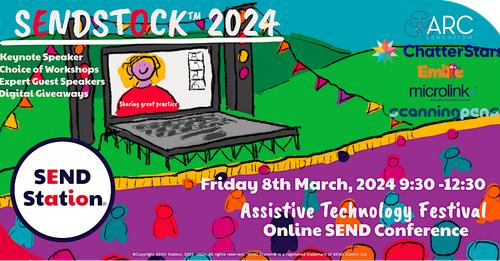



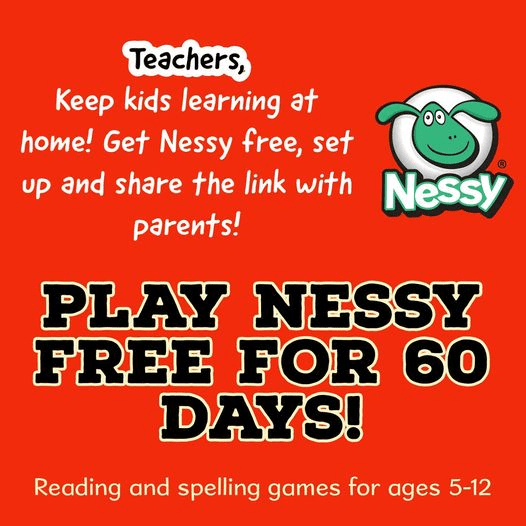
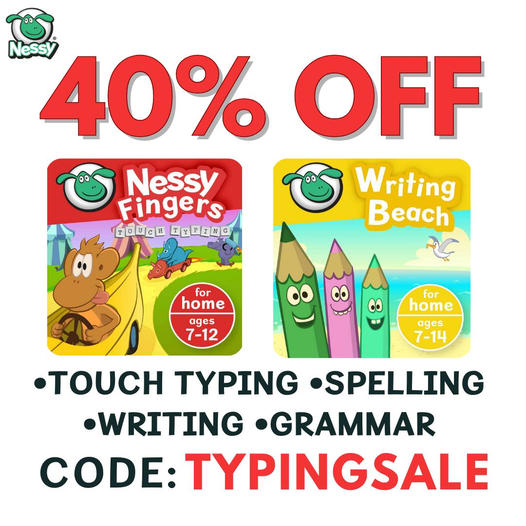






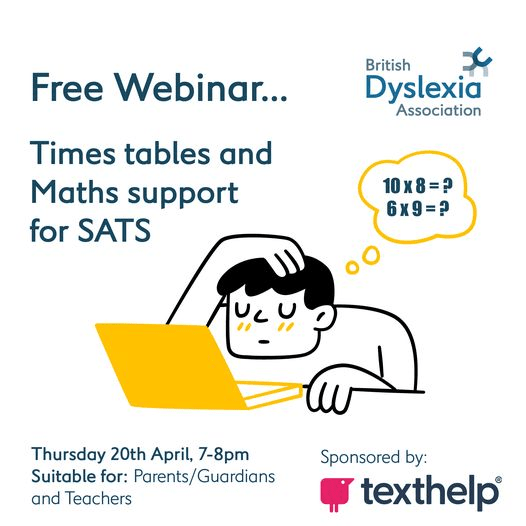






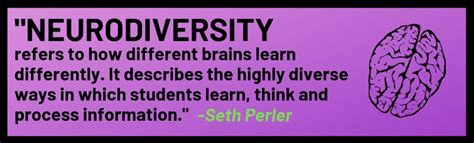

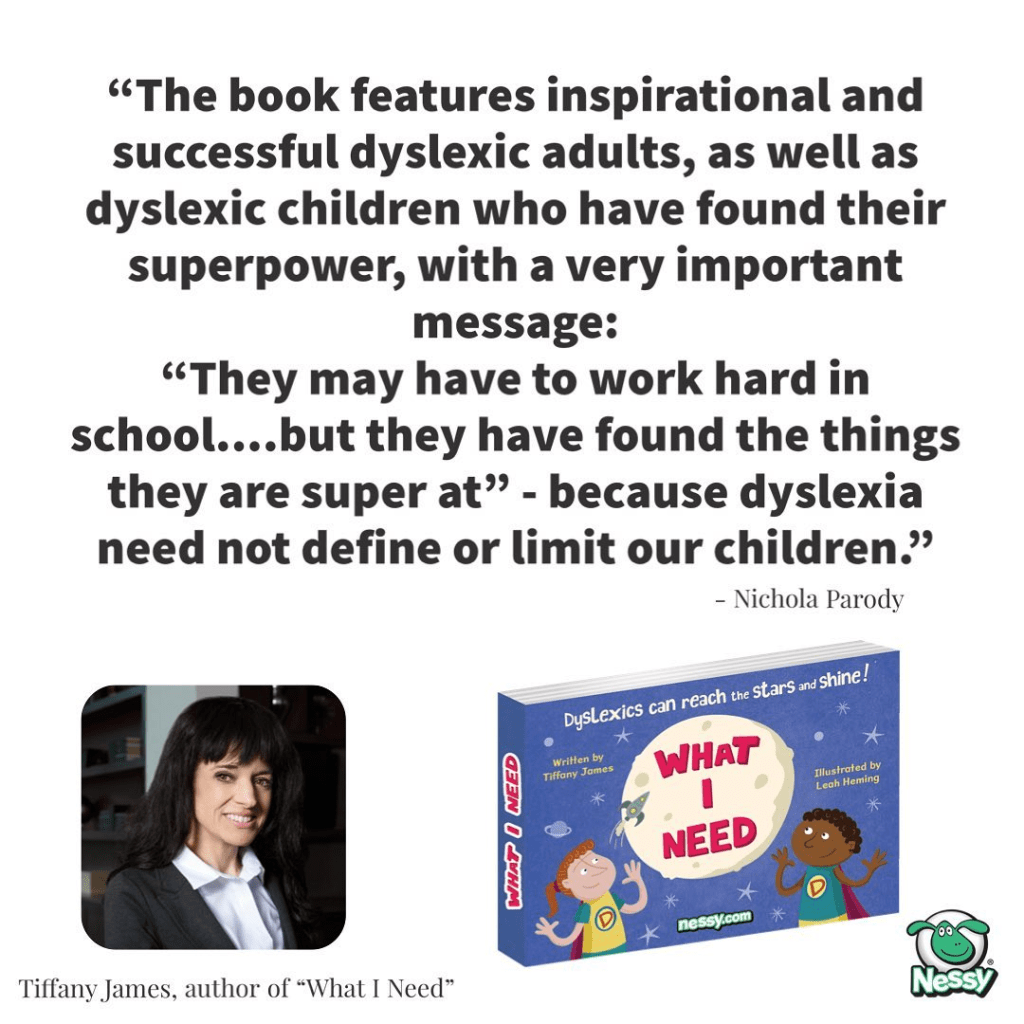




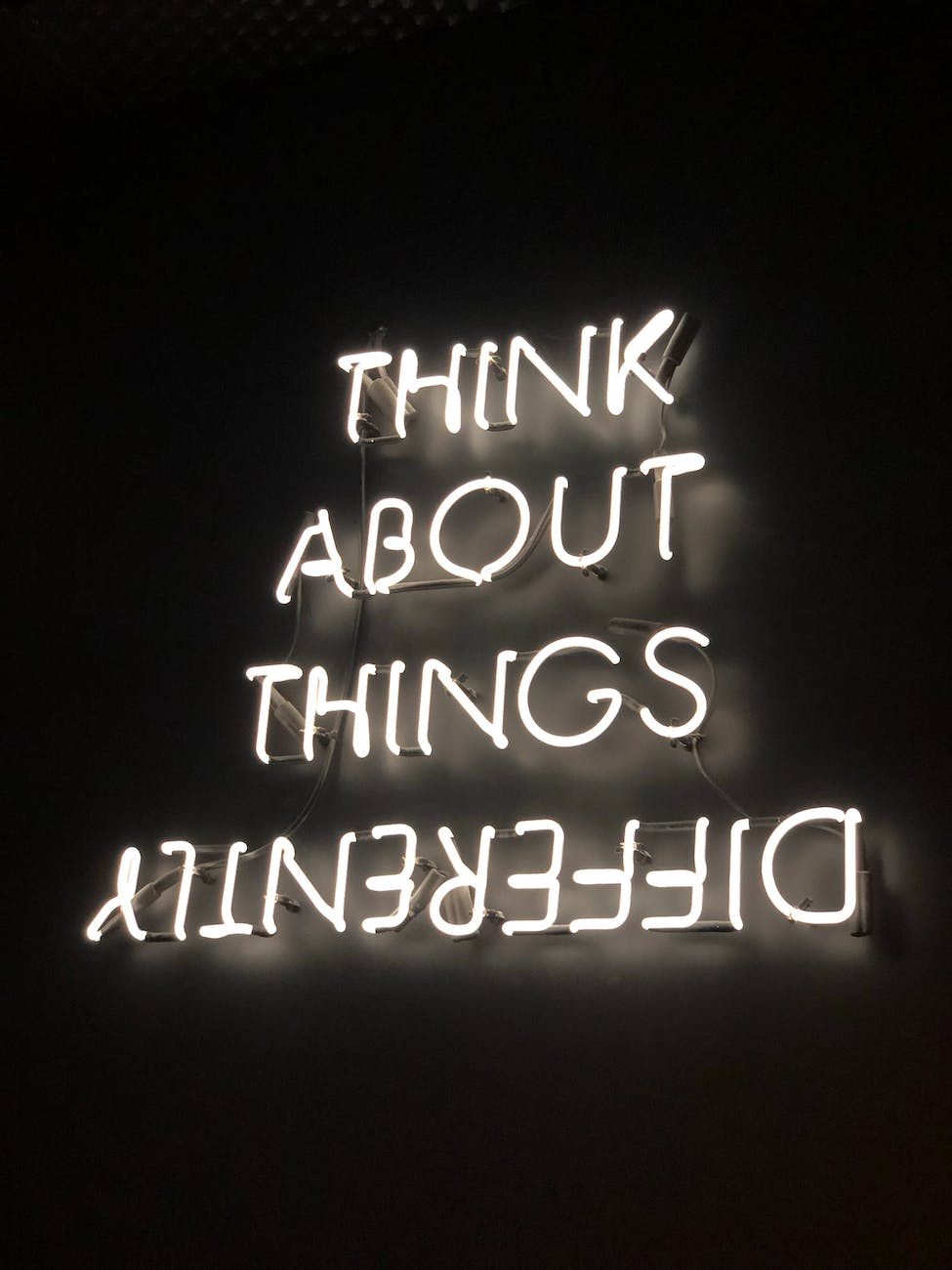

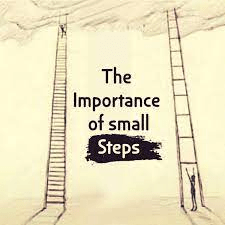


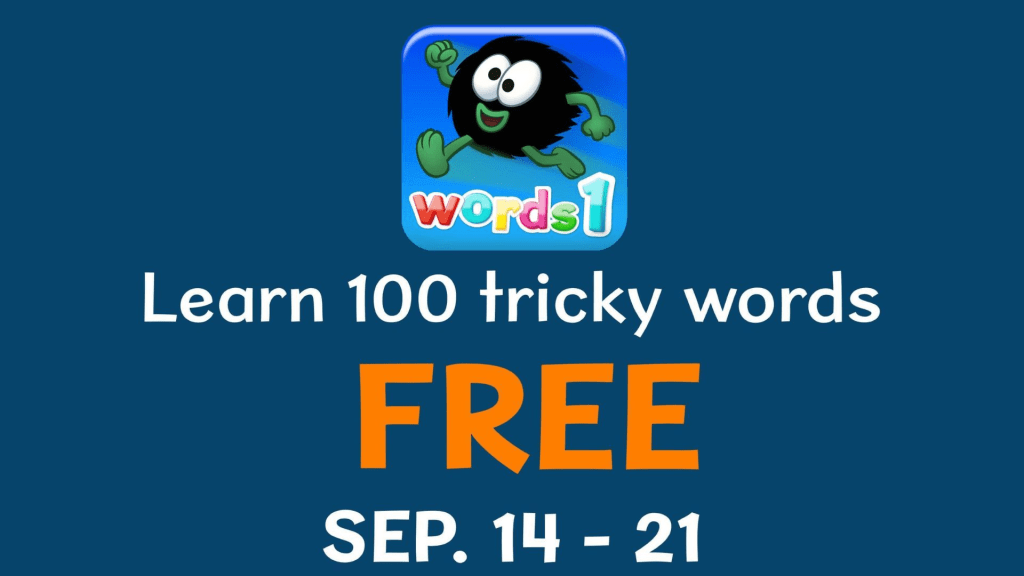

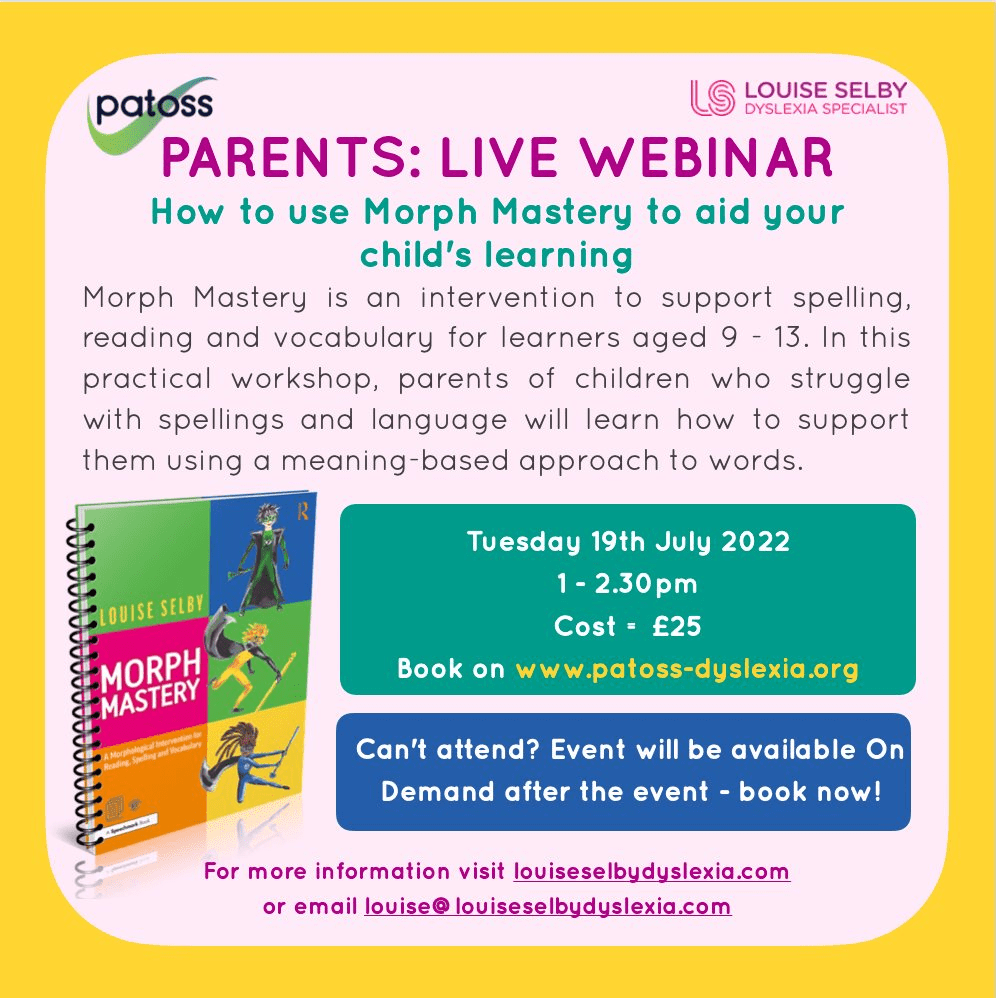





 ADHD – an introduction- 7pm
 Independent Learning – 9.30am
 Alphabet Arc- supporting phonics – 7pm
 Autism and Visuals – 9.30am

 1.5 hours in length

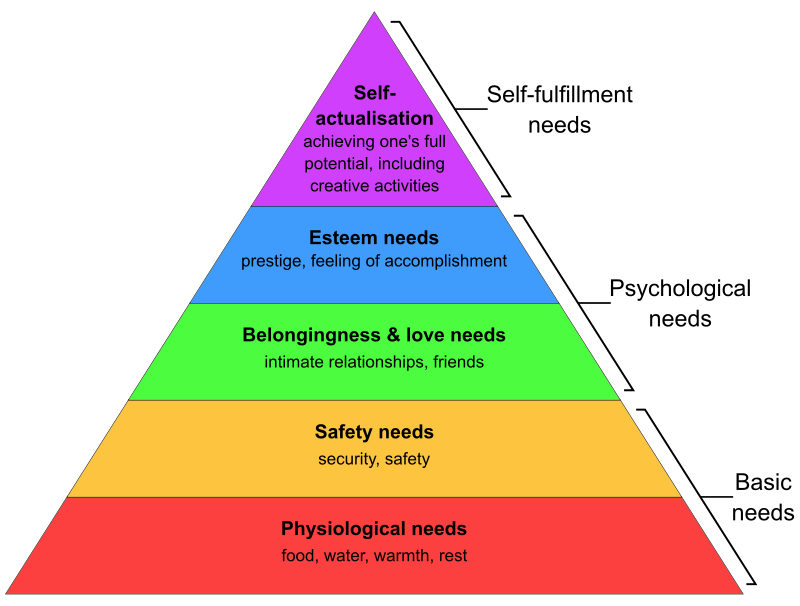



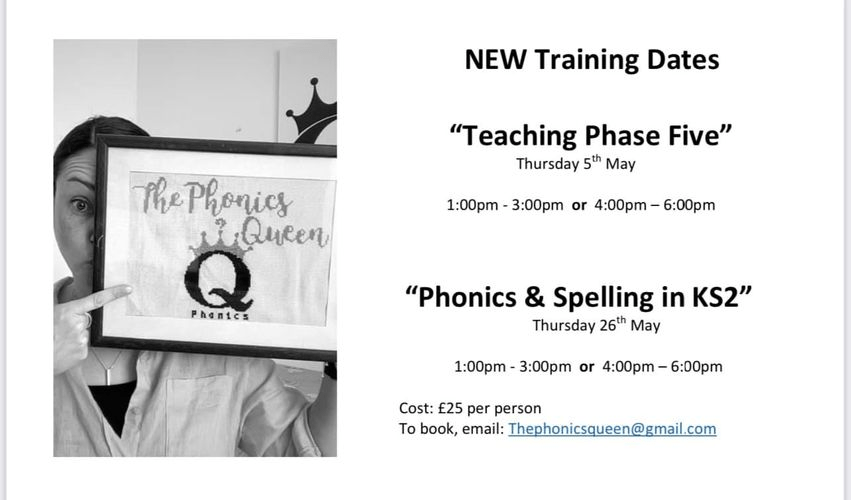









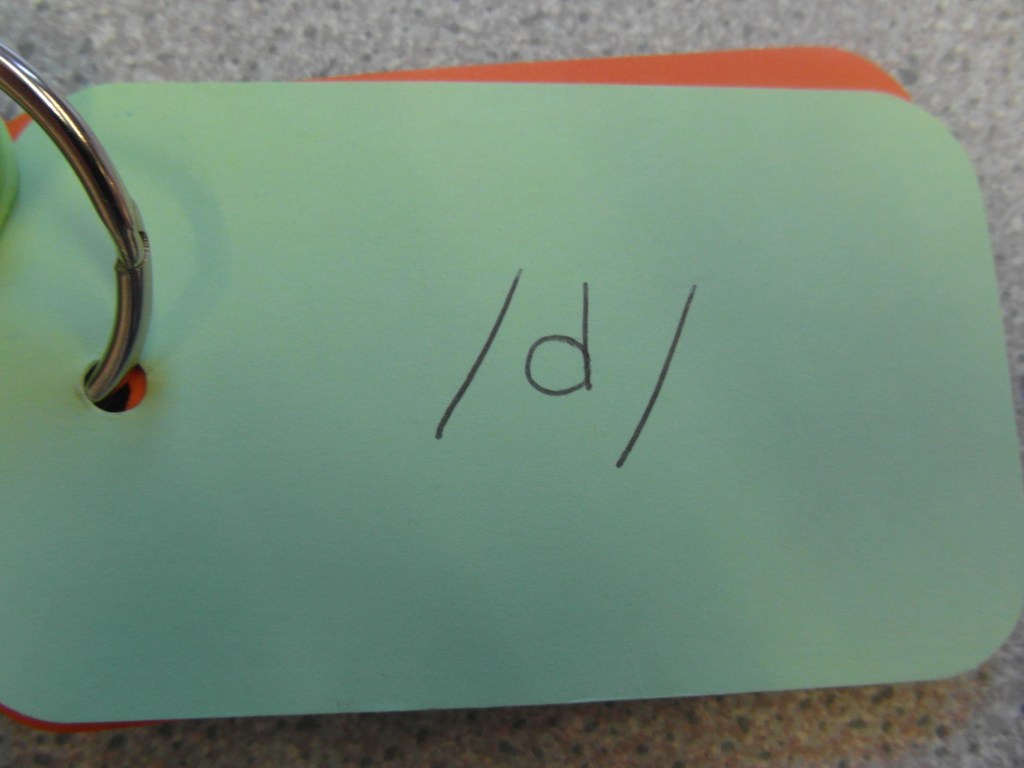
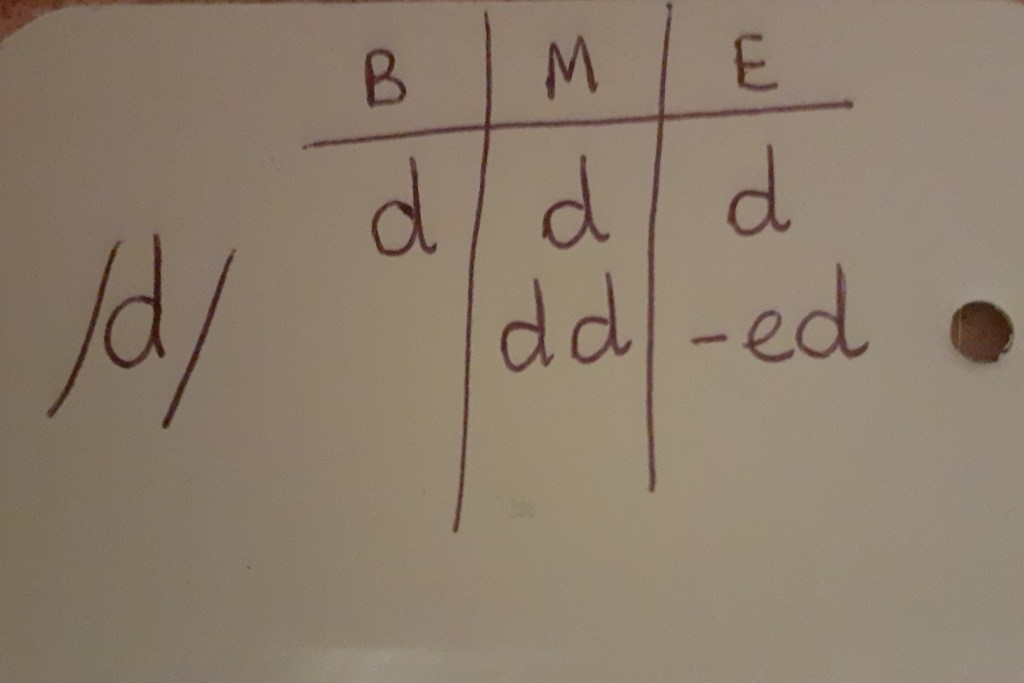





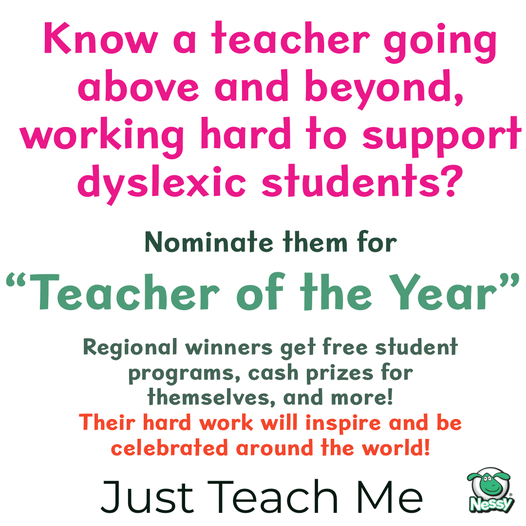





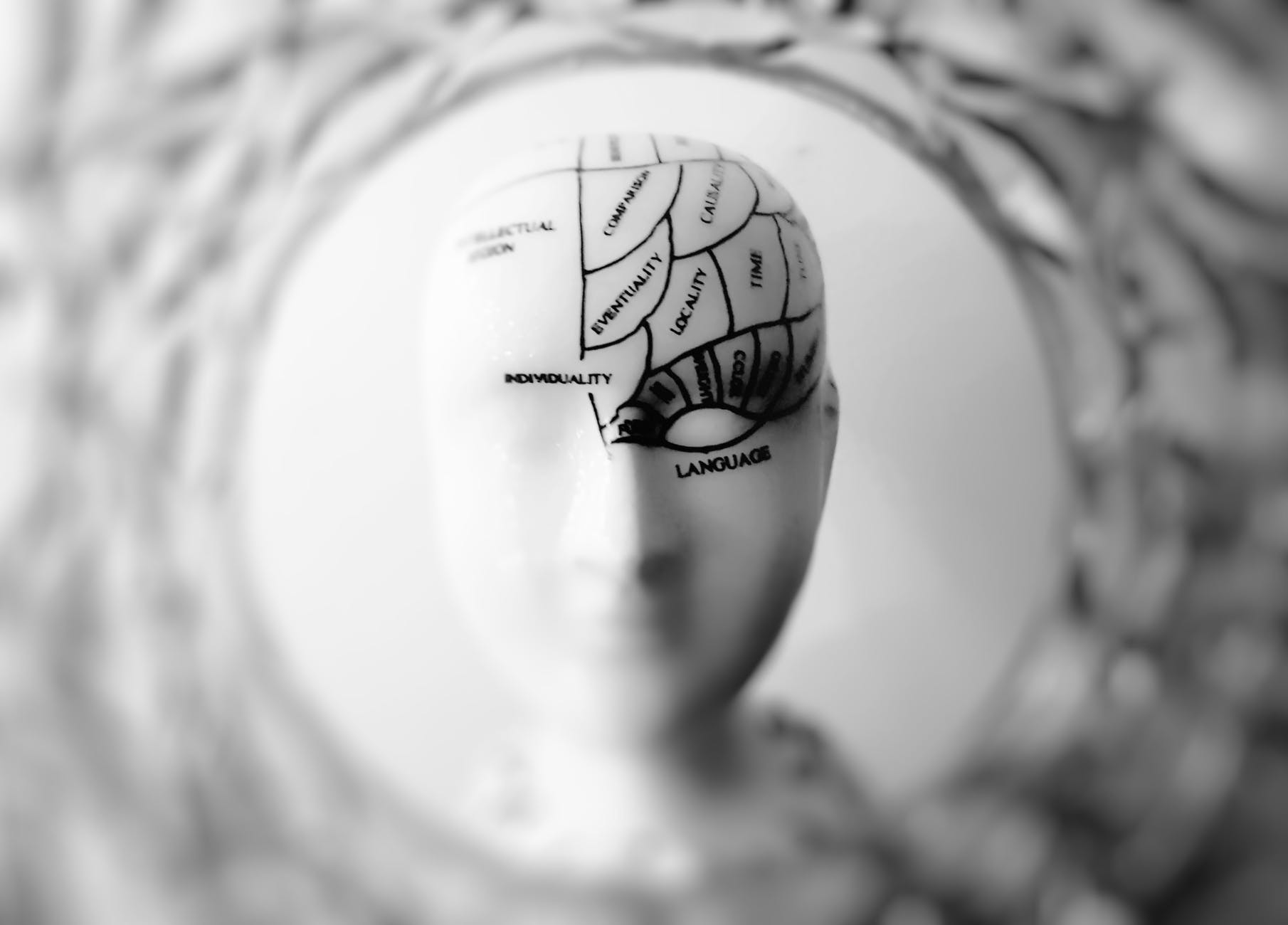














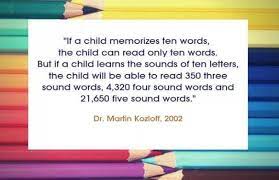


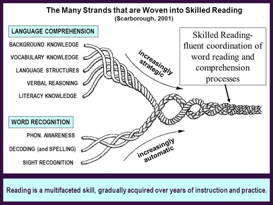





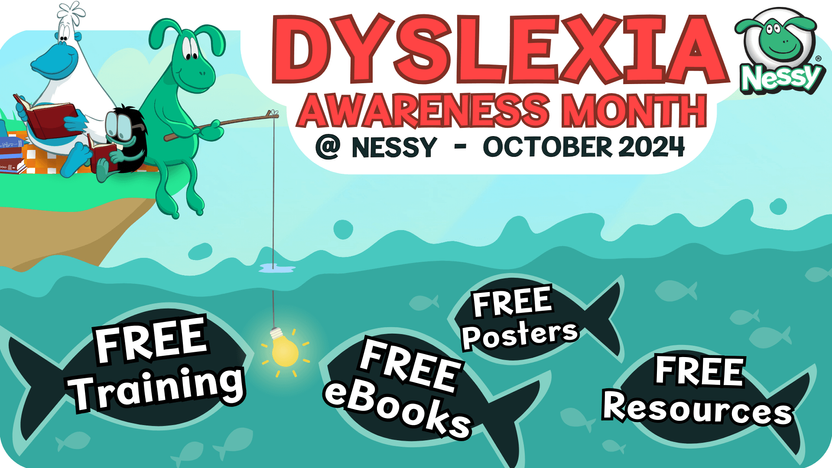


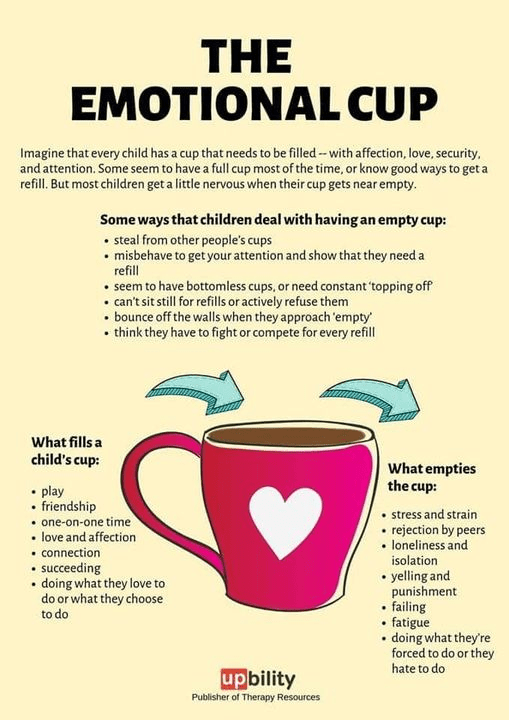
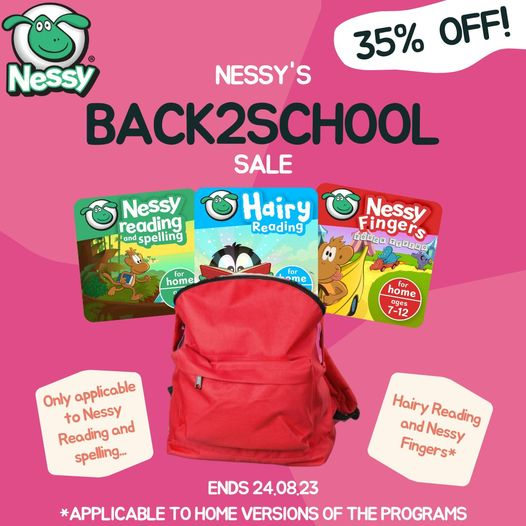
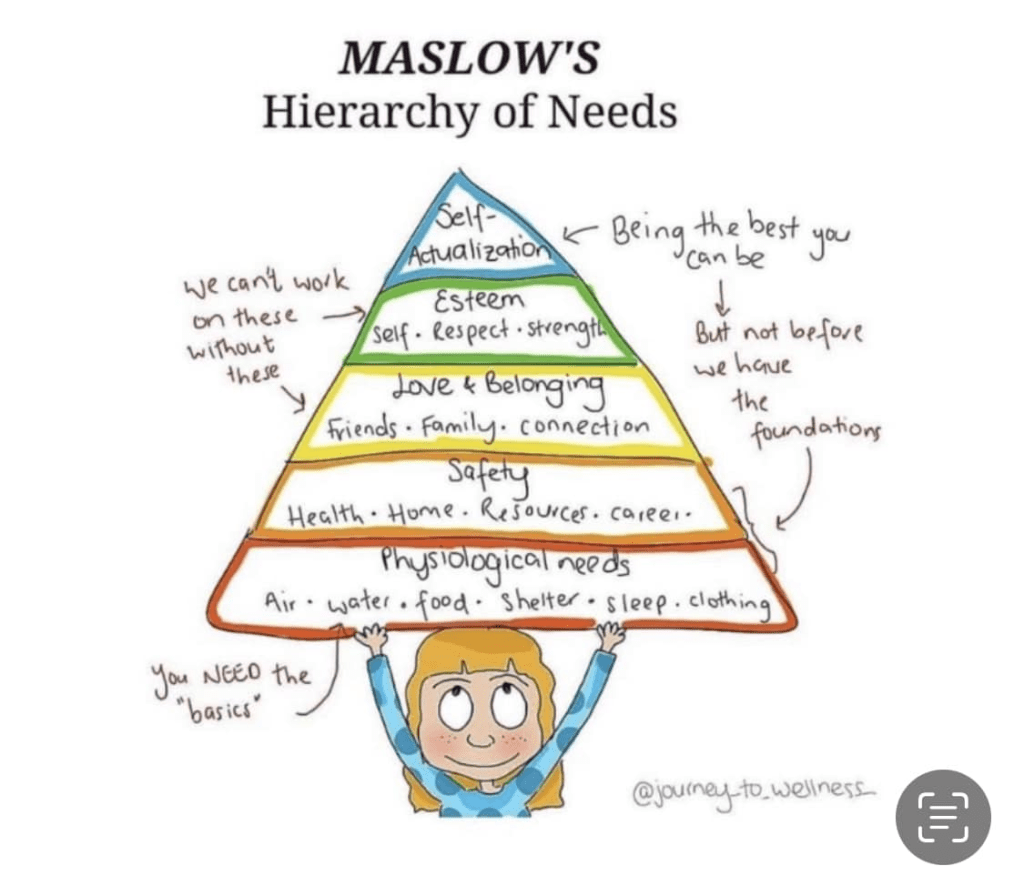
 Help your child learn to read, write and spell